
Mzansi Now: U.S. Plans To Accept 4,500 Afrikaner Refugees Per Month In 2026
AP
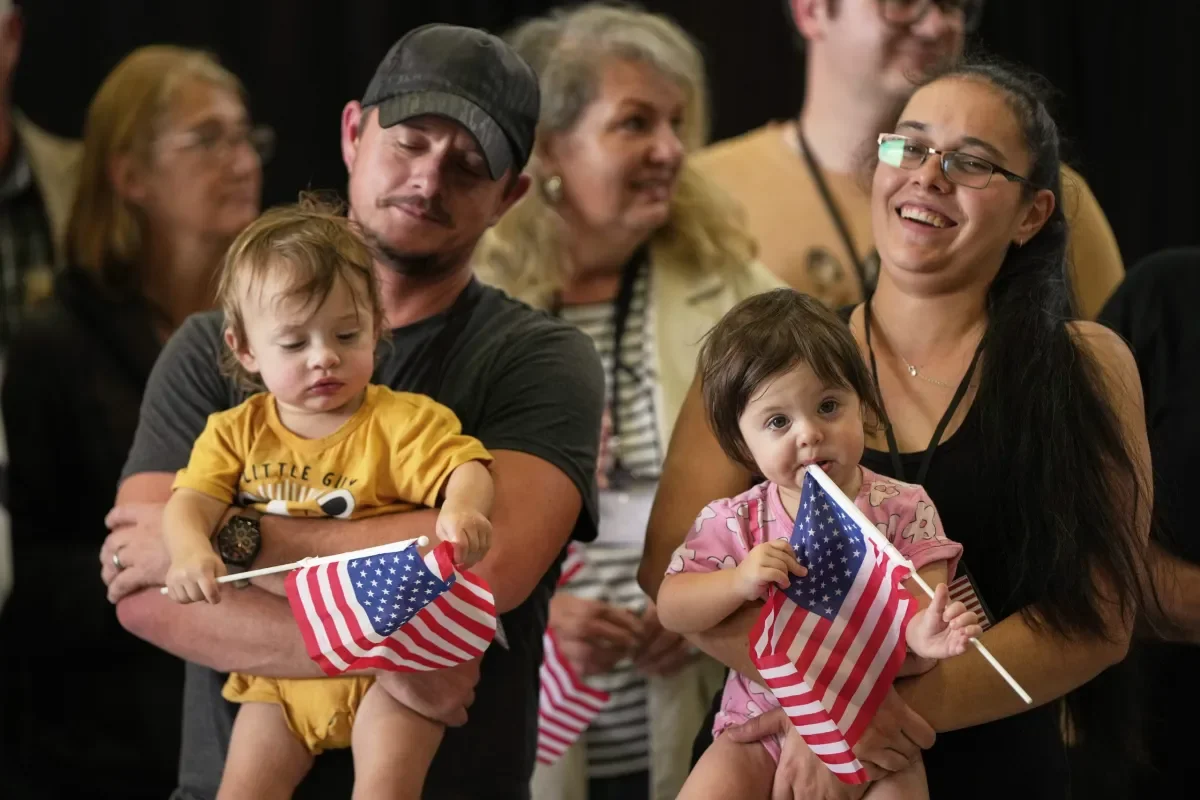
A previously unreported document from the the United States State Department shows a new goal to process 4,500 refugee applications per month from white South Africans in 2026. The document is dated from January 27, but was not made public until February 26 after reporting by Reuters.
In September 2025, the United States President Donald Trump announced that the acceptance cap for all refugees from around the world would be set at 7,500 for 2026, one of the lowest admissions limits on record. The new goal outlines a contradiction, with 4,500 applications per month equating to seven times the amount of acceptances outlined in the initial cap. As of February 10, only 1,647 Afrikaners had arrived as refugees in the United States. However, the pace has picked up in recent months, as almost 95% of these refugees arrived between December 2025 and January 2026.
The U.S. embassy in Pretoria issued a R12.2 million ($772,000) contract to construct trailers on site in order to process the anticipated influx of applications more efficiently. But from February 23 to March 9, the State Department had halted all refugee travel into the U.S. in order to assess “whether resumption of entry of refugees into the United States under the USRAP would be in the interests of the United States.”
Impact On Afrikaner Refugees
The White House also stated that the United States Refugee Admissions Program (USRAP) must ensure that both incoming refugees and existing American citizens are given proper resources before the State Department admits more foreigners. Refugees rely on non-profits contracted by the U.S. State Department to provide necessities like housing, food, and appointments with government agencies for services like Social Security cards and Medicaid.
These non-profits may provide as much as $2,000 for each refugee, but Afrikaners who have immigrated to the United States under this program have reported that this money runs out quickly.
Many refugees are forced to rebuild their lives in neighborhoods with high-crime rates, low employment prospects, and poor public transit in order to make their rent funds last longer. But even with these efforts to stretch their seed money, many Afrikaners end up having to live in mold-infested apartments or walk miles to grocery stores.
Impact on South Africans At Home
Back in South Africa, emigration has strained the economy. Many of the refugees deciding to leave South Africa are individuals with steady jobs and high salaries; their absence is felt in the economy. Last May, the U.S. embassy in Pretoria issued a statement that over 67,000 people had expressed interest in the Afrikaner refugee program, another motivation for the increased number of application acceptances.
Emigration from South Africa has been an increasingly popular trend, but the United States is by no means the sole destination. In addition to the States, common destinations include the United Kingdom, Australia, New Zealand, and Canada. Perth, a city on the west coast of Australia, has brought in so many South Africans that the acronym PFP (Packing for Perth) has become common slang amongst Afrikaners considering emigration.
The emigration of skilled professionals from South Africa has subsequently weakened professions like healthcare, engineering, and IT specialties who have taken their expertise abroad, a phenomenon colloquially known as “brain drain”. The result takes the form of gaps in public service and productivity in these essential fields. The national economy has suffered too, as emigrants who leave the national tax base subsequently reduce government revenue. Because Afrikaners statistically hold higher paying jobs and own more land than black South Africans, the emigration of South Africa's wealthiest individuals has taken tax revenue and skills out of the country and into the United States, draining South Africa of vital resources.
U.S.-South Africa Relations
The Afrikaner refugee program, alongside the freezing of all U.S. aid to South Africa, was first launched as an executive order last February after Trump alleged that white Afrikaner farmers were experienced a genocide. His claims followed Parliament’s passing of a January 2025 land reform law called the Expropriation Act, allowing for the state to claim unused or unattended land without compensation.
The law was based on a 2017 land ownership audit that found white South Africans owned about 72% of the country’s farming and agricultural land, while Black South Africans possessed only 4%, despite compromising 7% and 81% of the population respectively. However, no land has been seized under the Expropriation Act since its passing.
Trump’s genocide claims have been widely disputed by experts and South Africans alike, but his statements continue to influence U.S.-South Africa relations. In November 2025, the United States boycotted the G20 summit hosted in Johannesburg on account of these claims, and has banned South Africa from attending the next G20 summit in Miami this November. The latest news comes from February 23, 2026, when the StatesStates appointed a new ambassador to South Africa: Leo Brent Bozell III. Throughout the 1980s, Bozell staunchly defended the apartheid regime in South Africa, and took part in the “Coalition Against ANC Terrorism” which worked to oppose negotiations with the anti-apartheid African National Congress (ANC). Bozell is also a vocal supporter of Israel’s military actions in Gaza, which South Africa has repeatedly condemned as a genocide.
The new ambassador appointment, the increased threshold for Afrikaner refugees, and the banning of South Africa from the next G20 all speak to the Trump administration’s continued efforts to shape South Africa’s economy and its foreign policy. Since the beginning of the current military conflict between the United States and Iran, South Africa has offered to act as a mediator, with President Cyril Ramaphosa calling for an immediate ceasefire on March 3. South Africa receives imports of oil, machinery, plastics, and rubber from the Middle East, and the potential for an all-out war would strain their economy even further. In his statement, he made clear that such military operations only serve to harm South Africa, and that African supply chains are already under pressure from the conflict. Though South Africa has not officially taken a mediation role on the issue, Ramaphosa is scrambling to mitigate the conflict before the United States’ foreign policies damage the South African economy further. As for the Afrikaner refugees, Trump may have to shift his focus toward domestic policies over foreign affairs if he wants to continue welcoming South Africans into the country and incentivizing them to stay.