
Inside Africa: Kenya’s Community Land Paradox, When Progressive Law Meets Pastoralist Reality
engin akyurt
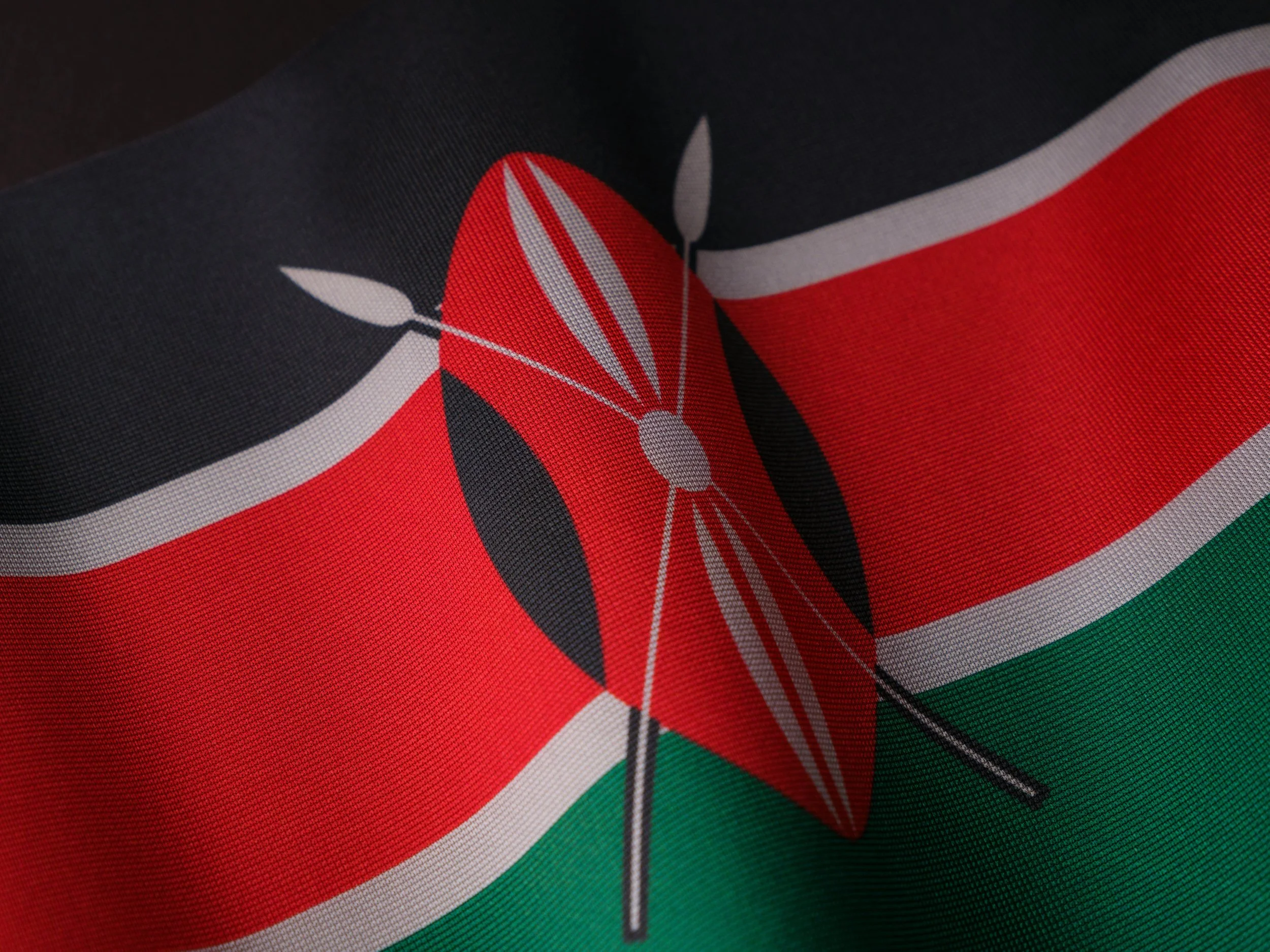
Nine years after Kenya enacted one of sub-Saharan Africa’s most progressive land laws, the gap between its promise and its practice is widening. The Community Land Act (CLA) of 2016, born from the aspirations of Kenya’s 2010 Constitution, was designed to protect the commons, the shared forests, grasslands, and grazing corridors that sustain millions of pastoralists. Instead, in pastoralist counties stretching from Kajiado to Samburu, the legislation has triggered the very outcome it sought to prevent. The accelerated fragmentation of communal land into private, individual parcels.
Kenya’s 2010 Constitution, approved by 67% of voters in a national referendum, reclassified all land into three categories, public, private, and community, and Article 63 vested community land in communities identified on the basis of ethnicity, culture, or similar interest. The CLAct, signed by President Uhuru Kenyatta on August 31, 2016, was the legislation designed to operationalise that constitutional vision. It empowered communities to register themselves, obtain collective titles, and govern their territory, while mandating women's inclusion in community assemblies and land management committees.
Approximately 80% of Kenya’s landmass is classified as rangeland, according to the International Land Coalition (ILC). For pastoralist communities, particularly in counties like Kajiado and Narok, the law represented a historic recognition that communal tenure was not a relic of the past but a legitimate system of land governance. “In the absence of a legal framework, community land rights have faced violations,” Odenda Lumumba, then executive director of the Resource Conflict Institute, told the Thomson Reuters Foundation at the time of the law's enactment.
The CLA’s implementation, however, has stalled. A joint study by Namati Kenya, a legal empowerment organisation, and the National Land Commission (NLC), Kenya’s constitutional land body, found that by May 2023, seven years after the law’s enactment, only 46 out of 315 undissolved group ranches in Kenya had fully transitioned to registered community land. That represents roughly 15% of the national total, a rate the study called “slow”. The main barriers identified were conflicts among group members (39.7%), financial constraints (22.5%), lack of information on the transition process (20.6%), and registration challenges (17.2%), percentages from a Namati-NLC survey of 16 group ranches.
The 46 transitional ranches were concentrated in just five counties (the nation comprises 47 countries), 21 in Samburu, 13 in Laikipia, five in Taita Taveta, five in West Pokot, and two in Kajiado. Narok County, Kenya’s largest by land area (17,950 km²) with a projected 2024 population of 1.32 million (91% rural, majority Maasai pastoralists), holds 239 untransitioned ranches, the largest bloc nationwide. A further January 2025 evaluation by Namati and the NLC, covering group ranches in Laikipia, Kajiado, West Pokot, and Samburu, found that half of the 16 ranches studied had experienced conflicts during registration, including disputes over whether to subdivide or pursue collective transition, exclusion of members, and fraud during elections of Community Land Management Committees.
By December 2025, the picture had not markedly improved. NLC Commissioner Tiyah Galgalo raised concerns at a workshop in Naivasha, stating, “The work we do here will determine whether communities across Kenya finally receive the secure tenure they deserve, tenure that has been promised in law but delayed in practice”. That same month, the NLC signed a Memorandum of Understanding with Community Land Action Now (CLAN) to accelerate the transition, with CEO Kabale Tache describing it as “a practical alliance to address historical land injustices”, a 17-month pact for joint registration drives, dispute resolution, and ranch transition monitoring.
A key phenomenon delaying the legislation’s implementation is the choice by many Maasai group ranches to dissolve their communal holdings into private, individualized parcels rather than registering them collectively. A 2025 Frontiers peer-reviewed study based on ethnographic fieldwork conducted between 2022 and 2023 in Oloirien (Narok County) and Olgulului-Ololarashi (Kajiado County), found that the CLA had the “opposite effect” of what was intended, triggering remaining group ranches to pursue subdivision.
The reasons were layered. Decades of corruption and mismanagement by group ranch committees had eroded trust in collective governance. Community members feared that without private titles, they remained vulnerable to land grabbing by elites and outsiders. In Olgulului-Ololarashi, respondents reported that leaders warned of potential government settlement of non-Maasai on their land if subdivision did not occur, even though no such provision existed in the Act. The CLA itself left critical ambiguities unresolved, creating confusion around the definition of “community” and leaving state powers over community lands vaguely defined.
The consequences of unmanaged subdivision are already visible. In Oloirien, the shift to private tenure led to increased land enclosures and weakened collective resource management. The neighbouring Kimana group ranch, which dissolved in 1992, offers a cautionary tale. Widespread land sales to non-Maasai buyers led to agricultural conversion, the near collapse of livestock-based livelihoods, and the emergence of a class of landless Maasai.
Compounding the implementation failures is a gender crisis within the registration process. An audit by the Kenya Land Alliance (KLA), one of Kenya’s leading land rights NGOs established in 1999, exposed a complete absence of gender-disaggregated data in community land inventories submitted by counties, making it impossible to track women’s participation or protect their rights. In Laikipia County’s Ilpolei community, women reported being actively barred from community land registers and from meetings where critical decisions about land were made. “The men won’t even allow you to attend the meetings,” Florence Siamanta, a resident of Ilpolei, told the Daily Nation (Kenya’s largest newspaper) in November 2025. “If you attempt to go, they chase you away like chickens”.
The figures at the national level are starkly unequal. A 2018 KLA report found that only 10% of approximately 3 million title deeds processed by the government between 2013 and 2017 were issued to women, translating to a mere 1.62% of total land acreage. The 2022 Kenya Demographic and Health Survey (KDHS), published by the Kenya National Bureau of Statistics, found that 75% of women did not own agricultural land, and only about 6% of women aged 45–49 held a title to agricultural land, compared to 21% of men. A UNDP Kenya gender analysis report corroborated that around 10% of land titles are issued to women, translating to only 1.62% of agricultural land owned by women.
Kenya’s 2010 Constitution, particularly Articles 27 and 60, explicitly guarantees equality and prohibits gender discrimination in land practices. The Kenya Institute for Public Policy Research and Analysis (KIPPRA), a government think tank, noted in a 2024 analysis that despite these legal frameworks, women’s land ownership had actually declined since the constitution’s ratification, from 61.3% of women owning no land in 2014 to 75% owning no agricultural land by 2022.
The picture is not entirely bleak. In Laikipia County, 13 former group ranches successfully achieved full transition from group ranches to community land between 2019 and 2023, demonstrating that the law can work with county-led sensitization, NLC oversight, and FAO/Impact Africa funding.
In Kajiado's Olgulului-Ololarashi group ranch, the Amboseli Ecosystem Trust brokered a zoning approach that paired private titles with communal conservancies, each registered member receiving 21 acres for settlement alongside eight acres within a new community-owned wildlife conservancy. Eighty-four percent of 285 landowners surveyed said the conservancy model was a good idea, and women in particular supported the arrangement because it protected land from unauthorised sales and preserved access to firewood and grazing resources.
By April 2025, five of six targeted counties, Baringo, Samburu, Turkana, Tana River, and Kajiado, had completed updates to their community land data, producing cadastral maps and narrative records intended to inform planning and investment, according to the International Land Coalition. The NLC’s CEO, Kabale Tache, committed in November 2024 to a target of at least 30% representation for women on community land decision-making committees. Advocacy groups including FIDA-Kenya and GROOTS Kenya are intensifying civic education and legal support for women in pastoralist areas.
The stakes extend beyond land titles. Community land forms the backbone of Kenya’s rural economy, sustaining large-scale livestock production, biodiversity conservation, and the livelihoods of millions, according to the International Land Coalition. As Kenya reviews its National Land Policy and National Land Use Policy, there is a unique window to integrate accurate data into long-term planning. But delays have real consequences. In counties like Narok, where 239 group ranches remain untransitioned and land is under growing pressure from tourism expansion, agriculture, and settlement, communities risk losing tenure security altogether.
What the Community Land Act promised, the formal recognition of pastoralist commons within Kenya’s legal framework, remains achievable. But the gap between law and practice continues to reshape the landscape in real time. As Commissioner Tiyah put it in Naivasha, “This is a collective responsibility”.
