
Mzansi Now: An Overview of the Madlanga Commission’s Findings On Police Corruption
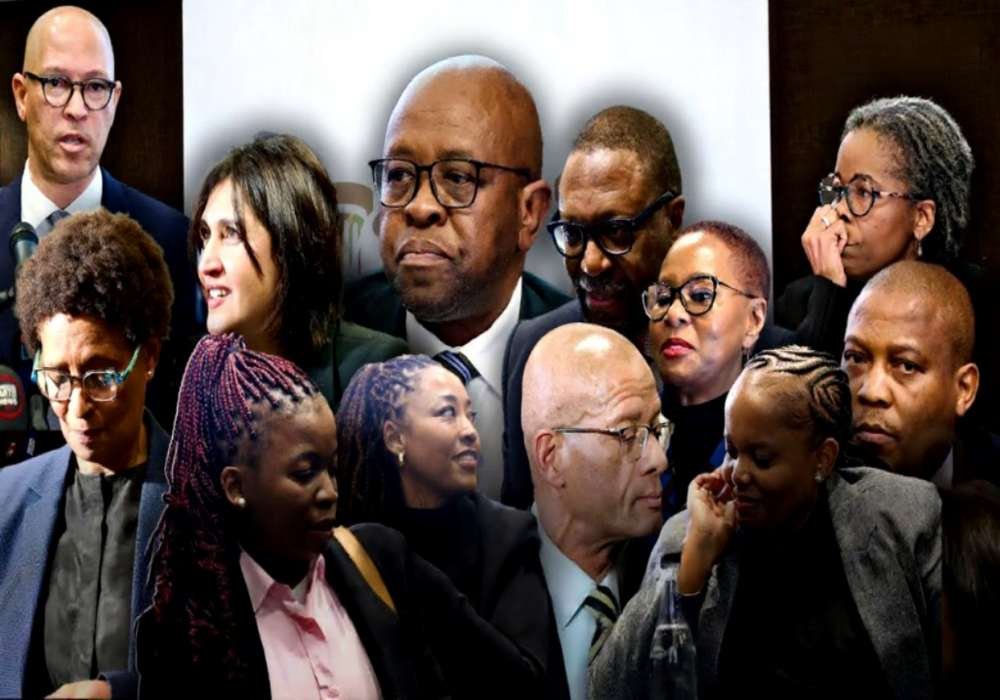
In Pretoria, the Madlanga Commission is holding court hearings regarding multilateral police corruption across several provinces in South Africa. The case has been ongoing since July 2025, when the Provincial Commissioner of Police for KwaZulu-Natal, Lieutenant General Nhlanhla Mkhwanazi, held a media briefing alleging deep-rooting corruption of top police officials. He claimed that Police Minister Senzo Mchunu and Deputy National Commissioner for Crime Detection Shadrack Sibiya, amongst others, were tied to the "Big Five cartel”, an alleged criminal syndicate that engages in drug trafficking, hijackings, tender fraud, extortion and contract killings.
A week after Mkhwanazi gave this briefing, on July 13, President Cyril Ramaphosa announced the establishment of the Madlanga Commission, led by Justice Mbuyiseli Madlanga to hear Mkhwanazi’s further testimony. The public hearings by the commission began in September 2025 and have continued since, leading to discoveries in murder cases, money laundering, and corruption of high level officials.
Mkhwanazi’s Briefing
Lieutenant General Nhlanhla Mkhwanazi held this media briefing on July 6, 2025 at the South African Police Service (SAPS) Provincial Headquarters in Durban. The briefing was assumed to be an update on the now-disbanded Political Killings Task Team (PKTT), a specialised unit investigating politically motivated violence in KwaZulu-Natal and surrounding areas. The PKTT was disbanded in January 2025 by Police Minister Senzo Mchunu, garnering criticism due to the vague nature of why the task team had been dissolved. Per the minister’s memo, the stated reason for the disbandment was because the PKTT was “no longer required nor [was] it adding any value to policing in South Africa”.
Mkhwanazi’s briefing began with announcements of the PKTT’s success, like the sentencing of 128 individuals and the capture of 156 firearms, discrediting Mchunu’s reasons for disbanding the team. He further claimed that the disbandment of the PKTT resulted in the abandonment of 121 active cases and was done without the authority of the National Commissioner nor himself.
Mkhwanazi went on to make more serious allegations, which dated back to 2024. He said that when the Gauteng Organized Crime Investigating Unit requested assistance in dismantling an organized crime syndicate, Mkhwanazi sent 10 members of the PKTT to the province. According to Mkhwanazi, PKTT investigations revealed that the Gauteng crime syndicate involved members of the SAPS, members of the provincial judiciary, and politicians currently holding office in Parliament. He alleged that the discovery of these government officials’ involvement in organized crime was the true reason for the PKTT’s disbandment.
Brown Mogotsi
Mkhwanazi presented further evidence that Police Minister Senzo Mchunu had been sharing classified information with unauthorized individuals linked to this criminal syndicate. Mkhwanazi showed WhatsApp messages from Brown Mogotsi, a North West-based businessman, that contained classified information he should not have had access to. Four months before Mkhwanazi presented this evidence, Mchunu had denied allegations of a relationship between himself and Mogotsi on record while speaking before Parliament. Mkhwanazi claimed that based on these messages, Mogotsi was acting as a middle man between the police and alleged members of the Gauteng crime syndicate. Thus far, neither Mchunu nor Mogotsi have been convicted of any related crimes.
Vusimuzi “Cat” Matlala
These WhatsApp messages were found on the cell phone of Vusimuzi “Cat” Matlala, a government contractor who is alleged to be a kingpin in the Gauteng crime ring. Matlala directs several companies in the healthcare and security industries, and his services have been contracted by the South African government since 2022. He currently faces 25 charges of attempted murder, conspiracy, money laundering, and more. In his briefing, Mkhwanazi said “Further analysis of the chats indicates that Vusimuzi ‘Cat’ Matlala is financially supporting the Minister of Police and Mr. Brown Mogotsi’s political endeavours.”
As the Madlanga Commission began its work, evidence of payments between Matlala, Mogotsi, and Mchunu was brought by the testimony of Lieutenant General Dumisani Khumalo, the Head of Crime Intelligence for the South African Police Service (SAPS), who was arrested in June 2025 on charges of corruption, fraud, and unlawful property acquisitions. Khumalo presented screenshots of messages that read: “Matlala or one of his employees makes payment to Mogotsi for expenses related to ANC events for benefit of delegates of such events who are apparently linked to Mchunu through the chief of staff Nkabinde in the office of the minister… In return, Mogotsi uses his influence to manipulate SAPS processes so as to frustrate criminal investigations into Matlala.” The messages further allege that these payments were made with the knowledge and support of Mchunu and of the Deputy National Commissioner Shadrack Sibiya.
The most recent allegations came on February 27, 2026, when a pretrial hearing revealed that Buena Vista Learning Academy, owned by Matlala’s wife, had been paid R3.7 million by the Ekurhuleni Municipality in Gauteng — despite the original tender being valued at R66,000. The contract was awarded for skills development in the municipality’s metro system, but the Buena Vista Learning Academy lacked a necessary accreditation letter and was not compliant with regulations, according to lawyer Matthew Chaskalson. The payment was overseen by Ekurhuleni’s now-suspended head of human resources, Linda Gxasheka, who has been on trial for her participation in such tenders. Gxasheka claims that she attempted to halt these payments, but showed no evidence of intervention.
The pretrial hearing of Matlala and his co-accused are set to continue on March 18.
Shadrack Sibiya
Mkhwanazi’s July briefing also brought allegations against now-suspended Deputy National Commissioner for Crime Detection Shadrack Sibiya. He too was named in the WhatsApp messages, and was accused of using an unauthorized implementation plan to disband the PKTT. He was subsequently suspended on September 14 for his alleged interference with PKTT investigations. During his testimony on February 20, Sibiya admitted to allowing 121 active cases to sit on his desk untouched, instead of transferring them to Detection and Forensic Services as he was ordered to do.
On February 24, 2026, Sibiya was questioned again after Sergeant Fannie Nkosi testified that Sibiya had allegedly shared a confidential police report with Matlala through Nkosi, who is a known member of organized crime in Gauteng. Nkosi further claimed that he frequently arranged meetings between Matlala and Sibiya, which Sibiya admitted to, though he still refutes any wrongdoing.
Aftermath
The Madlanga Commission's findings have become a windstorm, with new allegations and evidence being presented each day, implicating more and more government officials. On February 24, Mogotsi flipped the narrative and claimed that Mkhwanazi himself was involved in the syndicate. He claimed that Mkhwanazi had taken a bribe from Matlala in order to “solve his problems”. The details of the bribe are unclear, and the only evidence for this is a statement by Mogotsi that Matlala had called him and reiterated this message.
This is not the only claim regarding Mkhwanazi’s involvement. On February 19, Mkhwanazi filed a High Court claim against a Durban business man, Calvin Mathibeli, regarding defamatory social media posts that claim Mkhwanazi was involved in these syndicates. The posts accuse Mkhwanazi of orchestrating an illegal raid on his business and ordering a hit on him. The posts landed Mathibeli a scheduled appearance before the Madlanga Commission to reiterate his statements under oath and provide evidence to substantiate them. On February 27, the court ruled in Mkhwanazi’s favor and ordered Mathibeli to retract and apologize for the statements, finding them libelous. This ruling weakened the credibility of the public claims, though it did not automatically remove the Commission’s authority to examine any underlying issues.
The Madlanga Commission is still ongoing, with reports of their findings expected by the end of March 2026, though there are current discussions of extending that deadline. On Monday, March 2, an unnamed witness is set to return with further testimony against members of the Ekurhuleni Metropolitan Police Department. According to reports by SABC News, action against these individuals is imminent.