
Mzansi Now: 15 South Africans Return Home After Fighting For Russia Against Ukraine
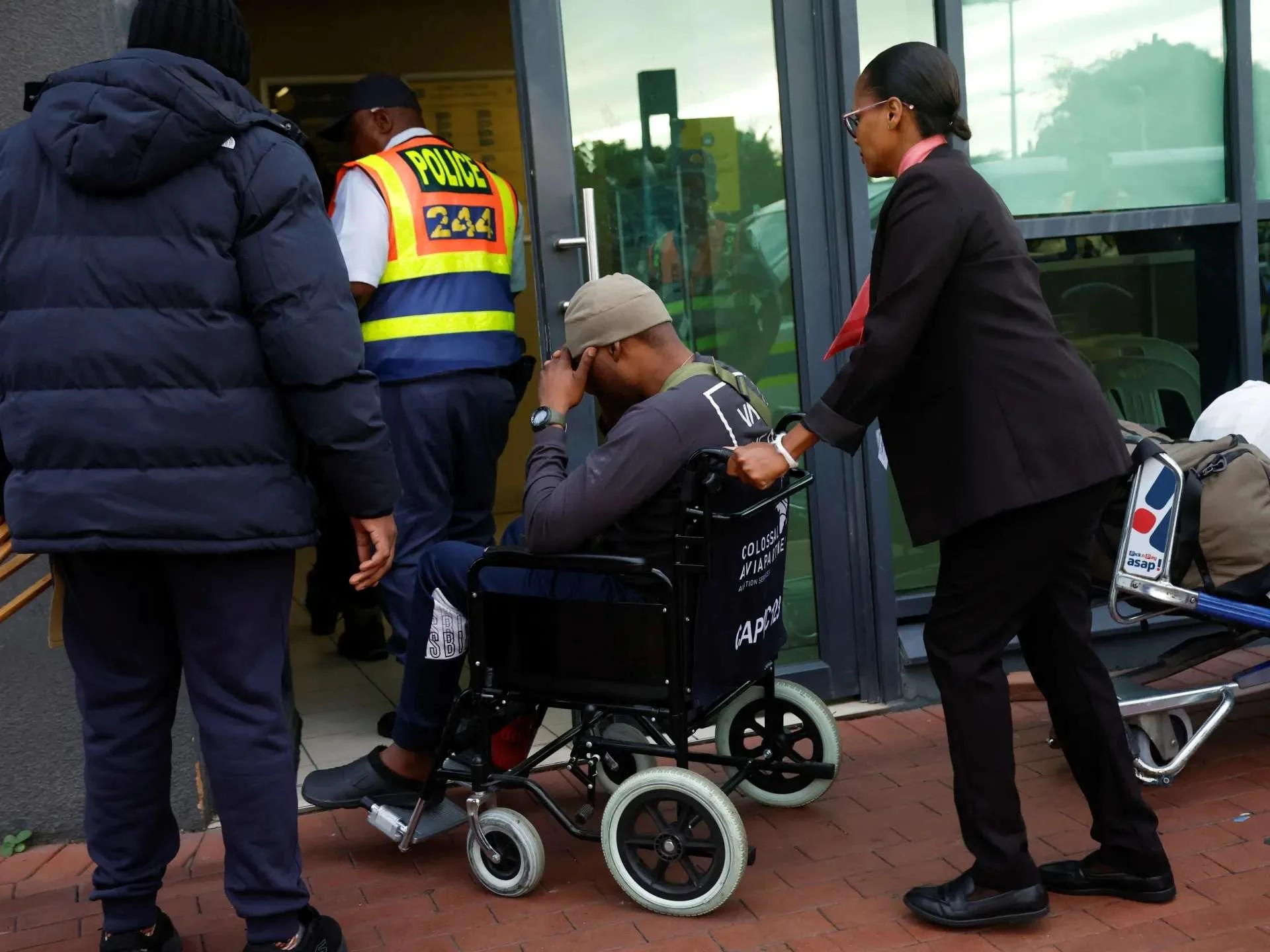
In July 2025, 17 South Africans left for Russia under the pretenses of bodyguard training for lucrative security jobs upon their return. Once they arrived, the men were forced to join Russian military operations fighting in Ukraine’s eastern Donbas region. These men reported that once they landed in Russia, their passports and clothes were burned, their phones were confiscated, and their ability to speak with family members back home was gradually cut off before being eliminated entirely. Others said they were forced to sign documents written in Russian they did not understand before receiving minimal military training and being deployed to the front lines.
Shortly after the men realized that they had become soldiers in the war against Ukraine, they began pleas to the South African government to return home, leading to the diplomatic conversations between President Cyril Ramaphosa and Russian President Vladimir Putin that brought the men back to South Africa. The men began returning home on February 6 after six months in Russia, when four landed in O. R. Tambo International Airport in Gauteng. 11 more returned on February 25 to King Shaka International Airport in KwaZulu-Natal. Of two South Africans remaining in Russia, one is undergoing medical care in Moscow, and the other is finalizing his travel arrangements, according to Ramaphosa.
The case is part of a larger pattern of African nationals being recruited into the Russia-Ukraine war. The 17 South Africans are amongst 1,780 individuals from across the continent fighting for Russian forces under false pretenses, primarily coming from Kenya, with other recruits coming from Ghana and Nigeria.
Possible Government Involvement
Duduzile Zuma-Sambudla — former MP representing the uMkhonto weSizwe (MK) party and daughter of former president Jacob Zuma — has been linked to the scandal. Her half sister, Nkosazana Bonganini Zuma-Mncube, filed an affidavit on November 22 alleging that Zuma-Sambudla, along with two others, promised the men that they would be sent to Russia for job training and then be sent home to South Africa after a year. Instead, however, the men were taken by a Russian mercenary group and were forced to fight in the war against Ukraine. The affidavit also alleged that half of the men sent to Russia were members of the Zuma family.
Anecdotes from the families of the men sent to Russia, and from the men themselves, corroborate the allegations made in this affidavit. An unnamed individual reported that he had received a phone call from Zuma-Sambudla encouraging him to join a training program in Russia which would prepare him for a guaranteed security role working for the MK party. The man stated that after a few weeks of training, he was given a Russian military uniform and was sent to Ukraine’s Donbas region to fight on the front lines of the war.
Furthermore, a spokesperson for the returnee’s families alleged that Zuma-Sambudla and her associates were paid over 14 million rand ($845,000) by a Russian mercenary organization called the Wagner Group in exchange for the men’s services. Of the 17 men, 16 were from KwaZulu-Natal, the Zuma family’s hometown and the MK party’s most popular stronghold.
After these allegations came to light in late November, the Democratic Alliance laid charges against Zuma-Sambudla, including “human trafficking, contraventions of South Africa’s anti-mercenary legislation, and additional offences that the South African Police Service (SAPS) must now investigate”. The day after these charges were made publicly, on November 28, 2025, Zuma-Sambudla resigned from Parliament.
In response to these charges, Zuma-Sambudla denied any involvement in the scheme and claimed she is a victim of fraud by intermediaries. She has stated that she believed the men were going to Russia for lawful training, not for military recruitment, as South African law prohibits all citizens from fighting on a foreign country’s behalf without explicit government authorization. The case against Zuma-Sambudla is still ongoing.
The Update
On February 24, Ramaphosa issued a statement welcoming the men home. He “expressed his heartfelt gratitude to President Vladimir Putin who responded positively to his call to support the process of returning the men home”. Putin also assured Ramaphosa that the South African men would be paid for their service.
Diplomatic relations between the two countries remain steady, with South Africa maintaining its “non-aligned stance” on the Russia-Ukraine conflict. Though the continued partnership between South Africa and Russia has received criticism, the neutrality between the two may be why the men were able to return home at all.
For the men who have just arrived back in South Africa, the ordeal marks the end of a months-long experience that began with promises of job security, but ultimately placed them on the front lines of one of the world’s most destructive ongoing conflicts.