
Inside Africa: Central African Republic's Elections Test Post-Conflict Stabilization
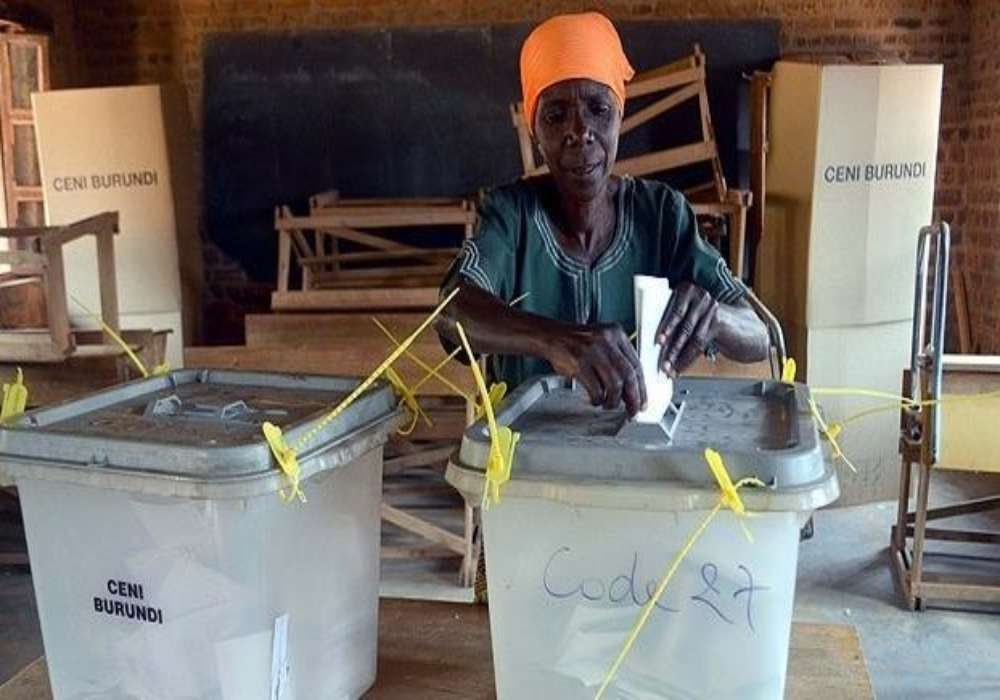
The Central African Republic (CAR) held presidential, legislative, regional, and municipal elections on December 28, 2025, the first municipal polls since 1988, in what UN Special Representative Valentine Rugwabiza called "the most extensive electoral operations ever undertaken" in the country. Incumbent President Faustin-Archange Touadéra won 76.15% of the vote with a 52.42% turnout, securing a third term after the Constitutional Court confirmed results on January 19 despite opposition claims of fraud. The elections unfolded against a backdrop of fragile security gains, including a N’Djamena ceasefire signed on April 19, 2025, between the government and two major armed groups, the Union for Peace in Central Africa (UPC) and Return, Reclamation, Rehabilitation (3R). The ceasefire ultimately led to their formal dissolution on July 10.
The vote represented a milestone in extending the state and its infrastructural powers. MINUSCA supported voter registration across 98% of centers (despite violence closing 58 voter registration centers) while securing polling stations even in hotspot areas. Provisional results showed Touadéra's United Hearts Movement dominating, with opposition fragmented by arrests and rally bans. Anicet-Georges Dologuélé took 14.66%, followed by Henri-Marie Dondra at 3.19%. Both rejected results citing irregularities, though the Constitutional Court upheld Touadéra's 77.9% final tally.
These elections were built on security improvements from the April ceasefire, mediated by Chad. UPC and 3R leaders publicly dissolved their political and military wings in Bangui, with fighters cantonmented at five sites for disarmament, demobilization, and reintegration. Since July 2025, over 1,200 combatants have surrendered weapons across operations in Ouham-Pendé, Basse-Kotto, and Nana-Mambéré prefectures. Local officials in Koui described the process as transformative after five years of 3R occupation, while former 3R Political Coordinator Yaya Amadou credited an "exceptional partnership" between government disarmament units and MINUSCA.
The N’Djamena agreement revived the 2019 Political Agreement for Peace and Reconciliation, under which nine of 14 armed groups had already dissolved. July ceremonies saw UPC's General Sembé Bobo and 3R's Ali Darassa lay down Kalashnikovs before President Touadéra, who called dialogue "not a sign of weakness" but essential for development. Chad's Defence Minister Issakha Malloua Djamous warned that CAR instability threatened regional security, positioning N’Djamena as guarantor of implementation. Disarmament operations continue, with teams from the National Disarmament, Demobilization, Reintegration, and Repatriation Program Execution Unit processing fighters through medical checks, vocational training selection, and reinsertion kits.
Yet structural challenges persist. The UN’s Multidimensional Integrated Stabilization Mission in the Central African Republic (MINUSCA) budget gap reached 63% by February 2, 2026, $733 million unpaid of $1.17 billion for July 2025-June 2026. This financial tension forced personnel cuts that Special Representative Rugwabiza said undermined civilian protection precisely when consolidation was needed most. Security remains uneven: 21 of 6,700 voting centers failed to open in the southeast due to militia attacks, while northeast and southeast hotspots continue militia operations targeting civilians and local authorities.
MINUSCA documented 46% fewer violations and 69% fewer victims by armed groups in November 2025 compared to prior months, though state security forces bore responsibility for most arbitrary arrests. November saw 232 violations, a 52% increase from October's 153, but reflecting variation across actors. UPC remained the primary armed group perpetrator at 115 violations. The Human Rights Division highlighted underreporting of conflict-related sexual violence, with approximately 180 additional CRSV allegations from 3R in October-November that security constraints prevented full investigation.
These elections tested the 2019 peace framework's resilience. The government integrated former UPC and 3R officials as ministerial counselors, while Wagner forces — accused of attacking ex-3R positions in August — continued supporting disarmament alongside MINUSCA. Temporary suspension of DDR during campaigning correlated with rising incidents in western and central regions, per CAR's UN envoy. Armed groups not party to N’Djamena, including anti-balaka factions, remain active, with clashes reported in Nana-Mambéré as recently as August.
Progress indicators include over 800 combatants disarmed since July across Maloum, Koui, and Sanguere-Lim operations. Residents like Adama Yaouba in Sanguere-Lim spoke of sleeping peacefully for the first time after years of fear. Sub-Prefect Larry Nordine Mahalba credited MINUSCA's multifaceted support for pacifying communities long traumatized by 3R control. The African Union Commission welcomed UPC/3R dissolution as revitalizing APPR-RCA, calling on remaining groups to join the inclusive dialogue.
The elections also exposed the limits of state-building under fragile peace. Opposition coalition BRDC largely boycotted, arguing 2023 constitutional changes enabling Touadéra's third term and the security environment precluded free competition. Human Rights Watch flagged pre-poll irregularities, including MP Dominique Yandocka's imprisonment despite parliamentary immunity. Voter registration reached 2.39 million, but 58 centers stayed shuttered due to violence, concentrated in Ouaka and Haut-Mbomou prefectures.
MINUSCA's mandate renewal through November 15, 2026, prioritizes civilian protection amid DDR acceleration. Resolution 2800 emphasized compliance with peace agreement benchmarks, including cantonment and reintegration of remaining fighters from 14 known groups. The Special Criminal Court continues investigations into atrocities since 2003, with 15 probes and three trials ongoing despite 2026 funding risks. Government efforts to extend security forces reached 11 of 20 prefectures for voter list revisions, though southeast prefectures like Mbomou remain WTA/Azanikpigbe strongholds.
The December vote demonstrated electoral feasibility where state authority could reach. Bangui's ceremony dissolving UPC/3R political wings before international witnesses marked symbolic progress after the 2012 rebellion resumption fractured the 2019 accord. Chad's mediation leveraged geographic proximity and mutual security interests, with fighters' cantonment preceding reintegration into security forces or civilian livelihoods. MINUSCA's logistical backbone — securing 6,679 of 6,700 polling sites- enabled 52% turnout despite nationwide challenges.
Fragility persists in funding and cohesion. The 63% MINUSCA shortfall threatens reverse gains as Wagner/Russian forces consolidate in gold- and diamond-rich east. Armed group splintering risks renewed cycles, with southeast militias preventing polling and northwest ex-3R rejecting cantonment terms. DDR verification challenges and resource gaps slow processing, while child soldier recruitment continues despite partial criminalization.
For a country where fighting slowed for the first time in years, per Human Rights Watch, these elections tested whether institutionalization could outpace fragmentation. Over 1,200 ex-combatants cantonmented since July signal momentum, but 63% mission underfunding and uneven security expose the tight margin between consolidation and relapse. With Wagner filling voids, MINUSCA cannot, and remaining groups beyond N’Djamena's reach, CAR demonstrates that elections alone do not equate stability; sustained DDR financing and inclusive reintegration do.
