
Inside Africa: Gabon Turns To The IMF, But Its Industrial Ambitions Are Already Waiting
Kristi Blokhin
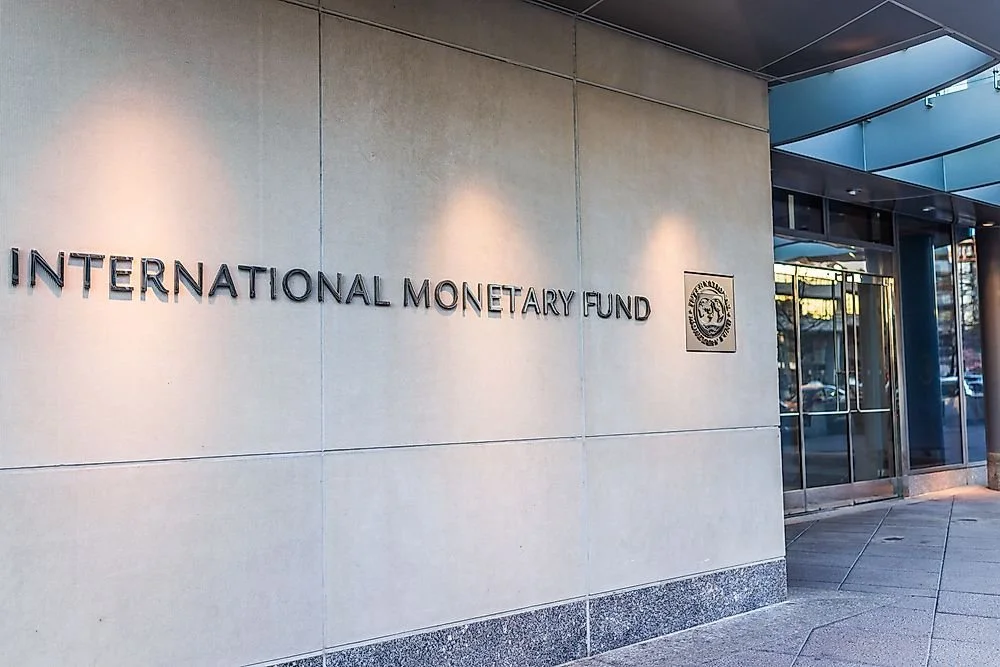
Gabon formally requested an arrangement with the International Monetary Fund in March 2026, days after an IMF team concluded a visit to Libreville. It was a significant shift for a country that had spent more than a year trying to navigate its fiscal pressures without a formal program. A 2021 extended credit facility had been suspended over implementation problems. Efforts to revive those discussions the following year collapsed when Gabon withdrew, citing the desire to try a different approach. When the government returned to the table in January 2026, announcing it would implement a new economic growth program with the Fund's support, it was not an act of confidence; it was a concession that the room for maneuver had narrowed.
The fiscal picture explains why. Gabon's public debt reached 72.5% of GDP in 2024, already above the 70% convergence ceiling set by the Central African Economic and Monetary Community (CEMAC). The World Bank projects that figure will rise to 80.2% in 2025, 82.6% in 2026, and 86.1% by 2027. Debt service consumed 42.6% of total public revenues in 2024. Public expenditure jumped 24% in the same year, with capital investment rising 155%, even as oil revenues, which provide the structural foundation for the Gabonese state's finances, declined. In February 2025, the government repurchased Eurobonds at 12.7%, a yield that reflected the market's estimate of default risk. External arrears accumulated to 1.8% of GDP.
The decision to replace Finance Minister Henri-Claude Oyima on January 2, 2026 was the most visible signal that the government's finances were strained. Oyima had been appointed after President Brice Clotaire Oligui Nguema's near-unanimous election victory in April 2025, a contest whose outcome was never in doubt once trade union leader Jean-Rémy Yama was excluded from the race over disputed documentation. Technical adviser Thierry Minko was installed in his place as "minister of finance, economy, debt, and shareholdings," with a mandate explicitly framed around combating high living costs. Fitch had by then already cited an increasing fiscal deficit and a lack of creditor funding as the basis for downgrading Gabon's foreign currency issuer default rating.
What the Fund Wants
The IMF's demands following the March 2026 mission are consistent with its previous assessments. After concluding its 10-day visit on March 6, the Fund welcomed recent steps taken by Libreville but stressed that reforms must continue, highlighting the importance of improving public financial management, governance, the business climate, and anti-corruption efforts. In its earlier 2024 Article IV consultation, the IMF had been direct about the underlying structural problem. Gabon's economic outlook would hinge on authorities’ ability to correct the fiscal position, ensure transparency, and make progress on diversification. The non-oil primary deficit had remained stubbornly large, running at around 15% of non-oil GDP, and the Fund noted that oil revenues were declining structurally, not cyclically.
The 2029 Bet
Yet the government simultaneously holds a different ambition, one that points in an economically uncomfortable direction. In May 2025, Oligui Nguema announced that Gabon would ban the export of raw manganese from January 1, 2029. Gabon is the world's second-largest manganese producer. Its output reached 9.4 million metric tonnes in 2024, the vast majority shipped in raw form. Manganese, used in stainless steel production and battery manufacturing, sits alongside oil and timber as one of the country's three primary export earners. The logic behind the ban is straightforward: by forcing domestic processing, the government aims to develop an industrial base, create skilled employment, and extract greater fiscal value from the country's mineral wealth. A public-private investment fund is being planned to support the transition, and the industry has been given three years to invest in local processing facilities. The government's longer-term ambitions are still broader. The National Plan for Growth and Development 2026–2030 targets raising mining's contribution to GDP from around 6% to more than 30% over the next 15 years.
The problem is that the two projects — fiscal consolidation and industrial transformation — carry contradictory demands on public spending, energy infrastructure, and institutional capacity, all in the same compressed timeline.
At the Mining Indaba conference in Cape Town in February 2026, Gabon's mining minister Sosthene Nguema Nguema was asked about industry warnings that chronic power shortages could prevent companies from constructing manganese refineries in time. "Energy is a false debate," Nguema told Reuters. "Some operators have already demonstrated processes that reduce energy use by 40 to 60%. So we do not expect energy to be a reason for anyone not to comply in 2029." His confidence may be warranted in specific technical applications, but it does not resolve the structural picture. Power shortages are a documented feature of Gabon's industrial environment, hampering energy-intensive operations across the country. France's Eramet, the largest manganese producer operating in Gabon, has expressed willingness to cooperate with the ban, but has cited power limitations as a genuine operational challenge. Eramet's additional vulnerability comes from its own management crisis. Its CEO was dismissed on February 1, 2026, though the company stated the decision does not alter group strategy. The minister's response was unambiguous: "Eramet must comply like everyone else."
Compliance is one thing, timeline is another. Silicomanganese processing is capital-intensive. It requires not just refinery construction but reliable baseload power, logistics infrastructure capable of handling heavier processed loads, and a trained technical workforce that does not currently exist in sufficient numbers. The World Bank projected modest growth of 2.4% annually for Gabon over the 2025–2027 period, alongside persistent fiscal deficits exceeding 5% of GDP. Against that backdrop, the financing of industrial infrastructure is largely dependent on private investment that will not materialize unless operating conditions, including energy supply, are credibly improved. The IMF's fiscal consolidation conditions push in the opposite direction, reducing the public expenditure that had previously funded infrastructure expansion at scale.
The Pattern That Worries
The nation’s history in this regard is not encouraging. Gabon's previous managed transition from raw timber exports to processed timber, a policy the Ali Bongo government pursued, proceeded slowly and incompletely, and the outcomes fell well short of the employment and value-addition targets originally announced. The broader structural challenge is that more than a third of Gabon's 2.3 million people still live in poverty, and oil-funded prosperity never translated into economic diversification at the household level. Ali Bongo promised much reform and modernization.
The April 2025 elections left Oligui Nguema's Union des Bâtisseurs (Union of Builders) without a meaningful political opposition — leading candidates were disqualified before voting began, and the results were never in doubt.That political dominance gives the president the authority to impose difficult reforms. Whether it gives him the institutional capacity to execute them simultaneously is a separate question.
The IMF program, if concluded, would provide external anchoring for fiscal discipline and potentially unlock additional financing from multilateral and bilateral creditors. But IMF-supported programs in resource-dependent African economies have a well-documented pattern. Fiscal consolidation shrinks public investment, private investment responds slowly, and the structural transformation that gives the adjustment political legitimacy arrives too late to compensate for the short-term compression. Gabon's debt service obligations alone, at 42.6% of revenues, leave almost no room for the public co-investment that would accelerate a genuine industrial transition.
Oligui Nguema's political legitimacy rests on being the man who ended the Bongo dynasty. His economic credibility will rest on something harder to deliver. A tangible improvement in the daily lives of a population that has grown accustomed to the gap between its country's mineral wealth and its own living standards. The IMF reset offers a chance to stabilize the finances and rebuild creditor confidence. The manganese ban offers a chance to break the structural dependence on raw commodity export. Both are necessary. The question that Gabon has not yet answered, and that the next three years will force into the open, is whether both can be done at once, in a country where the power grid is unreliable, the skilled workforce for industrial processing does not yet exist at scale, and the public finances can no longer absorb the cost of building them fast.
