
Inside Africa: Gas Rich, Power Poor: Why Cabo Delgado's LNG Boom Hasn't Lit Up Mozambique
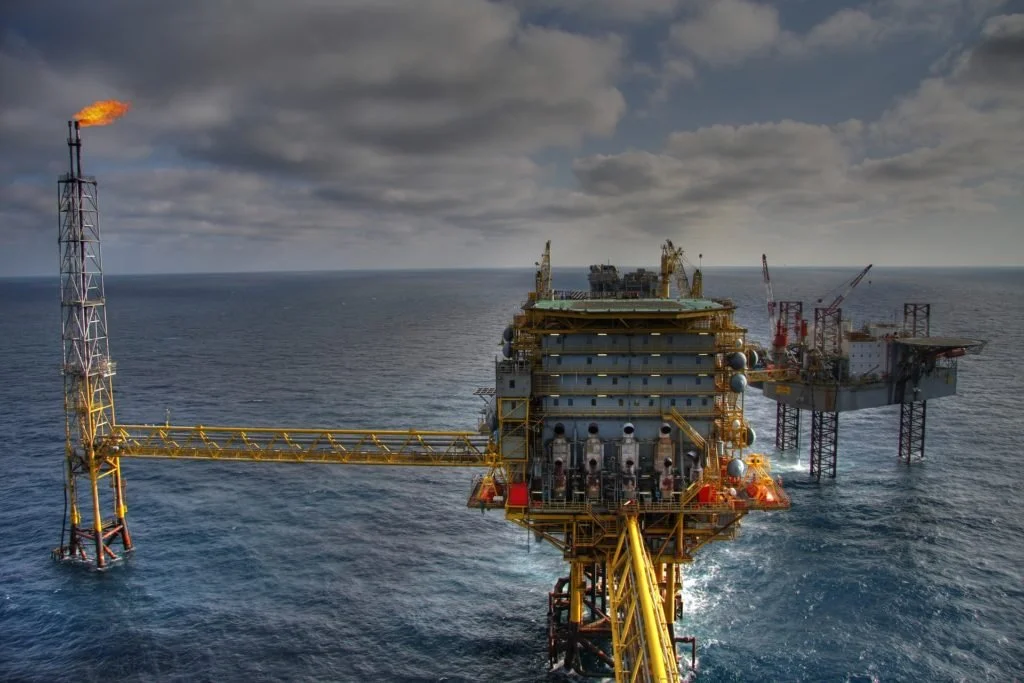
On January 29, 2026, Patrick Pouyanné, the chief executive of TotalEnergies, stood beside Mozambican President Daniel Chapo on the Afungi peninsula in Cabo Delgado and declared the full restart of a $20 billion liquefied natural gas project, the largest private investment on the African continent, after nearly five years of suspension. The project is expected to generate as much as $35 billion for government coffers over its lifetime in taxes, royalties, and profit-sharing.
Roughly 200 kilometres from that ceremony, families in Cabo Delgado's interior were cooking dinner over charcoal. In displacement settlements across the province, every site assessed by humanitarian agencies sits below the internationally recognized minimum threshold for energy access, with 62% of households relying on charcoal and 38% on raw wood. The juxtaposition is not accidental. It is structural, the product of a development logic that exports gas at scale while the communities sitting closest to it remain among the most energy-poor in Southern Africa.
The Scale of the Boom
Mozambique's gas story begins in the Rovuma Basin, where three trillion-dollar-scale projects sit in various stages of development. The first to produce, Eni's Coral Sul floating liquefied natural gas (LNG) platform, has operated since November 2022 and by September 2025 had exported 137 shipments, delivering $235 million in total revenue to the Mozambican state. In January 2026, Eni signed the Final Investment Decision for a second platform, Coral Norte, a $7.2 billion project expected to begin production in 2028 and generate an estimated $23 billion for Mozambique over 30 years. The TotalEnergies-led project at Afungi, 40% complete and targeting first output in 2029, is designed to produce more than 13 million tonnes annually. A 2024 Deloitte study put total potential revenues from Mozambique's gas reserves at up to $100 billion.
But the fiscal logic runs on a longer timeline than the political rhetoric suggests. LNG revenues from Coral Sul totalled $91.8 million in 2024, a 21.8% increase year-on-year, but still just 0.3% of GDP. The government's own medium-term fiscal scenario acknowledges that LNG revenues are “expected to remain around 0.3% of GDP during the period.” Oxfam's independent modeling found that the government's share only begins generating substantial flows in the 2030s, and that cost overruns push that further back. Mozambique's Centre for Public Integrity published an analysis in March 2026 identifying more than $4.5 billion in costs claimed by the Mozambique LNG consortium, costs that, if realized, could delay meaningful fiscal returns by years or decades. The boom is real. The revenues that could finance structural development remain, for now, largely a promissory note.
The Access Deficit
The World Bank's Global Electrification Database puts electricity access in Mozambique at 36% of the total population in 2023. EDM, the government utility, uses a higher figure, 60.1% in 2024, but this counts connections rather than reliable access and includes systems households describe as intermittent. Whatever the metric, 17.5 million Mozambicans lack electricity, and the rural-urban gap is severe. While 75% of urban residents had access in 2020, only about 5% of rural residents did, and more than 62% of Mozambicans live in rural areas. Only about 5% of the population has access to clean cooking fuels, placing Mozambique among the bottom 20 countries globally on this measure. Academic projections suggest solid biomass will remain responsible for 50-60% of total final energy consumption even by 2030, a health and deforestation crisis borne overwhelmingly by rural, poor, and female-headed households.
Some genuine efforts are underway. The government's Energy for All programme secured 434,289 new electricity connections in 2025, and between 2020 and 2024, more than 514,000 households were connected under the predecessor ProEnergia project. These are real gains, while also being slower than the arithmetic of a 2030 universal access target requires.
Cabo Delgado: The Province at the Centre
Cabo Delgado holds the gas. It also holds the insurgency. Since October 2017, at least 6,498 people have been killed in political violence in a conflict between the Islamic State Mozambique and Mozambican and Rwandan security forces. As of March 2026, the insurgency continues. Mocímboa da Praia, Macomia, Muidumbe, and Quissanga districts remain active conflict zones. Security has improved specifically around Afungi, but the security of the construction site and the security of the province are not the same thing.
Cabo Delgado is set to receive 223.5 million meticais, roughly $3.8 million, out of a total 862.8 million meticais allocated for community resource transfers in 2026. Against the backdrop of a province where 800,000 people were displaced by conflict at its peak, and where displacement settlements record universal energy poverty, the gap between the scale of extraction and the scale of community benefit is difficult to close rhetorically. TotalEnergies points to its $200 million Mozambique LNG Foundation as evidence of community investment, but the analytical question is not whether such commitments exist; it is whether their scale and governance match the permanence of extraction.
The Structural Logic
The pattern in Mozambique is not unique. Large-scale extraction serving export markets, governed by contracts whose fiscal terms delay host-state revenues into the medium term, while communities adjacent to extraction receive a fraction of the value generated and bear most of the immediate costs, is a well-documented trajectory in African resource economies.
What makes Mozambique's version distinctive is the convergence of factors. One of the world's poorest countries, a gas-hosting province devastated by eight years of insurgency, a government politically weakened by a contested election, and a fiscal architecture opaque enough that Mozambican citizens cannot independently assess whether the deal their government signed is a good one. Whether Mozambique's gas strategy will ultimately close the energy access gap, or deepen the “export first, electrify later” pattern, depends on transparency in fiscal negotiations, the effectiveness of community transfer mechanisms, and whether the political will exists to link extraction revenues explicitly to electrification targets in Cabo Delgado itself.
