
Inside Africa: Benin’s New Parliament, What Happens When Electoral Competition Is Filtered Before Voting Begins
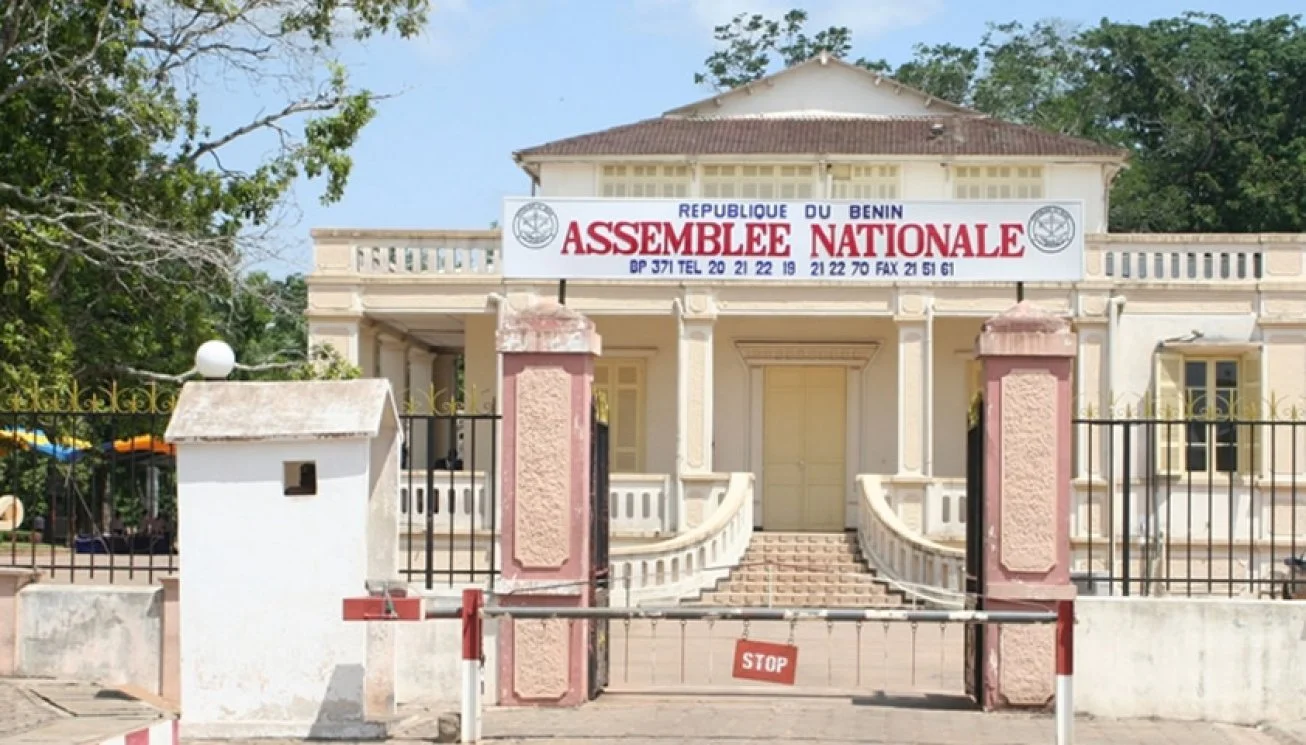
In January 2026, Benin’s Constitutional Court confirmed a parliamentary result that gave all 109 seats in the National Assembly to two parties aligned with President Patrice Talon: the Union Progressiste Le Renouveau (UP-R) and the Bloc Républicain (BR). According to the court’s final proclamation, UP-R won 41.21% of the vote and 60 seats, while BR took 36.62% and 49 seats. The main opposition party, Les Démocrates, received 16.20% of the national vote but no seats. Turnout stood at 36.74%, a low figure for an election that effectively determined the full composition of parliament.
That outcome was not primarily the product of a sudden collapse in opposition support. It was the result of an electoral framework that has been tightened over several years and then sharpened again in March 2024, when Benin’s National Assembly amended the electoral code ahead of the 2026 cycle. International IDEA’s Democracy Tracker described the changes clearly: the law raised the threshold for parliamentary representation from 10% of votes in an electoral district to 20%, with only limited exceptions for coalitions, and also increased the level of support required to stand for the presidency from 10% to 15% of representatives and mayors, restricting sponsorship to candidates from the same party as the sponsor.
The significance of those changes becomes clearer when read alongside the broader trajectory of Benin’s political system. International IDEA notes that earlier reforms in 2018 had already introduced stringent procedural requirements that disadvantaged opposition parties and prevented them from participating in the 2019 legislative elections. Although opposition parties returned to parliament in 2023, the 2024 amendments shifted the system again, raising the barriers to representation and narrowing the space for effective competition.
How The 20% Rule Changes The Meaning Of A Vote
On its face, a threshold is not unusual. Many electoral systems use thresholds to limit fragmentation and encourage broader coalitions. Benin's case is different because the threshold is exceptionally high by any regional or global measure. Across proportional representation systems worldwide, formal legal thresholds typically range from 0.67% in the Netherlands to 5% in Germany, New Zealand, and several other established multiparty democracies, according to the ACE Electoral Knowledge Network, the leading comparative reference on electoral system design. Turkey's 10% threshold– widely cited as among the most restrictive in the world– drew international criticism in 2002 when it caused 46% of all votes cast to be effectively wasted. Benin's 20% threshold, applied at the constituency level across all 24 districts simultaneously, is double that figure. Within West Africa, comparable proportional systems in Togo and Senegal do not impose comparable numerical bars. Benin's threshold, in other words, is not a moderate safeguard against fragmentation. It is one of the highest formal representation thresholds of any functioning parliamentary system on record, operating in a competitive landscape that has already been narrowed by prior party registration reforms. The result is that a party can attract a meaningful share of the vote nationally and still be shut out of parliament altogether.
That is what happened in January. The Constitutional Court’s final results show that Les Démocrates received 16.20% of valid votes, making it the third-largest party in the contest. But because only parties crossing the legal 20% threshold were eligible to share seats, those votes translated into no parliamentary representation at all. The same applied to the Force Cauris pour un Bénin émergent (FCBE), which took 4.78%, and Moele-Bénin, which won 1.19%.
This is the critical shift in Benin’s system: the election is no longer only about who wins the most votes. It is also about who is legally permitted to convert votes into representation. In practice, that favors parties with established national machinery and access to institutional power. The two governing parties had that advantage. The opposition did not.
BTI’s 2026 Benin report describes the 2024 electoral code as “contentious” and notes that opposition parties mobilized against it. At a joint press conference in March 2024, five opposition parties, including Les Démocrates and the FCBE, publicly condemned the new code as "insipid, pernicious, toxic, riddled with inconsistencies and leonine clauses,” arguing it was designed to build a “legal and institutional ecosystem favouring exclusion and reducing the field of political expression to a single partisan minority” close to the president. When the Constitutional Court upheld the law days later, Éric Houndété, leader of Les Démocrates, called the decision “a decision of shame” and accused the court of “intellectual acrobatics” to reach a predetermined conclusion. The government accepted a subsequent opposition demand for an electoral register audit and funded it in early 2025, but the legal framework under which the January 2026 election was held remained unchanged.
The Sponsorship System And The Narrowing Of Presidential Competition
The parliamentary threshold is only one part of the architecture. The same 2024 reform also tightened access to the presidency by increasing sponsorship requirements. International IDEA notes that presidential candidates must now be backed by at least 15% of representatives and mayors across the country, up from 10%, and that sponsors can only back candidates from their own party.
That detail matters because the elected offices that provide sponsorship are themselves dominated by the pro-government bloc. Political sociologist Narcisse Yédji argues that this mechanism effectively allows governing forces to gatekeep who can compete for the presidency. In official justifications, the sponsorship system is presented as a way to screen out unserious candidates and ensure that only figures with broad political backing run for president. In practice, as opposition parties and analysts have pointed out, it concentrates control over access to the ballot among actors already inside the dominant coalition.
The parliamentary and presidential rules reinforce one another. A party that struggles to enter parliament under the 20% threshold also struggles to accumulate the elected officials needed to sponsor a presidential candidate later. Representation becomes not just a reward for support, but a prerequisite for future competitiveness. Over time, that transforms a multiparty system into something closer to a managed two-party arena, except both dominant parties are aligned with the same governing center.
From Democratic Model To Managed Competition
Benin still benefits from the institutional memory of its post-1990 democratic transition and is often contrasted favorably with countries where military coups or open authoritarian reversals have broken electoral continuity. But continuity alone is no longer enough to explain the country’s political trajectory. International IDEA’s Benin tracker notes that since 2016, the government has faced criticism for undermining political institutions by co-opting the legislature, weakening judicial independence, and constraining the media. The same tracker links earlier electoral reforms to the exclusion of opposition parties from the 2019 legislative elections and to the broader deterioration in representation.
The 2026 parliamentary result crystallizes what those cumulative reforms have produced. Two ruling-aligned parties won every seat in parliament. The largest opposition party won more than 16% of the vote and still received nothing. The formal language of multiparty democracy remains intact, but the effective range of competition has narrowed sharply.
One argument in defense of these reforms is that Benin’s earlier party system was excessively fragmented and encouraged weak, personalistic formations rather than coherent national platforms. Higher thresholds, from this perspective, promote consolidation and governability. That logic is not unique to Benin. But the risk is that reforms justified in the name of rationalization can move beyond consolidation into exclusion, especially when they are layered onto a system in which the governing bloc already dominates the institutions that regulate entry.
The Larger Question
The central question raised by Benin’s January election is not whether the law was followed. It was. The question is what kind of political system the law is now producing. If a party can win a substantial share of votes and still be erased from parliament, and if presidential candidacy depends on sponsorship controlled by the same dominant political forces, then the electoral arena begins to function less as an open contest than as a filtered one. That is why the most important story in Benin is no longer simply who won the latest election, but how the rules have changed what winning, losing, and even participating now mean.
