
Inside Africa: When an ID Becomes a Wall: Uganda’s Digital System and the People It Leaves Out
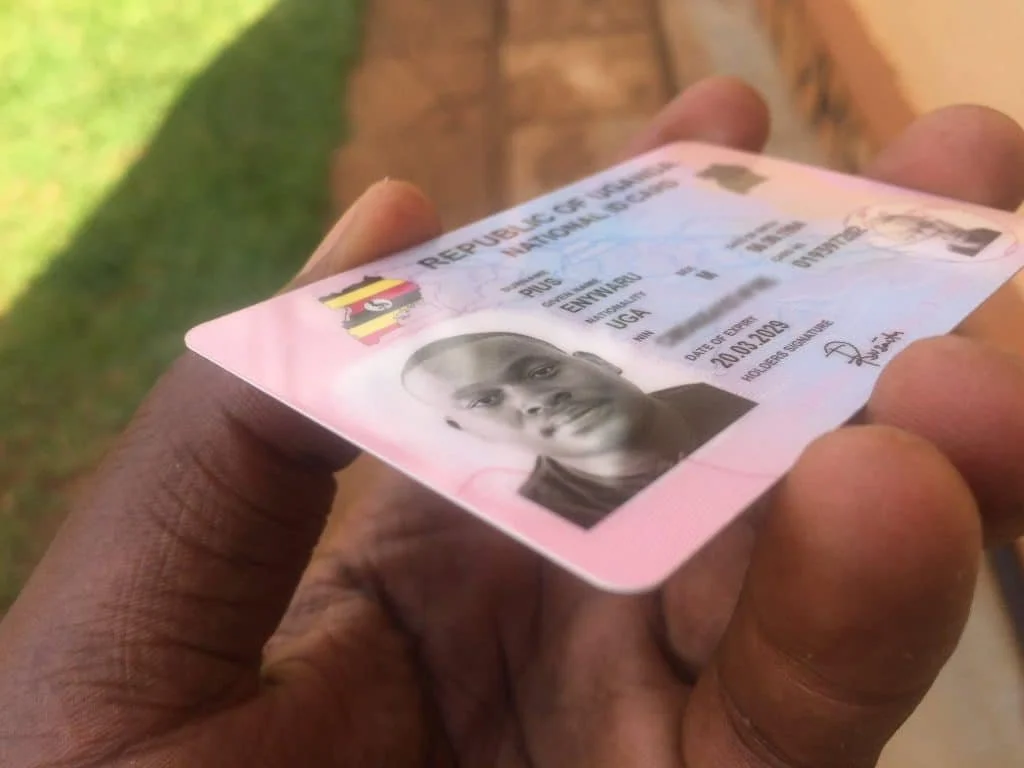
Uganda’s national digital ID, Ndaga Muntu, was sold as a gateway to services; for millions, it has become a wall. Central to voting, cash transfers, health care, SIM registration, and formal finance, it now decides who counts in the eyes of the state and who is left to improvise on the margins. Civil society research suggests roughly a third of Uganda’s adults still lack an ID, even as the card has become the only accepted key to essential services. The result is a system that shuts out the people it was meant to reach.
A card that decides who counts
Ndaga Muntu, rolled out starting in 2014, was introduced with a familiar promise: a single, secure identity to streamline elections, social protection, and access to state services. By 2015, the Registration of Persons Act had made the ID or its number effectively mandatory for everything from SIM registration to opening a bank account, enrolling to vote, or receiving social benefits, and created the National Identification and Registration Authority (NIRA) to manage the system.
The government framed this as an inclusive agenda: everyone would be known, reachable, and legible to the state. But the system was built around a high‑friction, document-heavy registration process and an under-resourced bureaucracy, so large numbers of people never made it into the registry at all. For them, tying basic rights to Ndaga Muntu turns a promise of inclusion into a mechanism of exclusion.
Women and the paperwork the system refuses to see
Uganda’s ID regime assumes citizens can produce formal, often urban-centric documentation: birth certificates, church or court marriage certificates, and written proof of address. For many Ugandan women, particularly in rural areas, that assumption fails. Customary marriages do not generate the paperwork NIRA demands, and moves after marriage may not be reflected in any formal records.
Regional research on East Africa notes that adult women are consistently less likely than men to hold official IDs, reflecting structural barriers from social norms to documentation rules. In Uganda, those barriers become lethal when IDs are made mandatory for health care. Ugandan rights groups have documented repeated cases of women and children being turned away from clinics or vaccination points because caregivers (guardians, mainly women accompanying their children) lacked Ndaga Muntu, a pattern that surfaced sharply when national IDs were briefly proposed as a requirement for COVID‑19 vaccination— a move civil society pressure forced the Ministry of Health to abandon. The system reads this as individual failure to comply; women’s advocates read it as a design choice that ignores how women actually live.
Old age, worn fingerprints, and SAGE
Older Ugandans are among the people most harshly hit by this design. The Senior Citizens’ Grant, the country’s flagship cash transfer for the elderly, requires a national ID to open the bank accounts through which payments are made. Yet older people, especially in rural areas, are the least likely to have ID cards and the least equipped to fix problems when registrations go wrong.
A lifetime of manual work leaves fingerprints worn and difficult for scanners to capture. Furthermore, elders may not know an exact date of birth, and correcting errors in NIRA’s database involves fees and travel they cannot afford. Civil society organizations describe cases where elderly beneficiaries lost access to grants for years because of minor data-entry mistakes, with no realistic avenue for redress. Even as the government has lowered the eligibility age and increased the grant amount, it has maintained the ID requirement, broadening the scheme on paper while leaving the core barrier intact.
Informal workers, distance, and everyday exclusion
For informal workers and rural residents, the exclusion is as logistical as it is legal. Registration and card collection are concentrated in district centres far from where most Ugandans actually live. Studies by Ugandan NGOs describe manual laborers and market traders losing multiple days’ income to travel and wait at NIRA offices, only to be met with unmanageable queues, rejected biometrics, or malfunctioning systems.
These are the same groups most likely to need subsidized health care, social protection, and access to formal financial services. Instead, Ndaga Muntu functions as a filter. Those with the time, money, and documentation to navigate the process pass through; those without are classified, in practice, as ineligible.
Minorities the Constitution refuses to name
Digital ID has also hardened older exclusions. Uganda’s Constitution grants citizenship by birth to members of “indigenous communities” listed in an annex; groups left off that list, such as the Maragoli, struggle to obtain recognition and thus an ID. In recent years, NIRA has withheld thousands of Maragoli IDs or insisted they register under other tribes, leaving many without valid documents and locked out of health services, bank accounts, and government programmes. Reporting by Minority Rights Group and others shows how some Maragoli have been pressured to register under another tribe to secure a card, while those who refuse live without documentation and are shut out of loans, formal work, and government services.
Research ICT Africa points out that when digital ID systems are built on top of such legal frameworks, they efficiently reproduce the underlying discrimination. In practice, the digital ID system reflects the exclusions already built into Uganda’s legal and political framework, rather than correcting them.
Built by security, branded as social protection
Ugandan researchers stress that Ndaga Muntu’s problems flow from its origins. The system emerged from a National Security Information System project tied to electoral management and policing, not a universal welfare registry. It collects far more data than is strictly necessary for service delivery, including ethnicity, clan, tax information, and detailed family links, raising fears about surveillance and abuse.
Regional analyses in African fora argue that when a security‑driven infrastructure is made mandatory for basic services, access to rights becomes contingent on compliance with a project that citizens did not design. In Uganda, that has meant that those who cannot clear the bureaucratic hurdles, women without formal marriage certificates, older people with unreadable fingerprints, informal workers far from registration centres, and unrecognized minorities are quietly written out of the system.
Civil society’s counter‑design
Ugandan civil society has pushed back by framing Ndaga Muntu as a constitutional problem, not a technical one. In 2022, the Initiative for Social and Economic Rights, Unwanted Witness, and the Health Equity and Policy Initiative sued the government, arguing that making access to health care and the Senior Citizens’ Grant conditional on Ndaga Muntu violates rights to health, social security, equality and non‑discrimination.
Their demand is carefully scoped– not to abolish digital ID, but to require fallback forms of identification for core services and to recognise that a system excluding a third of adults cannot be the only gateway to survival. Research ICT Africa and other African policy bodies echo this: digital ID is not inherently exclusionary, but it becomes so when built on fragile civil registration, under-resourced institutions and pre‑existing inequalities.
Who, then, benefits from Uganda’s digital ID? In its current form, Ndaga Muntu works best for urban, documented citizens whose lives already fit bureaucratic templates, and for a state that seeks tighter administrative and security control. For those on the margins, it is less a key than a reminder that, in the eyes of the system it powers, they were never fully counted to begin with.
