
Inside Africa: The Bill That Never Left: How Chad's Oil Debt Keeps Shaping Its Future
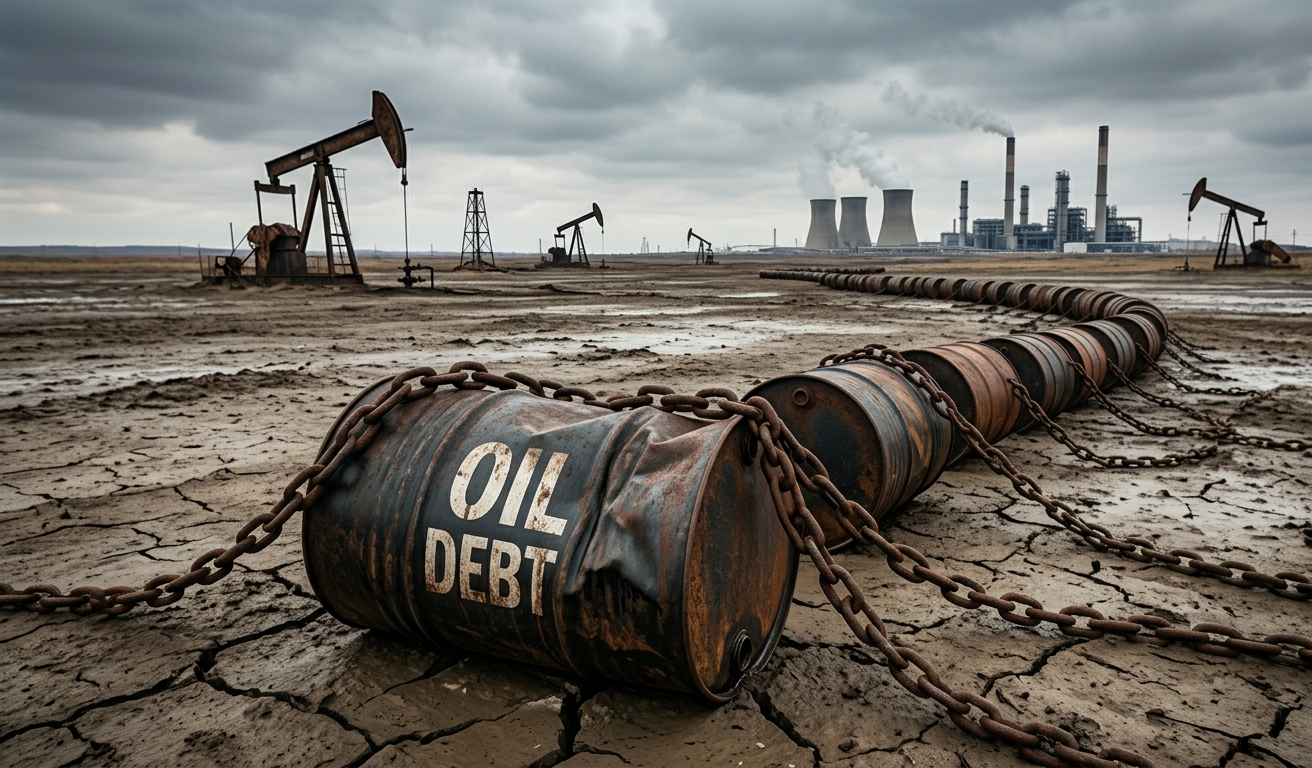
When Mahamat Idriss Déby was sworn in as Chad's president in May 2024, officially ending three years of military rule, the country was presented as the Sahel's democratic outlier, the first in a regional cluster of junta-led states to hold elections and return to civilian governance. What received far less attention was the financial architecture quietly constraining Déby's government long before he took office. That architecture has its roots in a commodity loan signed a decade ago with a Swiss trading company, and in an earlier experiment in oil governance that the World Bank once championed as a model for Africa before declaring it a failure.
A Loan, a Price Crash, and a Decade of Consequences
In 2013 and 2014, Chad's state oil company entered into oil-for-cash agreements with Glencore, the Swiss commodities trading giant, borrowing approximately $1.45 billion to be repaid through crude oil shipments. Part of the proceeds purchased an equity stake in the Doba oil consortium. The repayment schedule was agreed at a time of high oil prices, which fell sharply soon after. Within weeks of the final signing, those prices collapsed.
With most of its oil output suddenly obligated to service the Glencore debt, Chad had little revenue left for anything else. An investigation by SourceMaterial, a non-profit journalism organization, published in 2024, documented what followed. The health budget was cut by half, university fees doubled, and austerity from 2015 onward drove large parts of the population deeper into poverty. Amnesty International, in documenting the same period, found that pregnant women were delaying ante-natal care they could no longer afford and that student scholarships were withdrawn without notice.
By 2017, the IMF had declared Chad's commercial debt, accounting for nearly all of the country's external commercial obligations, to be unsustainable, and pressed Glencore to restructure. The firm did so twice, in 2015 and 2018, extending deadlines without reducing the principal.
The Common Framework's First Test
In January 2021, Chad became the first country to formally request debt treatment under the G20's Common Framework, a mechanism created during the COVID-19 pandemic to coordinate restructuring across Paris Club creditors and newer bilateral lenders including China. After bilateral creditors agreed in June 2021, Glencore, which held approximately one-third of Chad's nearly $3 billion in external debt, stalled for over a year before joining in late 2022.
The resulting agreement reprofiled, but did not reduce, Chad's total debt. World Bank President David Malpass said at the time that the deal provided "no immediate debt reduction" and that "the debt service burden of Chad remains heavy and is crowding out priority expenditures on food, health, education and climate". Debt advocacy organization Debt Justice noted that Glencore had been rewarded for blocking relief for two years. Bilateral creditors had justified the absence of cancellation by pointing to higher oil prices, pledging to reconvene if they fell.
That conditionality matters. Chad's oil GDP growth averaged only 1.7 percent from 2020 to 2023, compared to a projected 9.9 percent, and oil production has continued to decline.
The Earlier Template– and Why It Collapsed
The current debt dynamic cannot be fully understood without the Doba pipeline, once held up as proof that oil revenues in a fragile state could be managed responsibly. The Chad-Cameroon pipeline project, backed by ExxonMobil, Chevron, and Petronas and supported by the World Bank, came online in 2003 with a detailed revenue management law. A portion of oil proceeds was to be directed to health, education, and infrastructure, with 10 percent ring-fenced for a Future Generations Fund.
The system unravelled within two years. In 2005, Chad's National Assembly amended the Petroleum Revenue Management Law, weakening its poverty-reduction conditions. World Bank President Paul Wolfowitz called the changes a "material breach" and suspended disbursements in 2006. A 2007 memorandum of understanding required Chad to direct 70 percent of oil revenues to priority sectors; it was not upheld. In September 2008, the government repaid its pipeline-related credits and the World Bank ended its engagement in Chad's petroleum sector entirely. Scholars later described the project as a failure of the Bank's attempt to overcome the "resource curse" through contractual conditionality in a politically fragile environment.
The lesson was not only about governance. It was about the fundamental difficulty of sustaining externally designed fiscal frameworks when a state faces genuine security pressures and domestic political incentives pointing in a different direction.
Transition, Consolidation, and What the New IMF Programme Leaves Open
In July 2025, the IMF Executive Board approved a new four-year Extended Credit Facility for Chad worth $625 million, supporting the government's national development strategy, "Chad Connection 2030". The program includes commitments on domestic revenue mobilization, governance of state enterprises, and targeted social spending. The transition was formally completed in February 2025 when senatorial elections finalized the institutional framework under the new constitution.
The program rests on assumptions that Chad's recent history gives reason to scrutinize. The World Bank estimates the poverty rate will rise to 45.4 percent in 2025, with approximately 9.5 million people in extreme poverty, projected to reach 47.6 percent by 2027. Oil production is declining, and the IMF noted in the first review of the new programme, completed in December 2025, that oil revenues were running below projections through the first three quarters of 2025. The fiscal consolidation the program requires is to be achieved while debt service continues.
There is also a transparency question the restructuring process did not fully resolve. SourceMaterial's 2024 investigation revealed leaked documents suggesting millions of dollars in payments to a middleman who simultaneously served as Chad's official representative in loan negotiations with Glencore and, according to the documents, as a covert agent for the trading company itself. No legal accountability has followed.
The question at the centre of Chad's current fiscal situation, whether a government borrowing against a declining oil resource under opaque terms can use a constrained programme window to build durable institutions and reduce poverty, is not one that any IMF arrangement can resolve on its own. It was there when the pipeline came online in 2003, when the World Bank left in 2008, and it hangs over Mahamat Idriss Déby now as he tries to turn a contested transition into a lasting mandate.
