
Naija Focus: voters are dissuaded from the presidential election given corruption
Tope J. Asokere
The presidential general election is quickly approaching this January 2027. In spite of decreased trust in the Nigerian government, voters are more optimistic about heading to the polls, with 76% of respondents to a YIAGA Africa poll holding the belief that their vote can influence the outcome of the election.
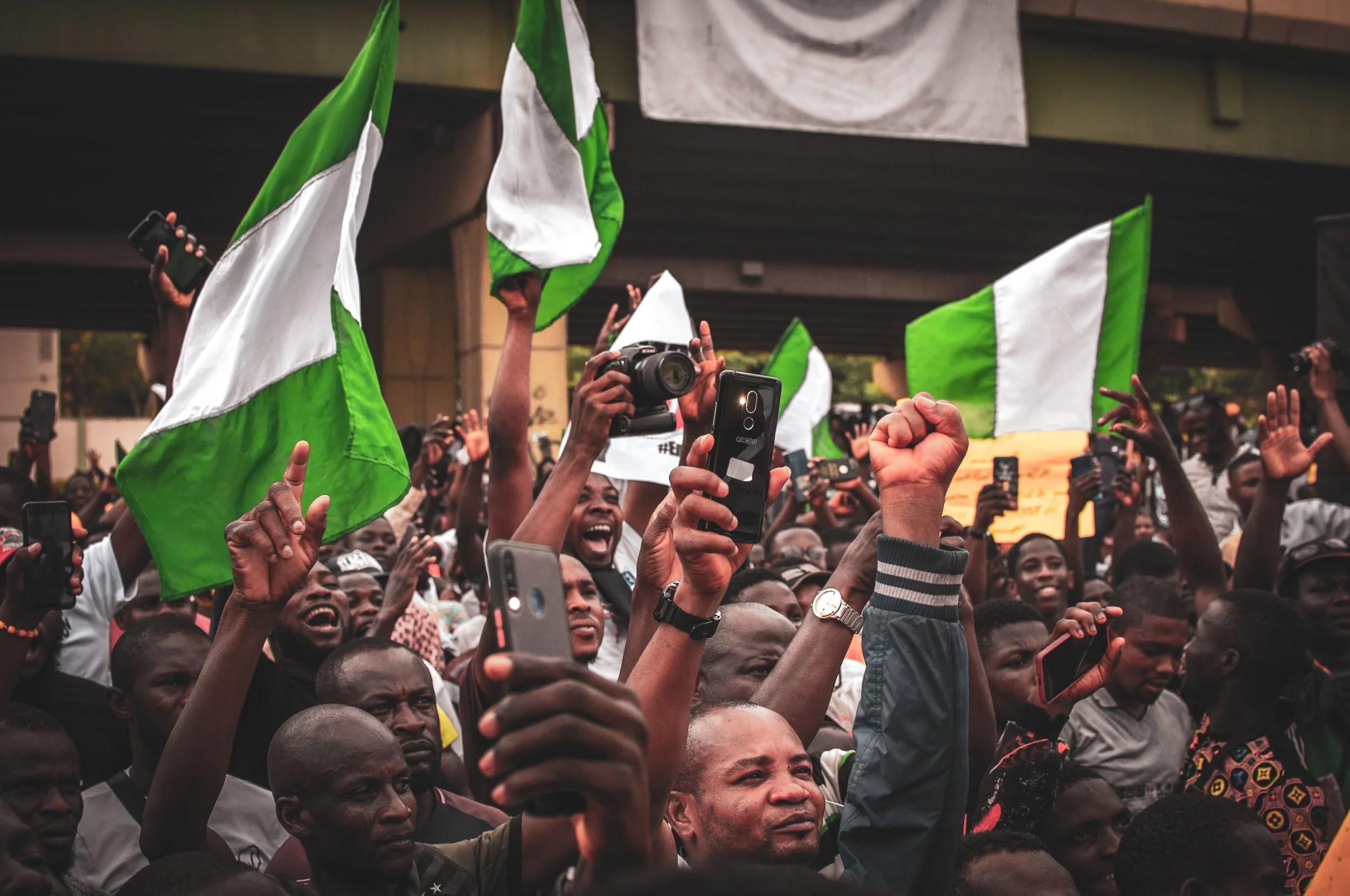
According to a National Voting Intentions Survey by YIAGA Africa, 77% of respondents say they are likely to vote in this upcoming 2027 presidential election, despite 44% fearing violence as the primary barrier to voter participation. Yet, just 30% of those aged 18-35 say they will vote. Young people are increasingly disillusioned from the voting process given corruption and lack of improvement concerning their material needs.
In a May 2024 assessment by the African Polling Institute, President Bola Ahmed Tinubu, from the center-left leaning APC (All Progressives Congress), faced a significant disapproval rating one year into his leadership, with 78% of Nigerians believing the President’s job performance to be poor or very poor. This sentiment is in part due to the country being mired with unaddressed poverty levels as well as insecurity due to kidnappings by jihadist groups.
Yet, according to a 2026 Oxford Metro Analytics Poll, the tide has turned as President Tinubu is gaining the most momentum running up to the election, with Peter Obi of the NDC (Nigeria Democratic Congress), a broad opposition party, taking second place, and Atiku Abubakar of the ADC (African Democratic Congress), a progressive, reformist opposition party, taking third. In total, there are 18 political candidates from 18 respective parties running for the 2027 presidential election.
Voter turnout in Nigerian presidential elections has steadily declined since 2003, from 69% in 2003 to just 27% in 2023, according to the Independent National Electoral Commission.
Amongst fear of violence, Nigerian voters are dissuaded by evident corruption during the electoral process.
“It’s not that people will not show up.” Ochechi Adah, a Nigerian and mental health counselor currently living in Chicago, Ill. said. “You see, with Nigeria, elections are bought. And they don’t hide it. Politicians in Nigeria – they buy voters. So even when they lose, they still have their way of turning the election in their own favor. That’s what is happening and that’s why a lot of people have lost trust in the electoral body in Nigeria.”
Indeed there has been a long history of vote buying in Nigeria, with the Catholic Archbishop Matthew Man-oso Ndagoso asking adherents to reject the practice, on Sunday, September 13, 2026.
The majority party, the APC (All Progressives Congress), the party of President Tinubu, leads the way in governorship across the nation, controlling 31 out of 36 state governorships. Prior to the 2023 elections, the APC controlled 21 with the PCP (People’s Coalition Party) controlling 14. This swing from a more politically plural state to a majority controlled by the APC also impacts voter turnout and trust, as consolidation does not lend a hand to a competitive democracy.
“When you take competition out of democracy it loses its vitality” Samson Itodo, Executive Director of YIAGA Africa, said on a CSIS (Center for Strategic and International Studies) Podcast. “Some of them, it’s either they were blackmailed due to control of funding streams from the federal government, or the use of anticorruption agencies to intimidate opposition and governance.” Itodo finds this to be institutionalizing authoritarianism. “A compromised process cannot produce a credible outcome.” Itodo said.
Nigeria is a relatively new democracy. In 1960, they were declared independent from Great Britain. They then emerged as a democracy again after 15 years of militarized governance in 1999, when the government approved an amended version of their 1979 constitution, the year they achieved universal suffrage. Their political system is modeled in part by the United States. However, this system was and continues to be thwarted by corruption, money, militarism, authoritarianism, and opportunism in governance.
“There are three things we need to do for Nigeria to work.” Adah said. “One, we need to put tribality aside, we need to put religion aside, and we need to put sentiment aside. These are the three things that are destroying Nigeria. This is why it would be very hard for Nigeria to get the right person.” Adah argues in the process of choosing a tribe or religion over the right candidate, it allows for more corruption into the electoral process.
“Nigerians are very hardworking people.” Adah said. “But when you don’t give them that opportunity, all that the government is doing is just keeping people hungry so that they can control them.” According to the African Polling Institute, 81% of citizens find the country to be heading in the wrong direction, with 36% reporting hunger as the biggest challenge they face.
According to Transparency International, Nigeria ranks at 142 out of 182 countries in corruption, with a public sector corruption index score of 26 out of 100. Amidst a populace concerned with getting their basic needs met, and a corrupt government, young voters are becoming disillusioned with the lack of progress.
With corruption deciding elections (through intimidation, the buying of votes, and violence) the courts are the final resting place that determines electoral outcomes, according to the International Centre for Investigative Reporting.
Itodo believes young people aren’t casting their votes because their “material conditions have not improved since they voted last time” and “they don’t trust that their vote will count.”
Itodo is of the mind that young people are not showing up because they believe voting to be a waste of time and makes a plea to young people to not be dissuaded from voting. “Staying away from voting at elections actually makes it worse, because the political actors, especially those that are unpopular, don't want you to show up because they know when you show up in your large numbers, you will tilt the balance of power.” Itodo said.
“Nigerian youth, they are waking up, but again, the government will still do everything to suppress them – to silence them.” Adah said.
Nigeria will need the swath of young voters and the polity alike to show up en masse to the upcoming election. Yet, voter disenfranchisement continues to permeate, dissuading voters and upending already fragile democratic processes.
