
Naija Focus: Nigeria requests South Africa take action amidst March and March Protests
Anadolu
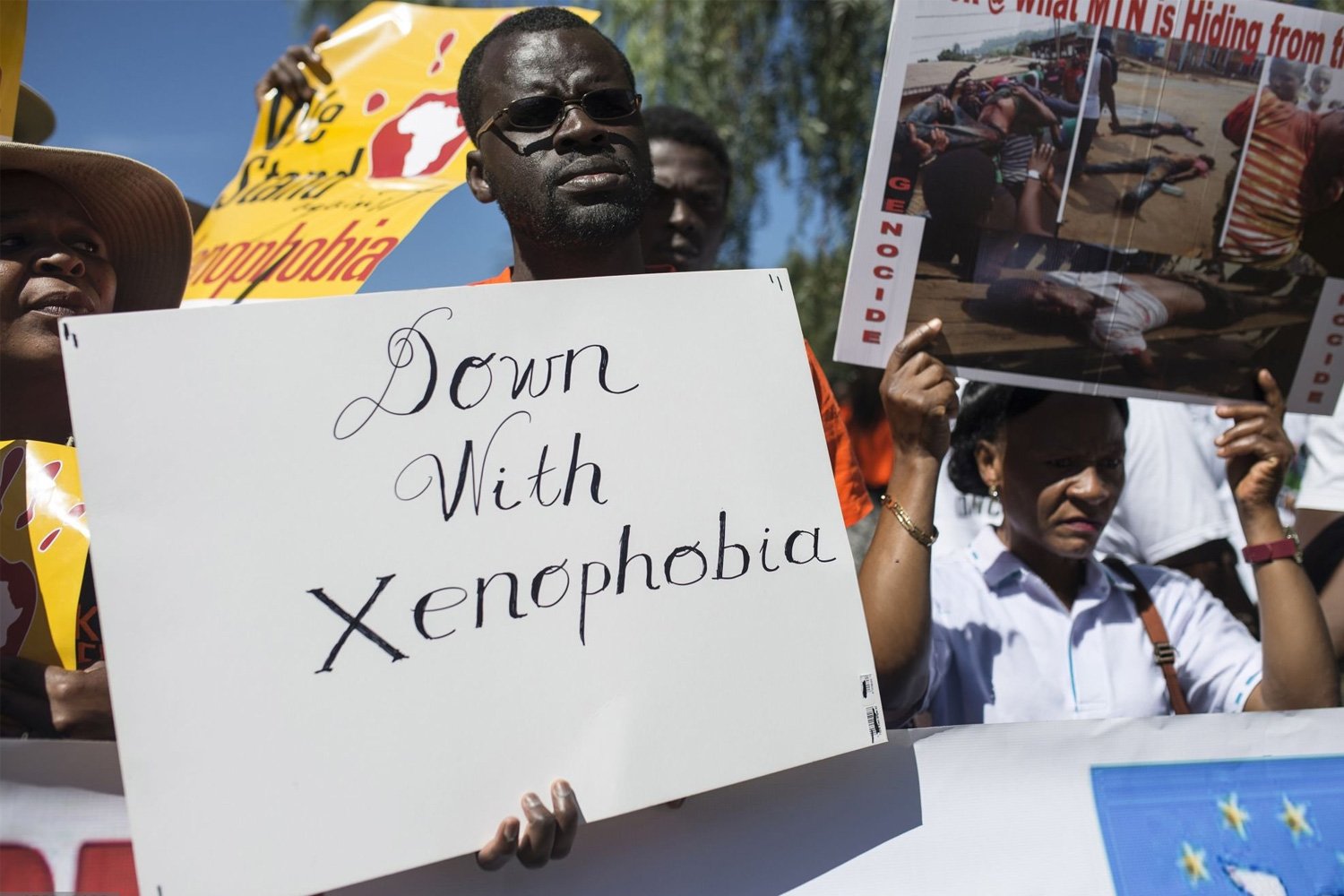
After months of violent anti-migrant protests, Nigeria has urged South Africa to respond.
On August 30th, 2026, at the 21st Extraordinary Session of the African Union Assembly in Luanda, Angola, Nigeria’s Vice President Kashim Shettima expressed concerns of xenophobia and afrophobia taking place in South Africa against foreigners.
“While recognizing South Africa’s sovereign right to impose its immigration laws and acknowledging its contributions to the continent, Nigeria stresses that such attacks undermine African solidarity, unity and peaceful coexistence, and require urgent collective action.” Vice President Shettima remarked.
As such, Vice President Shettima requested the matter be added to the agenda for the 40th Ordinary Session of the African Union Assembly, taking place this January.
South Africa is seeking to avoid the matter to reflect on the next agenda in the same manner. Instead, South Africa aims to focus on the issue of migration writ large, rather than specifically on the rise in anti-migrant protests.
“And remember, both sides will be lobbying very hard.” Sophie Mokoena, SABC News Special Correspondent, said during an on-air interview on SABC News.“You know that the AU in 2013 adopted a resolution to call for that, called for a special gathering or conference on migration. So, South Africa is saying, let’s go back to that resolution.”
Nigeria and other impacted countries repatriating their citizens are of the mind that these acts are both Afrophobic and xenophobic, while South Africa denies this characterization.
In response to the rise in xenophobic protests, on September 11, 2026, Nigeria’s parliament ordered a boycott of all legislative visits to South Africa as well as all legislative activities hosted by South Africa.
This urgent request follows a rise in demonstrations, some violent, by the South African group March and March, an anti-migrant group urging undocumented immigrants to leave. In a country with high unemployment of over 33.6%, citizens are turning on their foreign neighbors as the scapegoat, while government action remains stagnant.
March and March calls for the removal of all undocumented immigrants, claiming they’re responsible for sparse job opportunities and increased crime. However, according to Statista data, the crime index in South Africa has steadily decreased in the past six years, from a score of 77.3 in 2020 to 74.6 in 2026. This rise in xenophobia may be attributed in part by corruption and lack of accountability in government.
TRT Afrika finds over 160,000 people have fled as of July 21, 2026, according to an AFP (Agence France-Presse) tally of repatriation figures. Following the protests in July, at least 1,490 Nigerians living in South Africa voluntarily evacuated.
According to data collected by the ACLED, there were roughly 170 anti-migrant demonstrations in South Africa in the month of June alone, with the most demonstrations occurring in Gauteng. In July, this decreased to approximately 50.
Two Nigerians in South Africa, Musa Yunana Joe and Charles Iroegbu, were killed on June 28, 2026, amidst anti-migrant protests. The causes of death have been disputed by officials. Joe was killed in front of his storefront and his killers are still at large. Iroegbu was killed by the South African police while in custody.
In April, two Nigerian men, Amaramiro Emmanual, and Ekpenyong Andrew, were similarly killed at the hands of South African officers amidst a spike in anti-migrant sentiments.
Bianca Odumegwu-Ojukwu, Minister of Foreign Affairs of Nigeria, worries the situation will not improve anytime soon, as more evacuation flights were announced in July.
These protests have led to foreign nationals and undocumented people alike fleeing, in part, due to their violent nature. ACLED data found over 30% of demonstrations turned violent in July, 2026. On Thursday, September 3, 2026, a protest at a refugee encampment in Durban led to one arrest of a foreign national, and left five Congolese migrants injured, including two children.
According to Sola Enikanolaiye, Nigeria’s Minister of State for Foreign Affairs, at least 98 Nigerians have died due to xenophobic violence since 2022.
In May, 2026, Mozambique said five Mozambique nationals were killed during an outbreak of anti-migrant violence in Mossel Bay. However, the South African police confirmed only two deaths. SABC said this violence was due to allegations that construction companies were employing undocumented migrants. Roughly 55 houses were burned down in the violence, according to local media and the Guardian.
This is not the first instance of xenophobia in South Africa. In 2017, attacks against Nigerian-owned businesses and homes spiked, with looting taking place in Pretoria, Johannesburg, and Jeppestown. In response, Nigerians attacked and looted the South African phone carrier MTN headquartered in Abuja.
According to the Guardian, in 2008, 62 people were killed during anti-migrant violence. This included 21 South Africans, with thousands being displaced. According to Al Jazeera, since 1994, tens of thousands of people in South Africa have been attacked, harassed, or killed because of their immigrant status.
“These xenophobic attacks have gone beyond, you know, attacks on criminals” Enikanolaiye said during talks in Abuja on July 27, 2026. “We have records of Nigerians who have legitimate papers to remain in South Africa. Yet, they have been attacked.” Enikanolaiye is concerned this raises issues of complicity and culpability with South African police.
In response, Ronald Lamola, Special Envoy, Minister of International Relations and Cooperation of South Africa, pushed back.
“President Ramaphosa and the government elites have been outspoken against any intolerance, including xenophobia, racism, homophobia, violence, discrimination directed at individuals within our borders.” Lamola said. Yet, Lamola remarked President Ramaphosa has a right to deal with acts of criminality that occur within South Africa.
This enforcement has mainly been enacted by citizens and vigilante groups, with lack of a definitive governmental response. The March and March protests were particularly pronounced in June, as the group set a deadline for June 30, 2026, for undocumented immigrants to leave the country.
According to the mission statement on the March and March website: “We exist to protect South African citizens, enforce the rule of law, and restore accountability through firm action, responsible governance, and the empowerment of communities.”
This problem is not one that either side of the issue will relinquish. It is incumbent upon the South African government to address the underlying issues of unemployment and lack of social services that contribute to this rise in xenophobia. Nigerians and the diaspora alike are looking to South Africa for a legitimate, cohesive, accountable response.
