
USAHEC
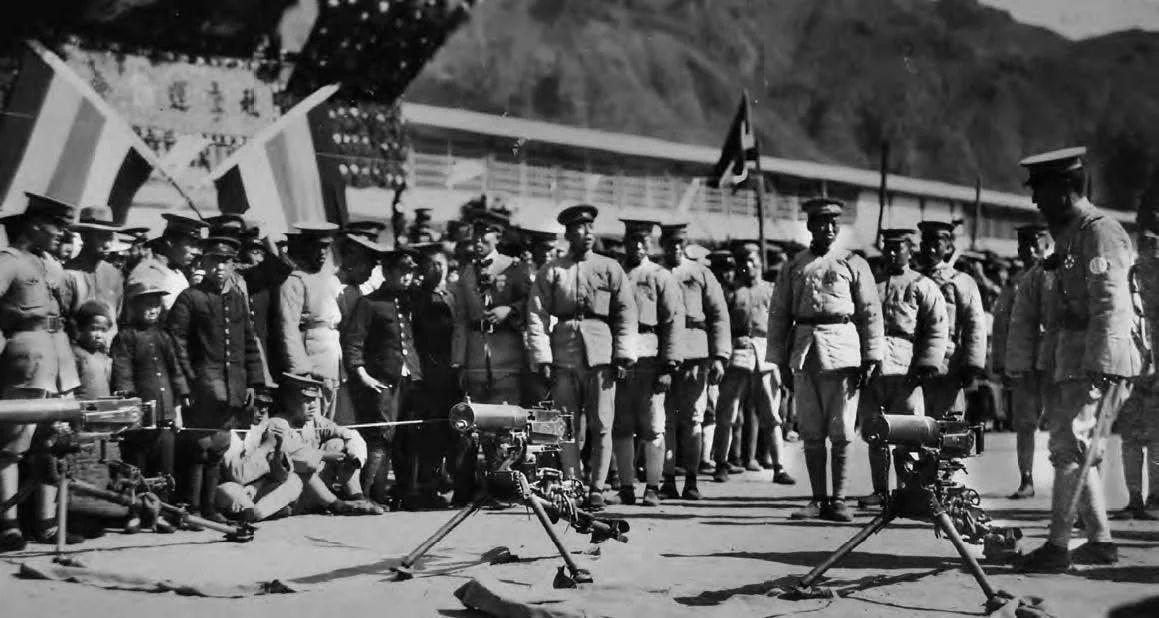
In the grand scheme of history, a century is a blink of an eye. Within that historical blink is the rise of China from near rock-bottom beginning in the twentieth century. In 1925, China was a dysfunctional nation with a shattered government and rampant warlords controlled various regions across its traditional territories. The nascent Kuomintang (KMT) had succeeded the last Chinese dynasty, the Qing, in 1912. However, the KMT’s power was not absolute, and it waged war against several powerful warlords in the north, south, and western parts of China. Only 25 years before, the Boxer Rebellion had compelled an international alliance of imperial powers to violate Chinese sovereignty and deploy their armies into the country, including the capital, Beijing. It should not be surprising that modern China has a cynical view of history, as it was introduced to the 20th century at the point of a bayonet. But is this historical view an organic result of popular hindsight, or are very real historical injustices enjoying a cultural revival as part of a realpolitik strategy by government actors?
The Only Constant Is Change
From the victory of the Chinese Communist Party (CCP) in 1949 to 1995, the historical and social conception of its recent history had been based on traditional Marxist concepts of class warfare. When considering the Second World War, Chinese scholars and students framed the struggle as being between the ruling upper classes of Japan against the Chinese proletariat, as well as the Japanese proletariat. There were strands of unity between working classes across national lines. The real enemy was the bourgeois elite class that forced the lower classes to fight for their capital and imperial gains. This narrative was consistently applied to China’s recent history, from foreign interventions to the Chinese Civil War between the CCP and the KMT. However, since 1995, the national narrative of Chinese history has shifted to one of foreign exploitation. Yinan He, a professor of International Affairs with a focus on Asia, writes
“Generally speaking, the new history is no longer centered on the ideological and political conflict between the Communist CCP and the capitalist KMT. Instead, the ‘defending fundamental fissure’ for Chinese national identity was now drawn between the Chinese nation and those foreign nations that had invaded and humiliated China in the past.”
From an outside perspective, rhetoric on the 100th anniversary of a troubled and chaotic period of Chinese history could easily be organic. With greater access to information and the digitization of historical sources, many societies are undergoing a natural reflection of their past. The United States and Europe are reckoning with their colonial histories abroad, not to mention the growing public awareness of the lasting impact of chattel slavery in the United States.
While it is not inaccurate to perceive contemporary Chinese history as an ethnic and national struggle against outside powers, the recent shift in Chinese education and official statements regarding these events appears to be a deliberate choice by the central government.
Study The Past If You Would Define The Future
In the wake of the Tiananmen Square Massacre of 1989, the CCP began to bleed legitimacy in the eyes of its people. Before China began to experiment with a mixed market-capitalism system, the CCP’s promise of prosperity in exchange for freedom was unfulfilled in the minds of many Chinese people. To counterbalance an internal perception of the CCP being the greatest threat to average Chinese people and society, a coordinated effort was made to excite Chinese nationalism and pivot the locus of control outwards. Hence, the creation and deployment of the “Patriotic Education Campaign” in 1995. This campaign compelled Chinese media and schools to begin a focus on Chinese nationalism with an emphasis on historical injustices as justification for a new hawkish Chinese foreign policy. In 2023, this campaign was enshrined into law and will continue to influence current and future generations of Chinese citizens during their education and exposure to historical media. The internalisation of nationalism and rebuking former colonial powers is not limited to online rhetoric or paragraphs in school textbooks. Chinese diplomats are increasingly aggressive when defending Chinese foreign or domestic policy that is contrary to international law or norms. Much of the language used by these diplomatic actors are the same repeated terms or ideas expressed in partisan media related to historical injustices, suggesting a coordinated effort to apply this new historical framing for diplomatic power. The rise of hawkish Chinese nationalism has resulted in more aggressive political movements in disputed territories, such as Taiwan and the South China Sea, and a palpable sense of indignation when such aggression is called into question by international law.
The trend of authoritarian-style governments generating nationalistic sentiment to distract their population from internal disharmony is not new or unique to China. The last century of Chinese history is a genuine story of a nation rising from near destruction to an international superpower. However, the deliberate framing of this history to justify an aggressive foreign policy and distract from internal discontent is a weaponised use of real historical progress.
