
China View: On The Hermit's Border; Exploring The North Korean-Chinese Border
Planet labs
North Korea is one of the most opaque and closed societies in world history, rightfully dubbed a “hermit kingdom”. However, its border with China is one of the few places that has consistently been relatively open. Borders are traditional hubs for cross-cultural exchange and often foster hybrid communities made up of members of both sides of the border. The most famous North Korean border is the Demilitarized Zone (DMZ) with South Korea, but this is more of a military fortification than an avenue of migration and cultural dissimilation. In contrast, China and North Korea have official diplomatic relations and are historic allies. Chinese citizens are even allowed limited travel to North Korea. How might North Korea’s northern border be different? Could the hermit kingdom have a lone neighbor that breaks through its self-imposed isolation?
The Border
Modern Korean history is largely defined by Japanese occupation from 1910 to 1945. The Soviet Union and the People’s Republic of China heavily influenced northern Korea and assisted in the creation of an independent North Korean state. The PRC was the primary supporter of North Korea during the Korean War, directly intervening when American forces reached the Yalu River and pushed them back to the modern DMZ border with South Korea. Since the Korean War, China has continued to be a key ally to North Korea and was its only formally allied nation until the most recent improvement of Russian-North Korean relations. China is also North Korea’s largest trade partner, as it is under broad international sanctions, accounting for between 70% and 90% of North Korea’s exports and imports.
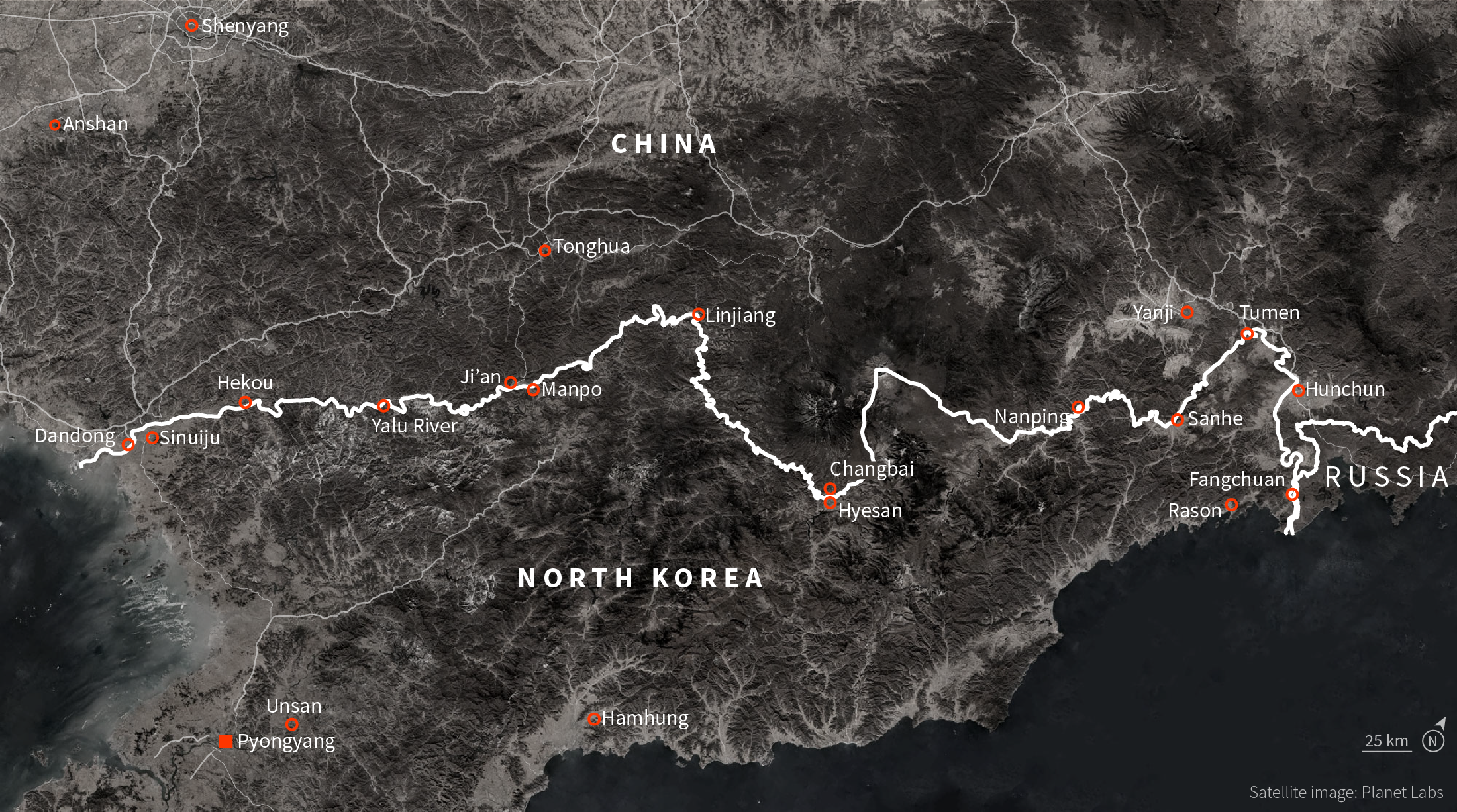
The current border between China and North Korea runs along the Yalu River, and at its easternmost point, it forms a triple border with Russia. In China, the provinces of Jilin and Liaoning border North Korea. The Yanbian Korean Autonomous Prefecture in Jilin province has the largest number of Koreans in China and is 50 kilometers from North Korea. Dandong is the largest city on the border, with its edge being on the Yalu River. Dandong hosts the largest rail bridge into North Korea, along with most of the international trade with North Korea; it sits opposite the North Korean city of Sinuiju. The two cities are connected by the Yalu River Bridge, formerly known as the Sino-Korean Friendship Bridge. Interestingly, this bridge completely lacks pedestrian pathways, featuring only a rail line and a paved road for vehicles.
Even along the border with its only official ally and largest trade partner, North Korea still ensures that its citizens cannot freely travel abroad and tightly regulates incoming travel from China. Chinese citizens can obtain tourist visas for North Korea; however, they are restricted to pre-approved areas, and availability depends on the current political relationship between the two neighboring countries. Since the COVID-19 pandemic, North Korea has closed its borders and exercised even stricter border controls. To North Korea, isolation is more than just a part of its political tensions with the international community; it is a cultural norm.
The Communities
Even the reclusive hermit kingdom cannot help but leak into the wider world. Small communities of North Koreans exist along the Chinese side of the border. There are state-backed restaurants in Dandong with North Korean workers, which offer a glimpse of North Korean culture and allow the workers to send back highly valuable currency to their families in Korea. In Dandong, there is a local tradition for Chinese couples to take small boats into the Yalu River to have their pictures taken with the North Korean border in the background. It is also not uncommon for border communities to have familial ties to North Korea. Before the COVID-19 pandemic, Chinese citizens with relatives in North Korea could apply for a special visa to visit their family across the border. Unfortunately, this practice has been suspended due to the increased security during and after the pandemic.
In Yanbian Korean Autonomous Prefecture, the border feels more traditional. A majority of signs are written in both Korean and Chinese characters, street stalls sell Korean desserts, and many of the people are first or second-generation Korean immigrants to China. Called “Chaoxianzu”, the Korean population of Yanbian has made the area a “third Korea” as it is sometimes referred to. The people of Yanbian are descended from older generations of North Koreans who moved across the border before or during the Korean War. Few new refugees from North Korea settle here, as the Chinese government has a strict repatriation policy for anyone fleeing across the border. The Chaoxianzu culture in Yanbian is ever-present but has been shrinking every decade. The Korean language is taught in fewer classrooms, and new buildings will sometimes only have signage in Chinese. The diaspora of Korean culture does not benefit from consistent interaction with its roots, and therefore has broken off on its own. The few direct links to North Korea are the state-run restaurants staffed by North Korean citizens, but these are mostly sources of foreign currency for the state and do not participate in or sponsor events like a locally owned business might.
The Chinese-North Korean border is far from the heavily militarized DMZ with South Korea. Most of the frontiers are sleepy farming communities on the North Korean side, hugging the winding path of the Yalu River. Boats from both sides navigate the river, and ordinary people make a living on the land the same way their grandparents might have done over 100 years ago. Cities like Dandong and Sinuiju are exceptions to the global trend of border communities, characterized by limited cultural exchange and a single, highly controlled crossing point. Where North Koreans reside in China is with the oversight and blessing of the North Korean state, or in hiding as economic refugees. Even to its closest ally, the reclusive hermit nation maintains its attitude of opaqueness and anxiety. However, small enclaves of Chinese-Koreans endure in cities like Dandong and Yanbian. Korean workers can send remittances back to their families, and Chinese familial ties still exist across the tightly controlled border, proving that even the strongest human urges of migration and cultural exchange can be suppressed, but never destroyed.
