
Baraa Obied
Following an attack by Hamas gunmen on an Israeli military checkpoint in late October, West Bank Palestinians were subjected to an intense crackdown and blockade from the Israeli military that has left hundreds of families displaced, homes destroyed, businesses at a loss, and their freedom of movement further circumscribed. Despite the military siege on the West Bank being officially lifted on November 2, Palestinians are continuing to feel its effects as settler violence against Palestinian families and livelihoods as well as raids and movement restrictions from the IDF continue to intensify.
Only four days before the recent Israeli elections, Hamas-affiliated Palestinian gunmen Firas and Hamouda al-Ja’aba opened fire near the Yehuda Junction military checkpoint just outside Hebron on October 23, killing two soldiers and wounding three others, as well as being killed themselves. The reaction from the Israeli government, military, and state was immediate; Prime Minister Benjamin Netanyahu called an immediate emergency meeting of the Security Cabinet, stating that, “We will act to destroy this place [the West Bank], to change it completely.”
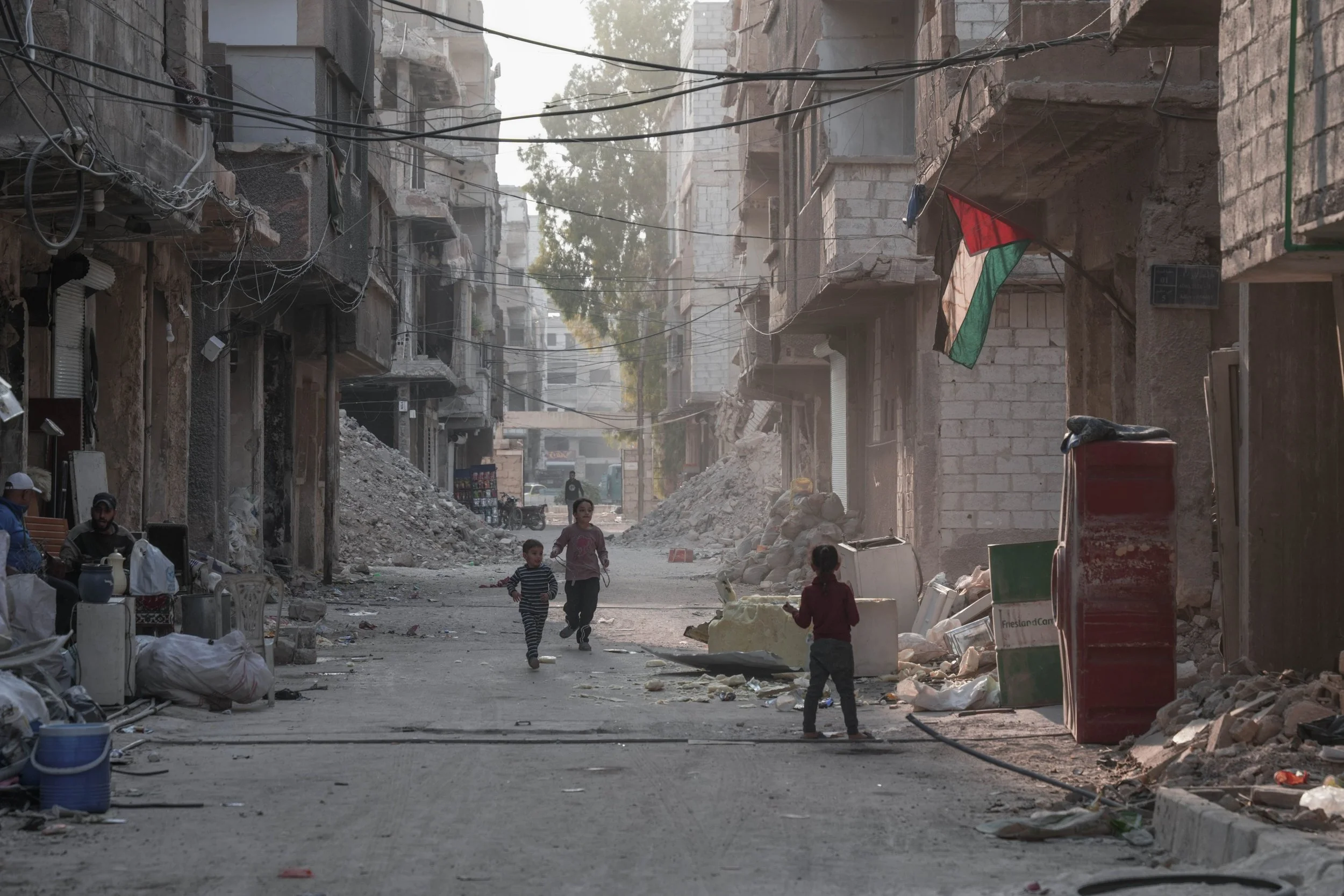
Less than an hour after the attack, the city of Hebron was completely immobilized and isolated from the rest of the West Bank through the closure of all of its main transit points. Within hours Netanyahu had commanded the military to “prepare for a full closure of the entire West Bank” while Israeli Finance Minister Bezalel Smotrich had posted a video of himself standing in front of a military bulldozer as it began to demolish a building belonging to Palestinians. In the neighborhoods of Al-Jalda and Ein Deir Bahha where the gunmen were from, IDF troops flooded the areas and forced hundreds of families into the street, being given as little as 5 to 20 minutes to evacuate. Homes and buildings belonging to Palestinians were taken over by the military and began to be used as sniper lookouts and operation centers.
Less than 36 hours following the attack, the crackdown had intensified further. The IDF had shut the iron gates and manned checkpoints that separated all major West Bank governorates — Nablus, Ramallah, Bethlehem, and Jenin — from one another, turning every city and village in the West Bank into a disconnected network of what the Secretary General of the Palestinian National Initiative, Mustafa Barghouti, called “small prison[s].” As Defence Minister Israel Katz publicly confirmed the day after the attack, 2,000 Palestinians had been forcibly displaced from their homes in Hebron in less than two days. In response, the Hebron governorate declared a state of emergency in the city and began to form a crisis management committee to aid the families that had been displaced.
Under the strain of the created isolation, the West Bank’s economy began to come to a standstill. The security permits of all Palestinian laborers were suspended, banning tens of thousands of workers across Judea, Samaria, and the Jordan Valley from entering Israeli cities and industrial zones while Hebron, which generates roughly 40% of the West Bank's industrial output, suffered a loss of approximately 3.8 million USD per day as the economy faltered and over 327 commercial shops were forced by the IDF to completely shut down.
In time for the elections on October 27, the entire West Bank was locked down, with zero movement allowed in or out by Palestinians except for a very small number of humanitarian or medical exceptions.
Between the initiation of the siege following the attack on October 23 and the official drawdown of the siege on November 2, more than 100 Palestinians were arrested or detained and over 400 distinct raids were carried out across the West Bank while the number of displaced individuals rose to more than 3,300. This number, according to the Hebron Governor Khaled Dudin, includes 232 infants, 326 older people, 147 pregnant or breastfeeding women and 213 people with chronic illnesses that were all forced from their homes.
In addition, settler violence ramped up significantly in conjunction with both the October 23 attacks and the annual olive harvest, with the Colonization and Wall Resistance Commission documenting a surge of 111.6% from September to October. In some cases, these attacks drove Palestinians from land that had been owned by their families for generations and/or was their main source of income, such as olive groves, with the settlers under the protection and receiving support from the Israeli military.
Despite the official end to the siege coming on November 2, the intense crackdown and increase of military operations in the West Bank have continued. What were mainly nighttime raids in specific neighborhoods and buildings prior to the October attack have now turned into a continuing cycle of round-the-clock arrest campaigns occurring during daylight hours, at checkpoints, and via field interrogations. November 10 saw raids in the city of Al-Bireh and the village of Burqa as well as the towns of Attil and Allar, resulting in the arrests of several Palestinians.
Settler violence has also escalated following November 2 with the support of the Israeli military. On November 4, around 30 armed settlers stormed a compound of 8 Palestinian homes, claiming a legal purchase of the land that Palestinian officials called an outright forgery and immediately displacing approximately 70 people. Within hours the army declared the neighborhood a closed military zone, established a security perimeter, and blocked United Nations humanitarian teams from reaching the displaced families. November 9 saw more than 150 settlers storm an industrial zone in Beita, south of Nablus, causing over 1 million dollars of damage.
With settler violence and military action in the West Bank showing no signs of stopping or slowing down, the official end to the siege on the West Bank on November 2 has decidedly not brought an end to the fallout Palestinians are continuing to face following the October 23 attack.
