
KAWNAT HAJU
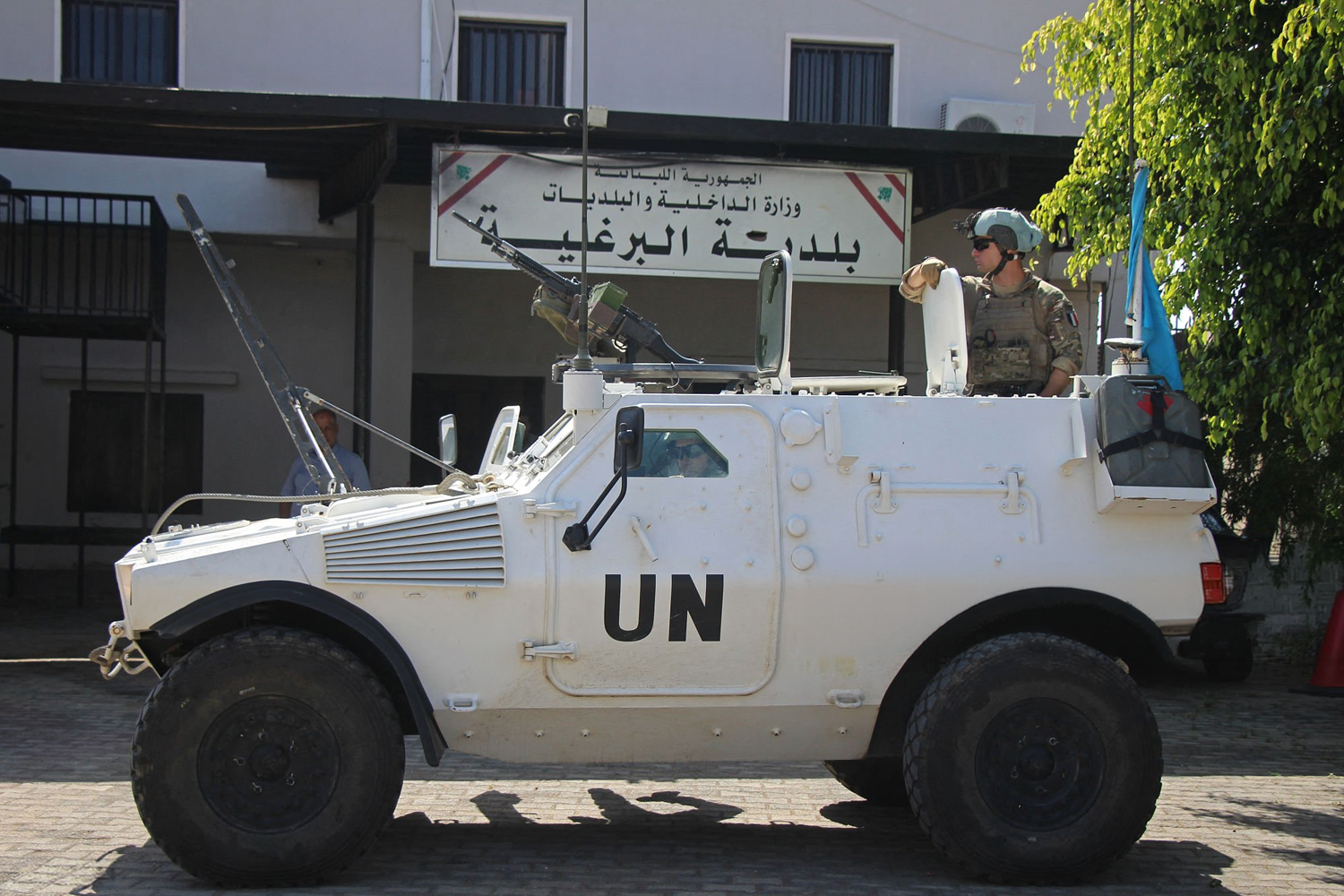
With the UN Interim Force in Lebanon (UNIFIL) set to begin a year-long drawdown of operations and an ultimate withdrawal from the Blue Line border between Israel and Lebanon in December, concerns about the long-term security of the area are being raised by UN officials and international parties alike. Following renewed conflicts between Hezbollah and Israel since 2023 and a ceasefire agreement that still has yet to be fully implemented, along with continued Israeli strikes in Lebanese territory, Lebanon has asked the UN mission to extend its operations to no avail. Now, as questions loom about the ability of the Lebanese government to maintain its security and sovereignty along the Blue Line, options are being weighed as to what type of force could and should fill the potential security vacuum left in the UNIFIL’s wake.
The Blue Line — a 120 kilometer stretch the dances inexactly along the disputed international border of Lebanon and Israel — was established in 2000 by the UN to provide a mandated withdrawal point for Israeli forces in Southern Lebanon, being patrolled primarily by the UNIFIL— a peacekeeping mission established by the UN in 1978. The exact responsibilities of the UNIFIL have changed in the decades it has been at work, but following an expansion of its mandate in 2006, it has operated multifacetedly as a patrolling force that monitors and reports violations of relevant UN resolutions, liaises between the Israeli and Lebanese militaries, and supports the Lebanese Armed Forces in expanding its military presence as well as humanitarian and civilian needs.
The UNIFIL has acted as something of a middle-man in the relations between Lebanon and Israel along the Blue Line, providing a third party to facilitate communication and prevent misunderstandings, along with independently verifying contested infractions alleged by either side. However, the UNIFIL ultimately has limited authority and depends on cooperation, access, intelligence, and the political decisions of both sides, which has left it unable to be entirely effective in maintaining the terms of the UN resolutions it operates under and has invited criticism of its operations.
One of the foremost criticisms that contributed to the unanimous UN resolution to end the UNIFILs mission and withdraw its forces has to do with Hezbollah, the Shiite Muslim political party and militant group based in Lebanon that operates as a proxy of Iran. Although Resolution 1701 calls for an area between the Blue Line and the Litani River to be free of armed personnel, weapons, and military assets other than those belonging to the Lebanese government and UNIFIL, the Lebanese government is unable to control Hezbollah or keep the area free of unauthorized armed activity. In addition, the conflict between Israel and Hezbollah has escalated several times despite the UN’s peacekeeping presence, and despite the 2024 ceasefire signed between Lebanon and Israel, Israeli forces have failed to withdraw south of the Blue Line as the ceasefire agreement mandated and still maintain five positions inside Lebanese territory today. As such, the effectiveness and necessity of the UNIFILs mission was seriously questioned, with that criticism spearheaded by Israel and the United States.
The debate as to whether the UNIFIL needed to or should continue its work came down to the voting of the Security Council in August of 2025, which was not a cohesive block in terms of its members support — or lack of support — for the UNIFILs continued mission. France, Panama, and Slovenia all explicitly supported the UNIFIL continuing its mandate along the Blue Line while numerous other countries raised serious concerns about the potential security vacuum that could arise should the UNIFIL withdraw and the Lebanese Armed Forces not be ready to take full responsibility for the security of southern Lebanon. But ultimately, a compromising agreement was reached in which the UNIFIL would continue its work for another 16 months before a progressive drawdown and eventual withdrawal of its forces. With December 2026 around the corner, those 16 months are almost up before the drawdown begins.
Lebanon is now preparing for the reality that it will no longer have the support of UN forces to maintain security along its southern border, a reality that is made all the more strenuous by the continued occupation of Israel at five different positions in southern Lebanon. Losing this support while the conditions the UNIFIL was supposed to help establish have not yet been accomplished means it will now have to contend with the security vacuum left in the UNIFILs wake while also still struggling to control Hezbollah and dealing with the Israeli infractions of the ceasefire agreement.
There are several options currently being explored as to what sort of support could be implemented in lieu of the UNIFIL. While the UN Secretary General has proposed three options for successor forces that could take up some of the UNIFILs former work along the Blue Line, none of these options have been accepted by or even comprehensively discussed within the Security Council. France and Italy have proposed an international initiative led by both countries to support Lebanon after the withdrawal, but as of yet there has been no formal acceptance of or structural planning of the mandate, organization, or responsibilities of the initiative. The concern that an international force would not be recognized or cooperated with, particularly by Israel, which has already rejected the idea of working with successor forces along the Blue Line or an international support team.
The greatest steps forward in finding a new means to aid in securing southern Lebanon has come from the European Union, which announced on October 12 that it had formally established the European Union Support Mission in Lebanon, which will — rather than patrol the Blue Line — advise and train the Lebanese Armed Forces and support the Lebanese Internal Security Forces. While this is a significant development in strengthening Lebanon's own forces, it still, however, leaves the needs of independent monitoring and deescalation along the Blue Line unfulfilled.
