
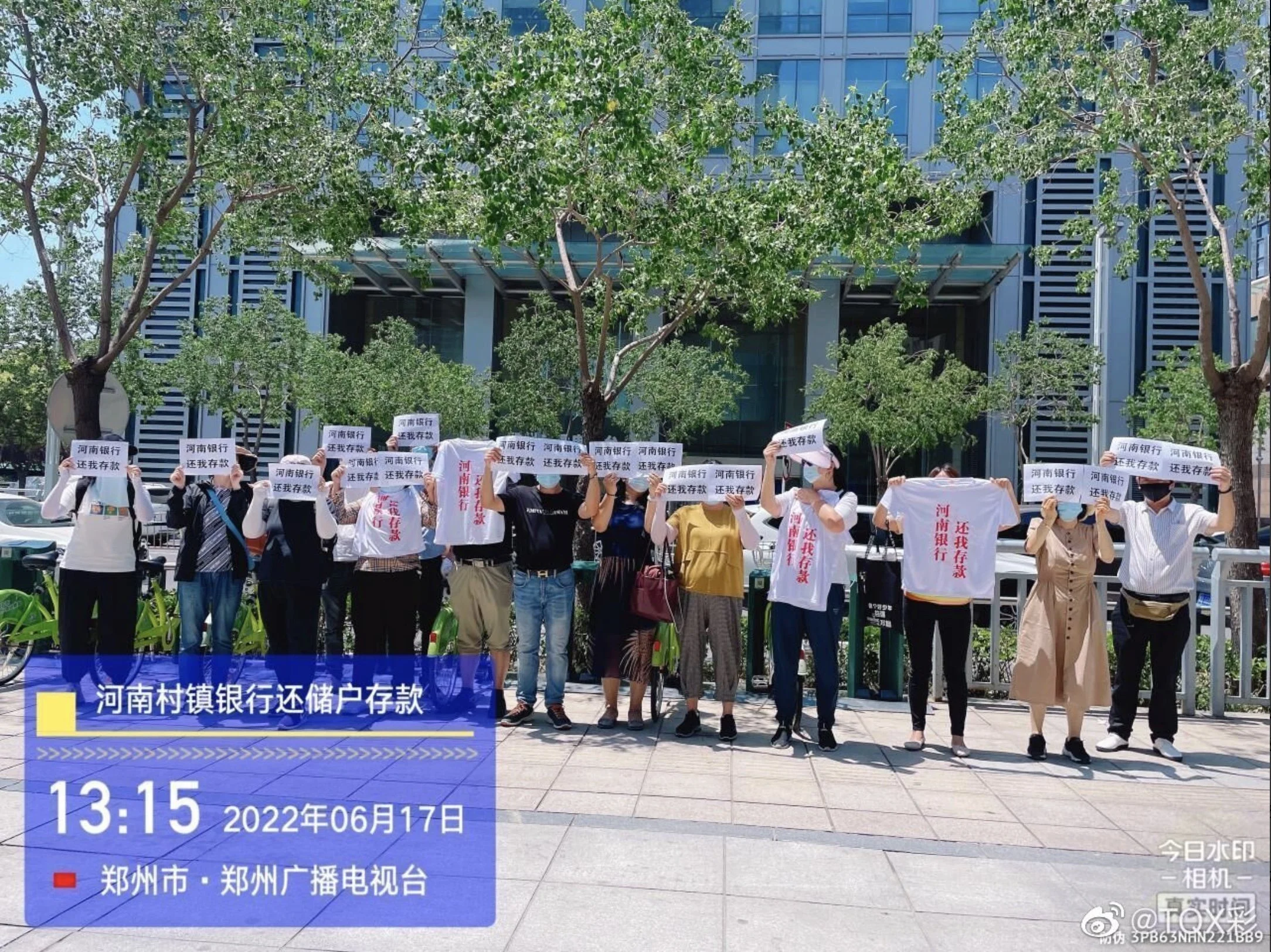
In April 2022, Henan Province experienced a crisis where depositors were unable to withdraw their funds, triggering multiple protests by Henan residents. Henan New Fortune Group exploiting the low entry barriers for shareholders in Henan Rural banks through market manipulation or insider trading, HNFG used third-party platforms and fund brokers for illegal control and absorbed over 40 billion yuan in public funds, affecting hundreds of thousands of depositors. This situation fueled public distrust in banks and, amid the ongoing pandemic, created a rift in trust between grassroots communities and government authorities.
According to the Freedom House survey on provincial protests in China, Henan Province, which ranked second nationwide, registered 1,154 protests by 2026. Zhengzhou was the most protested city in Henan, accounting for 38% of all demonstrations, indicating Henan's primary issues remain grassroots livelihood and economic concerns. Following the rural bank incident in Henan in 2022, the province experienced 146 protests, with the largest number occurring in June. Data shows Zhengzhou, the capital city of Henan, had the highest number of protests at 76. Among Henan's protests that year, bank customer and investor protests ranked third with 13 incidents.
The withdrawal difficulties at multiple rural banks in Henan triggered widespread public distrust in China's banking regulatory system and disappointment over government abuse of power.
By 2023, protests in Henan had not subsided but escalated, with labor rights and the interests of bank customers and investors remaining the primary drivers. This situation stemmed from two main causes: Firstly, during the pandemic, the Chinese government restricted Henan residents from withdrawing funds across provincial borders due to the provincial township bank crisis. At a time when everyone else required only a green health code, Henan residents inexplicably received red codes, sparking widespread skepticism about the government's unrestricted use of authority. The ongoing banking regulatory framework has led to a growing distrust among the Chinese public. These factors collectively impacted Henan residents' consumption patterns, asset management, and employment choices.
In 2022, Henan residents repeatedly voiced their dissatisfaction with the national government and the supervision of Henan's rural banks through rights defense activities and protests. Notably, since 2022, transparency in provincial banking statistics has declined. Multiple indicators have either been consolidated or removed from publicly available yearbooks. Furthermore, the Chinese government has not released the 2022 Henan Financial Yearbook, with the Chinese government reluctant to disclose further specifics.
Comparing the RMB deposit, loan balances, and their growth rates for Henan's financial institutions in 2021, 2023, and 2024 reveals differences in Henan corporations and how the public responded to the incident. Henan's financial institutions saw a 21.6% increase in RMB deposit and loan balances from 2021 to 2023. This trend indicates that Henan residents are hoarding cash and reducing investments. Conversely, non-financial corporate deposits in Henan decreased by 1.2% from 2021 to 2024, showing stagnation in corporate deposits. Moreover, Henan experienced a 4.8% decrease in new employment, a 28.2% decline in reinstatement, a 2.2% reduction in employee transfers, and a 2.8% drop in outbound migration to other provinces. These statistics suggest a diminishing resilience in employment within Henan and a "locked-in" outflow trend, which reflects the persistent decline in local employment confidence following the banking crisis.
Based on the IMF (2022) report forecasting China's future financial risks, despite a decline in non-performing loans, records from June 2022 indicate that credit risks at some rural banks remain significantly higher than those at other financial institutions. The report also notes that improvements at rural banks have been limited. The 2022 withdrawal difficulties at multiple rural banks in Henan hindered corporate deposit and loan growth and led to a 16.8% increase in short-term loans to small and medium-sized enterprises in Henan from 2021 to 2023.
IMF(2022) noted that China experienced weak consumption from 2021 to 2022, with consumption-driven GDP in the first and third quarters of 2022 significantly lower than in 2021. Exports and investment now drive economic growth instead of consumption. Additionally, China's CPI recorded negative growth in 2022, indicating reduced household spending. Economic conditions often closely influence consumer behavior. According to Henan Province's National Economic and Social Development Statistical Bulletin, the province's CPI rose by 8.3% year over year in 2021. However, by 2022, Henan's CPI increased by only 0.1% compared to the previous year.
As the situation escalated on June 17, 2022, Henan residents gathered outside the Zhengzhou Radio Station and the headquarters of the Rural Commercial Bank, holding banners that read “Henan Banks, Return Our Deposits” to protest. A week later, depositors from Henan's rural banks, whose accounts had been frozen again, protested once more, displaying banners with the same slogan alongside Chinese national flags. Reports suggest that government personnel obstructed a protester who suffered cardiac arrest during their transport for medical care.
Beyond shifts in savings, consumption, and labor mobility, the authorities' response to the banking crisis protests in Henan emphasized risk management and administrative controls. The year 2022 remained an era when COVID-19 continued to rage globally. The Chinese government routinely enforced real-name registration requirements and restricted cross-provincial petitioning. In response to protests erupting across multiple regions in Henan, authorities have deployed police to suppress these financial activities and restrict citizens' freedom of movement.
On July 16, 2022, Hongxia Liu, a rights activist in Zhengzhou, Henan, established a studio to produce advocacy videos assisting citizens. She was subsequently summoned by Beijing authorities, assaulted by local stability maintenance personnel in Beijing, and forcibly returned to Zhengzhou under house arrest. Despite surveillance footage documenting Liu Hongxia's beating and forced removal, the Zhengzhou police station in Henan did not release it. The footage indicates that the Henan local government adopted high-pressure suppression tactics in response to the bank incident.
It is worth pondering that, in addressing the consequences of the bank's misappropriation of public savings, the Henan provincial government did not require local rural banks to control protests by compensating citizens for financial losses. Instead, it resorted to violent suppression. In China or any other country, banking crises are inevitable. However, when solutions involve silencing citizens' voices, problems remain unresolved, and public concerns go unaddressed.
The Henan government's reflection on the 2022 rural bank incident framed complaints against banks as political responsibility rather than legal liability, refusing to elevate local government issues to the central government.
In 2023, the Henan Branch of the National Financial Regulatory Administration issued the “Guidelines for Consumer Complaint Management,” which focus on the incident involving the Henan rural bank; the Henan provincial government's approach centers on reducing complaint volume, making complaint handling performance-based, and shifting complaint resolution responsibilities to the lowest level of government. Whether such institutional reforms can genuinely address the issue of collusion between local banks and financial conglomerates warrants careful consideration.
The number of rural banks has significantly decreased after 2022. According to the latest data from the National Financial Regulatory Administration, as of February 2, 2026, there were 1,173 rural banks nationwide, marking a reduction of 109 institutions since December 2025. The mass disappearance of small banks, coupled with the merger and takeover of some rural banks, indicates that the Chinese government is reducing the number of village banks and imposing stricter regulation.
The question arises: why do rural banks continue to face difficulties? American political scientist Minxin Pei highlights issues of corruption and insufficient oversight within these institutions. Rural banks specifically serve China's farmers by providing financial services to rural populations, low-income households, and small-to-medium enterprises. Due to the lower cost to apply for establishing a rural bank in China, rural banks possess weak risk-bearing capacity. Moreover, it is hard to regulate these private and foreign investors, including instances where they acquired shares through financial fraud, which has become another hidden risk for rural banks.
Taking Yuzhou Rural Bank as an example, its major shareholder is Xuchang Rural Commercial Bank, holding 20.5% of the shares. Private investors held the remaining 79.5% of the shares. In reality, a small number of shareholders controlled these private shares, despite their apparent division among three major shareholders. Through shadow companies and cross-shareholding arrangements among enterprises, they gained control over the township bank's assets. These issues collectively demonstrate that Henan's rural banks require systemic reform
Following the 2022 turmoil in Henan's rural banks, the outlook remains bleak across household consumption, employment, and public trust in government. The latest report reveals the dissolution of 1,711 rural banks. Recent reports indicate that 162 such banks have closed across regions from Dalian City in Liaoning Province to Guangzhou City in Jiangxi Province. China's village banks are being consolidated through absorption by main sponsor banks, mergers of multiple institutions into single entities, or equity transfers to reduce their numbers for centralized management.
Nonetheless, serving the public is rural banks' primary goal.
It is crucial to address issues such as inadequate financial oversight, ambiguous ownership details, and challenges related to monetary management, including clarifying the sources of funds for rural bank holding companies, curtailing bribery that concentrates power among a select few, and meticulously managing bank deposits and liquidity. These measures are crucial for preventing a recurrence of the current crisis and for rebuilding the essential trust that must exist between the national government, financial institutions, and the general public.
