
Far East: The Ripple Effects of Global Conflict on Bangladesh’s Transport Economy
Ferdous Hasan
Bangladesh’s economic resilience has long depended on its ability to absorb external shocks: from swings in global commodity prices to recurring climate disasters. The country’s economic story reflects an interplay between challenge and opportunity. As the country strives for more sustainable and inclusive growth, it will need to focus on diversification, innovation, and strengthening resilience in order to navigate shifting global conditions and reach its long-term development goals. Yet the ongoing Middle East conflict, centered on hostilities involving the U.S. – Israel alliance and Iran, has revealed just how fragile that resilience can be.
The conflict’s repercussions have rippled, impacting not only across the Middle East but also the globe, and one of the major aspects is the energy markets. For example, the key to Bangladesh’s fuel imports, the Strait of Hormuz - has experienced a disrupted and irregular shipping schedule.
The Strait of Hormuz
The Strait of Hormuz, the only sea channel linking the oil-rich Persian Gulf with the Gulf of Oman and the Arabian Sea, is responsible for around 95 percent of Bangladesh’s oil sourced from abroad. Moreover, the strait normally handles roughly 20% of the world’s oil supply. Even minor interruptions can thus trigger outsized consequences. Now paralyzed, Hormuz has seen only a handful of ships in transit since the ceasefire was announced on April 8 2026.
Before the conflict, more than 100 vessels crossed the Persian Gulf on a daily basis. However, the current maritime data as of April 9, 2026 shows traffic remains below 10% of normal levels at best.
For Bangladesh, the impacts of the Strait of Hormuz’s paralysis are immediate and severe. For instance, freight rates surge drastically as shipping companies constantly encounter delays and rerouted plans. Global energy prices also escalated, pushing up the cost of fuel that powers Bangladesh’s industries, transport networks, and electricity generation.
However, behind the immediate crisis is a serious structural problem within Bangladesh’s economic and energy systems. The country’s growth over the past two decades has been powered primarily by imported energy, including liquefied natural gas (LNG) and petroleum products. Bangladesh’s vulnerability is largely due to its long-term structural dependence on the volatile commodity markets and supplies. When instability strikes critical checkpoints like the Strait of Hormuz, Bangladesh has limited buffers or alternative strategies to absorb and counter the shock.
The Motorcycle Economy Under Siege
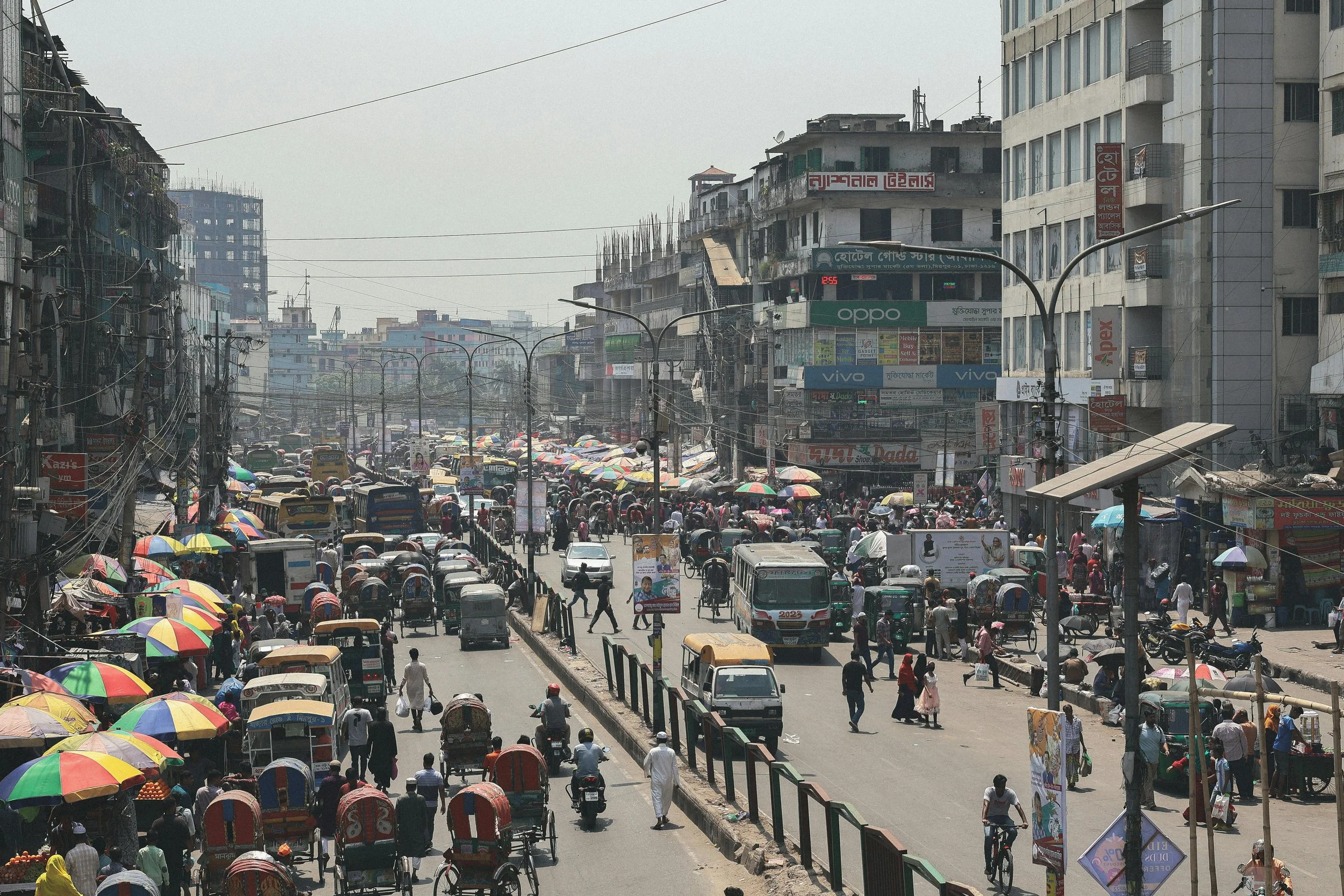
In Bangladesh, motorcycles as a mode of transportation are far more than a choice out of convenience or preference. They are a lifeline. A number of motorcyclists' careers depend on these vehicles, especially in areas where steep terrain and narrow roads make larger vehicles impractical.
Motorcycles are one of the most pervasive forms of transport in Bangladesh, reshaping everyday mobility across both urban and rural areas. With an estimated stock of around four to five million units, motorcycles far exceed private cars, buses, bikes, and three-wheelers as a transportation method. Characterized by speed, flexibility, and affordability that neither public transport nor traditional non-motorized options can consistently match, motorcycles have effectively democratized personal transport in Bangladesh.
The annual sales of motorcycles in 2025 exceeded 450,000 units. In Khagrachhari alone, an estimated 5,000 motorcyclists operate as informal taxi drivers or goods carriers. Before the fuel crisis, a rider can make Tk 1,200 to Tk 1,500 a day, around $10.00 to $12.50, serving as a reliable income supporting many households for the entire family. However, as fuel became scarce and expensive and the number of trips declined, riders report that they can only make Tk 200 to Tk 300 a day, around $1.75 to $2.60. This amount is barely enough to cover basic meals, let alone other expenses.
In Dhaka, the capital and the largest city of Bangladesh, riders working for ride-hailing platforms such as Pathao and Uber are facing similar hardship. Some riders wait more than five hours to secure just two liters of petrol, which is not even enough for rides working a day. Bangladesh has millions of registered motorcycles, and Dhaka represents one of the highest concentrations of ride-hailing motorbike usage in the country. As an outcome, the fuel shortage has paralyzed a sector that contributes an estimated Tk 2,200 crore annually to Dhaka’s urban transport economy.
Vulnerability Within Bangladesh’s Economic System
The current crisis reveals a deeper vulnerability within Bangladesh’s economic system, as transport and trade remain heavily dependent on imported fossil fuels. Short-term rationing can temporarily stabilize the situation, but it does little to shield the country from the next potential geopolitical shock.
Fuel station operators are already warning of mounting pressure. In March 2026, the Bangladesh Petrol Pump Owners’ Association had cautioned that limited supply and rising tensions at filling stations could force some pumps to shut down. If that happens, the crisis could expand far beyond transport. The food distribution, emergency medical services, and even the manufacturing system would be greatly impacted. According to the Bangladesh Petrol Pump Owners Association, the issue of security in fuel marketing has been largely overlooked by the government and local administration, leading to increasing disorder at pump stations.
Conclusion
In the case of the Bangladesh economic crisis, one can observe that the ripple effects began from what emerged as a distant geopolitical conflict. Bangladesh’s mobility-dependent livelihoods are now and will be dangerously exposed to global instability, if no strategic energy diversification initiative, fuel distribution systems, and meaningful support for informal workers are taken into action, The war in the Middle East has not only reshaped energy markets: it has also revealed how closely Bangladesh’s everyday survival is tied to changes far beyond its borders.