
India Insights: A Big Minority: Muslims in West Bengal having their voting rights revoked
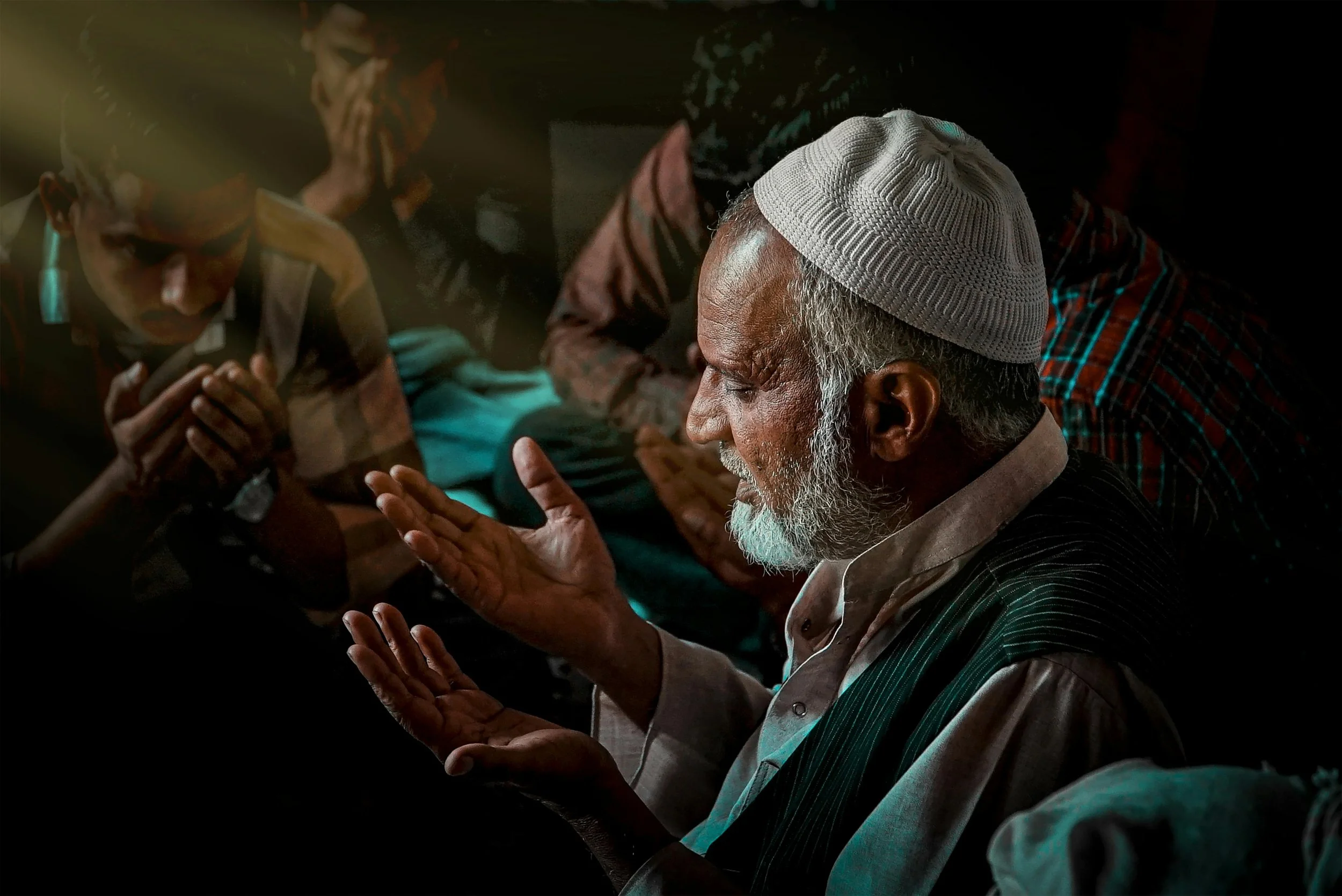
sanjot singh
Islam is the second largest religion globally, yet, in India, Muslims are a minority. Since the country’s independence and the partition between India and Pakistan in 1947, Muslims have suffered great discrimination in India, despite comprising 14% of the population. Historically, several reasons have fuelled the Islamophobia in India, such as policies established by colonial Britian in the country, the 1947 partition, and Hindu nationalist ideologies. Although laws in the country protect all citizens equally, regardless of religion and ethnicity, Muslims have faced violence acts since the nation’s independence. The discrimination against this minority has been visible in the current Legislative Assembly elections in West Bengal, where several Muslims have seen their voting rights strapped with no reasonable explanation from authorities. While experts have explained that most individuals who lost their rights are minorities, there is no official data showcasing such evidence. In order to comprehend the reasons behind the cancellation of several Muslim citizens’ rights, one should understand some of the history behind the discrimination.
The Legislative Assembly Elections In West Bengal
From April 23 until April 29, West Bengal’s Legislative Assembly elections will take place. This election is setting up to be a dispute between the TMC party, the state’s ruling party, and Modi’s BJP. Chief Minister Matata Banerjee has governed the state since 2011, when the TMC won after the Communist Party of India had been governing since 1977. Moreover, this election is marked by significant tensions between the parties and varied proposals, and it’s likely to have extremely polarised results. There are not any official polls analyzing the percentages the candidates are likely to receive, though, as seen through the campaigns, the election will be disputed between BJP and TMC.
The Loss Of Election Rights
After seeing the voters list published by the Electoral Commission of India (ECI), Nabijan Mondal, a local resident who has voted in the Legislative Assembly elections for over 50 years, couldn’t find her name. In the beginning of April, through the special intensive revision, the ECI analyzed its electoral rolls. In Nabijan’s case, the family noticed that she went by “Nabijan”, her nickname, on her voter card; however, her name “Nabirul” is on her ID, a name of Muslim origin, which may be a link to her voting rights loss. It has been reported that over nine million citizens have lost their rights, about 10% of the electorate, with six out of nine being either absent or deceased. It has been reported that 2.7 million citizens have contested their right’s status, however, the state is yet to respond to such requests.
Experts have analysed the current scenario and have pointed out that the majority of those who lost voting rights are minorities. A “bloodless political genocide” is what the actions of the Special Intensive Revision (SIR), conducted by EIC, have been called. This revision process is not exclusive to West Bengal, but has been occurring in several other states, in order to stop “infiltrators”, as Modi calls, from participating in elections. The use of “infiltrators” is to target Muslims; it’s a term that refers to Bangladeshi immigrants that are also Muslim. As this policy has been implemented nationally, the BJP is largely responsible for ceasing of voting rights within the country, given that they are the ruling party built upon Hindu nationalism. Hence, BJP found revoking constitutional rights of Muslims to be a strategy for furthering the goal of a fully Hindu state.
Since BJP is not the ruling party in West Bengal, the party found this a clever tactic to gain political dominance within the state. It is of outstanding importance to note that the region is of Muslim majority, a direct reason why the BJP hasn’t reached hegemony status in the state. The culture, social practices, and religion of West Bengal do not align with BJP’s motivations, leading the party to initiate anti-constitutional methods to establish themselves as politically dominant. The Bengali society has demonstrated great dissatisfaction with this development, especially the Muslims part. This may steer the elections further away from polarisation and more towards TMC, given the unlawful actions guided by the BJP. Overall, the Muslim community in West Bengal, and in the whole of India, is being forced into the most fragile state they have ever encountered.
Muslim Prejudice In India
The intolerance towards Muslins in India is widely complex and nuanced. Within the extensive list of reasons, ideology and nationalism play important roles. The rise of Hindutva has assisted in disseminating prejudice against Muslins. Hindutva a Hindu nationalist ideology, has been associated with right-wing extremism and an overall hegemony of Hinduism. This ideology believes that Hinduism is intrinsic to Indian cultural and national identity. In the 20th century, the ideology became a movement focused on detaching India from colonial Britain’s identity and the 16th century ruling Islamic Mughal dynasty. It was through Hindutva that, when independent, India became a non-secular state. Summarising, Hindutva is the extremist idea of that the national identity of India is defined by Hinduism.
Following Hindutva principles, the Rashtriya Swayamsevak Sangh (RSS), a volunteer right-wing paramilitary organisation, was born in 1925. The main goal of the community is to establish “Hindu Rashtra”, a fully Hindu state, and disseminate Hindutva. With over five million volunteers, the RSS holds an important influence on the political atmosphere of the country, being arguably the most influential non-governmental organization within the state. The RSS is the mother organisation of Sangh Parivar, which is a collective of Hindu nationalist organisations, including the Bharatiya Janata Party (BJP). Many have accused the RSS is accused of attempting to turn India into a fully Hindu state while eradicating Muslims.
The BJP has used of Hindu nationalism as a platform to gain more popularity within the nation. In the general elections in 2014, BJP became the ruling party of the country, filling 282 seats; BJP then elected Narendra Modi as India’s Prime Minister. Since Modi’s ascension to power, having been an RSS and BJP member during his youth, Hindu nationalism became a central feature of the national government. Although politically aligned with Hindutva, the party attempts to dissociate itself from the violent acts attributed to the ideology.
As previously stated, the partition of British India is a crucial element driving the discrimination against Muslims. The reckless division executed by the British, separated a majority Muslim population into Pakistan, as well as what currently is Bangladesh, and a majority Hindu population into India. Nonetheless, bloody riots and deadly conflicts sparked from the separation, leading Muslims in India to migrate to Pakistan and Hindus and Sikhs to move to India. The number of casualties estimated by historians is between two hundred thousand and two million. The violent nature of the partition led to deep scaring not only between the countries, but also between the people of each religion; which may provide some clarification of why Muslims in India suffer greatly.
