
India Insights: Electoral Duel: West Bengal Legislative Assembly elections marked by great tension between leading parties
engin akyurt
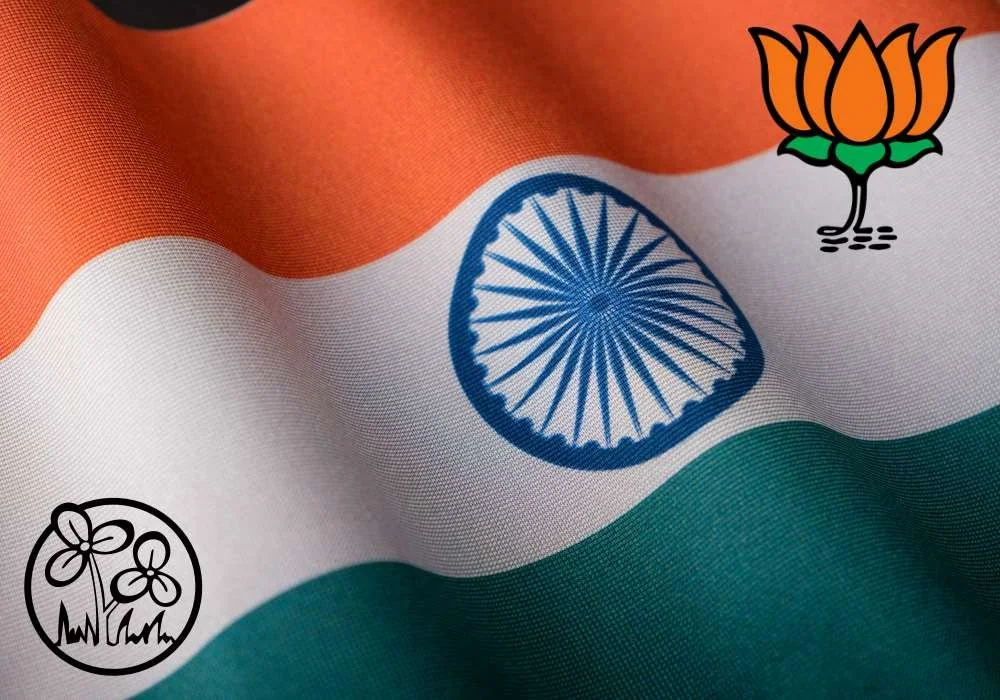
The West Bengal Legislative Assembly elections are scheduled to take place from the 23 to 29 of April 2026, with all 294 seats are set to be chosen. The results are expected to be announced on May 4. The previous election resulted in the victory of the current Chief Minister Mamata Banerjee, who is currently rerunning for the same position and has been acting as chief minister since 2011. Electoral research has shown that this election will be overwhelmingly polarized, with most of the electorate voting between All India Trinamool Congress (TMC), Banerjee’s party, and President Modi’s Bharatiya Janata Party (BJP).
From 1977 until 2011, the Legislative Assembly was ruled by the left wing, led by the Communist Party of India, who subscribe to the Marxist scholarship. Following their rule, Banerjee came into power with her party, TMC. The regime change established a major political transition in West Bengal, from left to right, which persists today. The 2011 election was not only historical due to the political upheavel, but also because of voter turnout, 84%, being the highest ever recorded in Bengal, emphasizing the voters desire to change their leadership. In addition to being widely polarized, a major issue the election has been facing is Banerjee’s claim that West Bengal has been living “unofficial presidential rule”. The ruling chief minister has accused the government, led by the BJP, of meddling in regional politics, further strengthening the high tensions between both parties. The elections have been transformed into a duel, where the parties have presented very distinct proposals. BJP proposes a model focused on economy and infrastructural development, whereas TMC desires to further expand the public wellbeing programs.
Tensions and Proposals
Throughout their campaign, TMC cultivated a tactic associating identity with food. The chief minister has publicly claimed that, in the event of a BJP victory, saying: “They will not let you eat fish. You cannot have meat, you cannot have eggs, you cannot speak Bengali. If you do, they will call you Bangladeshi”. The goal is to ignite the pride in the Bengali population. “Mache bhate Bangali”, a traditional Bengali saying that roughly translates to “fish and rice”, has become a non-official slogan for the campaign, as both parties have engaged in debates surrounding regional identity. TMC hopes to attract voters who align with their expressed sentiment expressed by them, in addition to promoting a feeling of pride within the electorate. BJP, however, is found at the opposite end of the spectrum. Associated with vegetarianism and Hindi speaking, BJP does not fully align with the region’s main practices. Thus, TMC used of their discrepancies as a political weapon. The BJP is now in a position where they must publicly state that they are not “anti-fish” to avoid being labelled as such: candidate Sharadwat Mukherjee carried a Katla fish across several boroughs, explaining to voters that the BJP would not adopt the practices the TMC claimed they would have.
Attempting to secure another victory and several seats within the Assembly, the TMC’s campaign focuses on the region’s welfare system. The party promised the protection of the current beneficiary list and the ongoing model. Additionally, the party is changing its Members of the Legislative Assembly (MLAs), which is framed as a course correction. TMC has also promised its voters to expect improvements on welfare programs that lacked in popularity and delivery standards, while protecting the schemes where the population is satisfied. The overall tactic seems to be promoting a sense of familiarity, where the voters know what to expect from the party and find the promises trustworthy and reliable.
On the other hand, the BJP is conducting a campaign based on economic and structural development. One of the propositions is called “Annapurna Yojana”, where eligible women will receive ₹ 3,000 every month through money transfer. The scheme’s aim is to financially empower women and contribute to their incomes. Moreover, the party plans to adopt the 7th Pay Commission, a model where government workers and pensioners would receive higher salaries and benefits. This system would significantly impact the economic sector, as it would increase the salary for public workers employees, as well as the possibility of boosting regional economy. Also foundational to BJP’s campaign their reassuring the people of West Bengal that they will not lose their land to factories and infrastructural development, such as roads. This has been an important concern to the population, mostly farmers, given that their livelihoods depend on their land. If the land happens to be taken, BJP promise that a fair financial recompense will be provided to the affected individual(s).
Banerjee’s “Presidential” Rule Claim
Mamata Banerjee has expressed her dissatisfaction with the alleged national government involvement in West Bengal’s politics. The current chief minister has claimed that the central government is attempting to establish presidential rule in the state. According to Article 356 of the Indian Constitution, the President is allowed to instate presidential rule if the state’s government fails to function along with constitutional provisions. The temporary dissolution of the regional government can last from six months up to three years. Even though no official presidential rule has been stated in West Bengal, Banerjee has accused her rival party, BJP, of attempting to cancel the Legislative Assembly’s election. She first made the accusation when villagers took seven judicial officers’ hostage in Malda; the situation was due to the removal of several electoral roles, leading to great discontentment from the CM. Banerjee has disclosed that this action was an attempt from the BJP to apply presidential rule. Furthermore, she has slammed the election commission for not properly imposing law and control in Bengal, and that the central government has deployed political forces that decrease the jurisdiction of the regional government.
In sum, this election is expected to be a vicious fight between both major parties. Even though other parties are also in the run, the state is polarized between the TMC and Modi’s BJP. The different proposals and accusations have strengthened the tension. TMC’s accusation that the BJP would limit the traditional practices the people from West Bengal, has ignited another flame in an already lit fireplace. TMC is focused on continuing the ongoing model of welfare, and BJP is direction their efforts to develop the states’ infrastructure and the economic sector; the parties’ proposals and promises are different and englobe distinct priorities for the state. In addition, Banerjee’s presidential rule claim has not helped in the polarization aspect of this election. Following the elections, West Bengal will still be found in an unstable position and fragile political scenario.
