
China View: Shenzhen Is Putting AI on the Streets
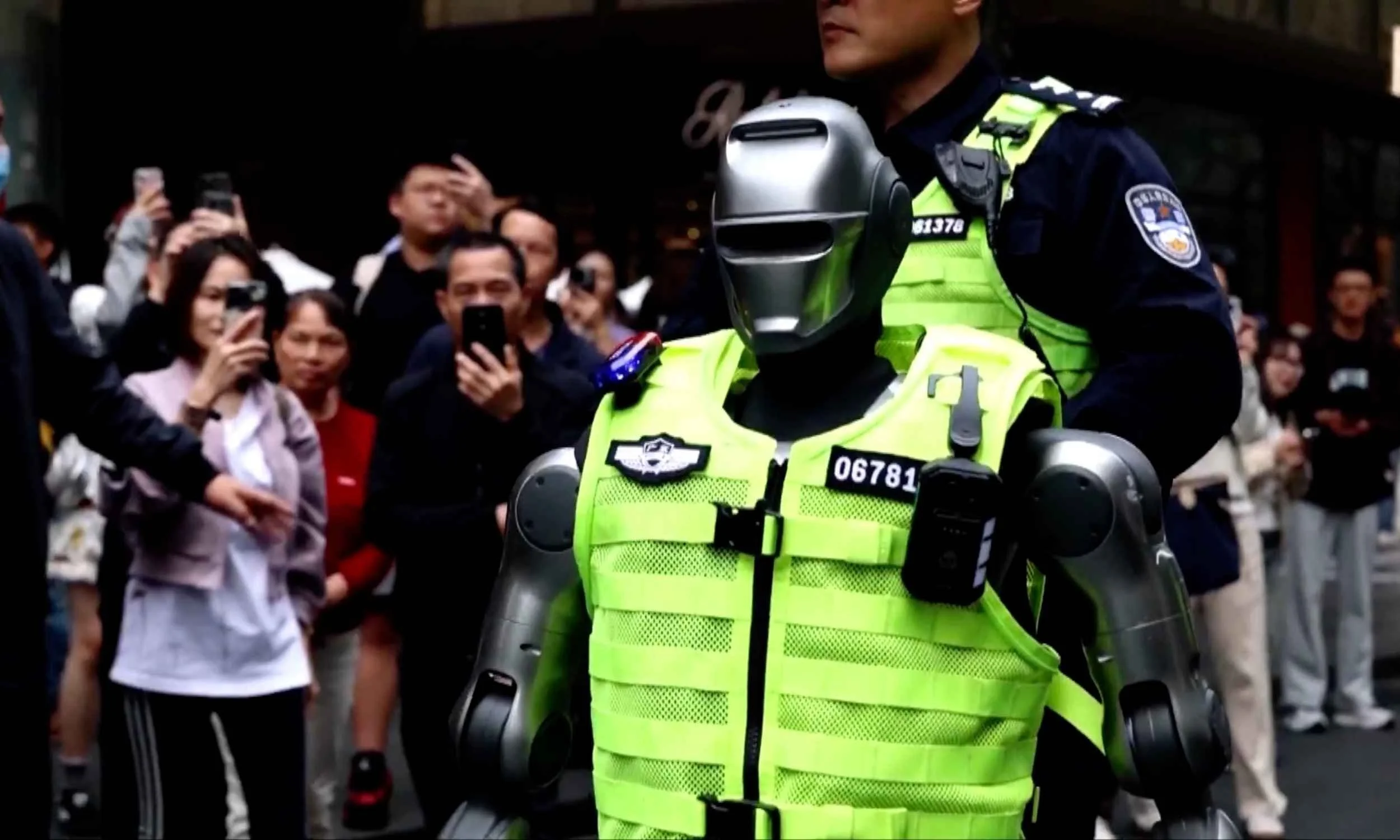
"Mom, look, that robot is directing traffic!" Recently, the robot district of Shenzhen welcomed a special duty officer, an intelligent robot dressed in a uniform with the "Longgang Traffic Police" insignia. It acts as a "safety guard" on the streets, repeatedly broadcasting warm reminders at busy intersections: "Please wear a helmet when riding an electric bike." "Pedestrians and electric bikes, please do not run red lights when crossing the zebra crossing." "Electric bikes, please do not ride in the motor vehicle lane" AI robots deployed by the Chinese local government actively transform into a "safety guide" on the streets, continuously broadcasting warm reminders at busy intersections. This novel phenomenon has already integrated into the lives of Shenzhen residents. This intelligent AI robot navigates through the traffic, providing advice such as wearing a helmet when riding an electric bike, avoiding running red lights at crosswalks, and staying out of motor vehicle lanes. The clear and gentle voices of the AI robots cut through the cacophony, spreading safety concepts to every hurried citizen, infusing the bustling Spring Festival travel season with a sense of humanized technological care.
In early 2026, the focus in Shenzhen shifted to the traffic safety situation. A tourist bus lost control and crashed into the barrier on the Shenzhen Bay Bridge, injuring 17 people. A serious multi-vehicle collision also occurred on the Hong Kong-Shenzhen Western Corridor. Furthermore, the management of vehicles such as bicycles and scooters has become a prominent issue due to safety concerns and regulatory challenges. The incident in which a shared bicycle parked haphazardly injured an elderly person highlights the challenges of compensating for damages and determining legal responsibility, making it the central issue.
The Shenzhen local government implemented traffic control using AI machines. AI robots have evolved from machines to decision-makers, taking on responsibilities such as traffic management and accident prevention in urban environments. During the feedback from Shenzhen residents, it was found that the majority of Shenzhen residents hold a positive view of public authority being gradually delegated to machines. AI has become a vital aspect of daily life, influencing sectors such as transportation, healthcare, and customer service. Furthermore, AI-robots for traffic assistance are currently utilized in four countries, with China and Thailand leading in implementation, while the US and Dubai have some experience in this field.
Shenzhen is committed to establishing itself as a global leader in artificial intelligence innovation by 2026, with a particular emphasis on advancing AI-enabled advanced manufacturing technologies. According to the 2026 Shenzhen Municipal Government Annual Report, the value added to the artificial intelligence industry cluster has increased by over 10%. Additionally, the production of service robots has seen a 25% increase, and efforts are underway to enhance the full-stack, self-controllable AI software and hardware ecosystem, which is expected to further improve efficiency in various sectors, including traffic management.
Previously, traditional traffic police managed road traffic in China, but now AI robots handle the task. According to an official from the Longgang Traffic Police Brigade in Shenzhen, the AI utilizes a high-precision visual perception system to precisely identify uncivilized behaviors such as electric bike riders without helmets and improper parking. It also continuously enhances its recognition and guidance abilities based on accumulating intersection data. Upon detecting a violation, the system immediately emits a crisp warning whistle, performs standardized traffic gestures, and provides real-time guidance through voice prompts.
Conclusion
In the future, with advancements in technology and expanding applications, the Chinese government aims to enhance AI visual skills through improved training methods and sensor technology, leading to more effective traffic management and safety measures. The Guangdong provincial government will further develop AI robots for tasks including checking for drunk driving, managing accident scenes, identifying illegal behavior, and collecting evidence automatically.
While robots can aid in traffic management, enhance efficiency, and cut labor costs, the issue of determining liability in traffic accidents poses a challenge that robotics currently cannot fully resolve. Shenzhen is the first city to deploy AI robots for traffic management incidents, with their current duties involving traffic management and advisory tasks.
Shenzhen's implementation of robotic traffic police marks a small practical step but symbolizes a substantial shift in government management in the era of artificial intelligence, showcasing the increasing incorporation of technology in governance.
