
Far East: When Language Becomes a Barrier to Justice in East Timor
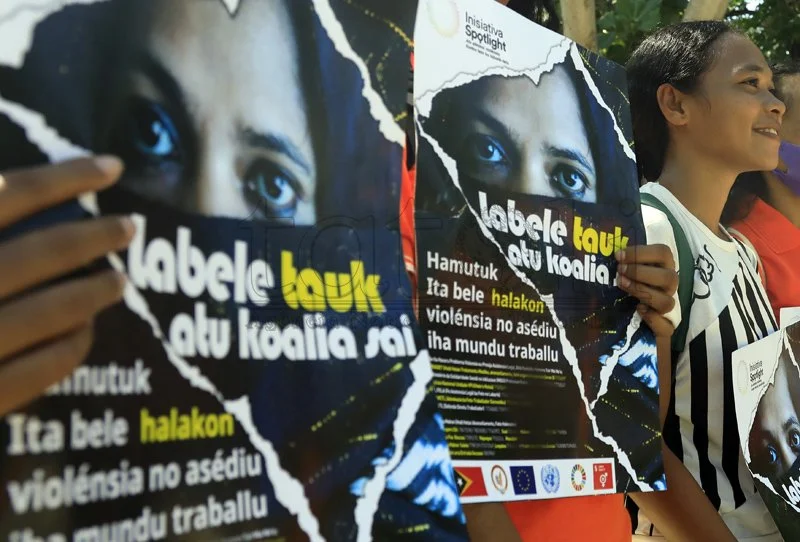
Gender-based violence is deeply entrenched in East Timor. According to the United Nations Population Fund (UNFPA), nearly 4 in 10 women and girls in the country have experienced physical, sexual, or emotional violence. In the municipality of Lautém alone, the United Nations reported that 38% of women aged 15 to 49 have experienced violence, highlighting the omnipresence of abuse. The statistics not only reveal violence and vulnerability, but also represent the hidden structural barriers that women and kids face in East Timor, such as geographic isolation, inconsistent treatment from police, and normalization of violence like domestic abuse, and even language barriers.
Despite ongoing efforts by the government and international organizations, these deeply rooted systemic issues continue to hinder meaningful progress, leaving many women and children without adequate protection, access to justice, and the necessary social support to break the cycle of violence.
Gap of Communication
In East Timor, although Tetum is an official language alongside Portuguese, most legal documents, court procedures, and formal complaints are written or conducted in Portuguese, reflecting the legacy of Portuguese colonization during the 16th century to 1975, when Portuguese became the language of administration and law. Given how many institutional processes still highly rely on Portuguese, a gap has manifested between how people and the system; in other words, how the laws are written and how everyday East Timorese People communicate, especially in rural areas.
Furthermore, many people’s mother tongues are neither Tetum nor Portuguese. The most up-to-date census shows that the number of native Tetum speakers in East Timor accounts for only 36.6% of the population. Other languages spoken are, for instance, Mambai (12.5%), Makasai (9.7%), and Kemak (5.9%).
Therefore, for example, for individuals who have experienced gender-based violence, the language gap can become a serious barrier at several stages. Specifically, one first has to file a police report or testify in court in a language they are often not fluent in, not to mention the lack of translation and interpretation services in East Timor. According to the findings from The Special Rapporteur On The Rights of Indigenous Peoples In Timor-Leste, one-third of those who have been to court did not understand the procedures followed.
Comprehensive legal research on East Timor’s law system, published in 2019, details the dominant use of Portuguese in formal legal contexts and emphasizes the fact that few laws have been translated into Tetum, even though it is widely spoken.
Lack of Translation and Interpretation Services
A 2026 report by the United Nations Children's Fund (UNICEF) demonstrates that there are severe shortages of translators and interpreters in East Timor. While a United Nations Development Programme (UNDP) commentary in response to the report advocates for the broader use of non-dominant languages in justice system training, the lack of concrete policy action underscores how linguistic barriers continue to obstruct equitable access to justice for vulnerable populations.
Notably, the government is undergoing a change in technology-based opportunities by using digital translation services, which can be used in the court system. Called Tetun.org, this no-fee English-Tetum machine translation service run by volunteers is available both as a website and an app that can be used to translate bulk text. Additionally, the machine translation service aims to enhance translation quality, specifically in a conversational human speech style. However, there are two main issues with this advancement. To begin with, according to UNICEF, children who speak only minority or indigenous languages are particularly disadvantaged by this development. The service only runs back and forth between English and Tetum, unable to foster communication for individuals of other language backgrounds.
The court system in East Timor comprises four district courts and one appellate court. The district courts sit in the districts of Dili, Baucau, Oecussi, and Suai, and the Court of Appeals also sits in the capital, Dili. Accounts from across the legal profession indicated the language barrier issues posed by the complex linguistic environment in East Timor. Firstly, courts usually do not provide translation across local languages and dialects, including situations where suspects need to understand their rights, proceedings in which they are involved, or even their sentence. Secondly, when professional translation is available, it is usually only to and from official languages between Portuguese and Tetum. UNICEF reported that there’s typically only a 30% chance that an interpretation service is available at the stage of criminal proceedings. Moreover, courts usually only request an interpreter where a foreign offender or victim is involved.
Children’s Access To Justice Proceedings
Because of the lack of translation and interpretation services, in addition to language barriers, children usually need to rely on lawyers to explain their situation in justice proceedings. Yet, while there is an entitlement to legal representation, a lawyer cannot be present with a child in detention, as they are only allowed to have contact with a child defendant shortly before a hearing commences.
Another translation issue arises in reading documents, such as evidentiary documents, which are typically not translated.
In 2022, the UNICEF Timor-Leste Country Office conducted a survey of people from the legal profession, mostly lawyers, in services supporting children's engagement with the justice system. In a question asked about their understanding of Portuguese, on a scale of one to five (basic to fluent), only 5.88% of respondents rated their Portuguese proficiency as “fluent”. 76.47% of respondents rated three or fewer. Furthermore, in a question asking “how frequently do you deal with clients who speak a different language”, 83.25% answered “always”.
In the end, people in the legal profession demonstrated that lawyers shouldn’t be expected to reliably facilitate translation. In other words, reliance on lawyers, police, or staff members, who are not qualified interpreters, to translate and explain concepts is never sufficient, fair, or safe to ensure that a child has understood the procedure it is engaged in. Instead, the absence of trained interpreters not only risks miscommunication but also ultimately compromises the child’s ability to meaningfully participate in and trust the justice system.
Conclusion
Addressing gender-based violence in East Timor requires more than legal reform; it begs for a systemic commitment to linguistic inclusion, investment in professional translation and interpretation services, and policies that reflect the country’s linguistic diversity. Without bridging the gap between language and justice, efforts to protect vulnerable populations – especially children – will remain limited.