
Across ANZ: New Zealand Shifts Towards More Proactive International Strategy
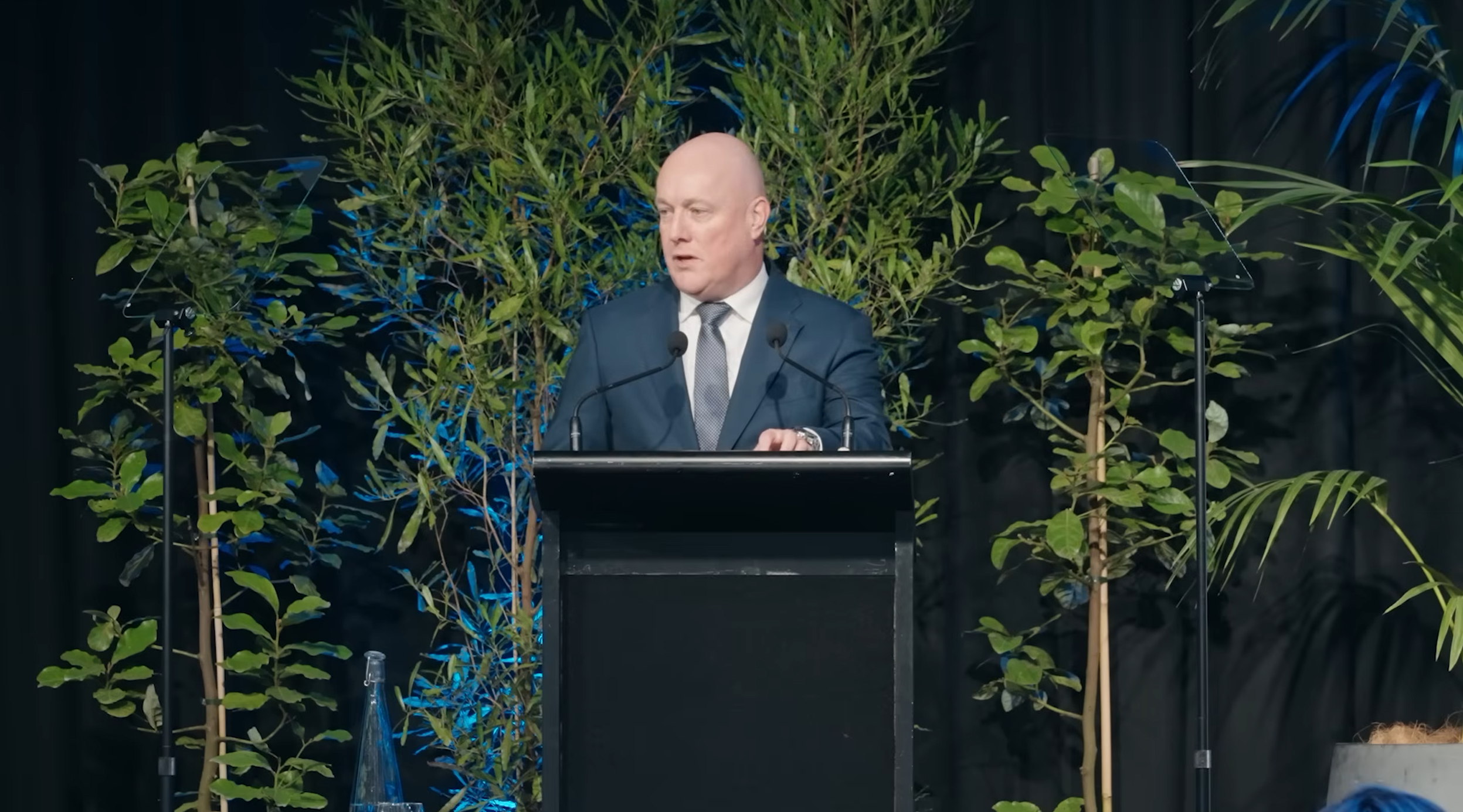
On May 13th, Prime Minister Christopher Luxon delivered a speech regarding the future of New Zealand. Luxon spoke of the current shifts in global politics, where stronger nations reign freely, nations increasingly focus on security concerns, and increasing state resilience has become the new norm. Luxon cited Russia, China, and the United States as key examples of this trend. He also recognizes how nations in the Global South have grown restless within the current system and are beginning to take action, further disturbing the global order. He asserts that for too long New Zealand has relied on an ocean and a passive national image to remain safe from the “storm”, now needing to take action in order to stay afloat in an uncertain world.
Point One: Defending The Nation
Luxon focused on numerous issues throughout the 23-minute duration of his speech, with the first being international security and international presence. He recognizes that New Zealand is a small nation with little hard power to speak of on the international stage. While investment in national defense forces is one step towards securing the future of New Zealand, Luxon emphasizes the importance of strengthening connections to multinational organizations like ASEAN or the Pacific Island Forum, as well as with specific regional powers such as Singapore or India. The issue of national security has grown significantly following further expansion by China or the United States in the Indo-Pacific region. In this regard, New Zealand has been under consideration for joining AUKUS since 2021, which would strengthen its regional ties as well as bolster its military capabilities. Additionally, New Zealand has worked to boost bilateral trade relations with many regional actors, with agreements to bolster relations with India being made in late April.
In the turbulent political climate of the world, the ability for a nation to defend itself grows increasingly important. New Zealand has stepped up to this task, with the 2025 Defense Capability Plan aiming to increase military spending and modernize the New Zealand Defense Force. The plan has been granted $12 billion NZD in funds, far more than what was previously allocated to military spending. These funds are said to go towards specific modernization efforts such as unmanned military vehicles, improved missile striking capabilities, and deepened collaboration with the Australian military. With such a large boost in funding and pronounced effort towards further development of the military, the nation has already seen significant strides towards the defensive capabilities Luxon spoke of.
Point Two: Securing The Future’s Energy
While Luxon made note that larger, more powerful nations can act openly within the international community due to an excess of resources, military strength, and geopolitical ties, he recognizes that New Zealand lacks the means to ascend to this position and instead must find alternate ways to sustain itself. He stated how the nation cannot stand on its own, instead needing to make use of its existing connections and further expand upon them. At the same time, New Zealand cannot be overreliant on its trade partners and international allies, as recent events have made clear. The global fuel crisis has struck New Zealand particularly badly, and thus Luxon has proposed a push towards greater energy independence for the nation. This push has been in action since late 2024, when the Fast Track Approvals Act was passed, allowing for the rapid approval of infrastructure projects in the nation.
The rapid development occurring in New Zealand since the passing of the Fast Track Approvals Act has since led to 23 infrastructure plans being approved for development. Of these projects, 4 are major renewable energy projects, which will significantly help to reduce New Zealand’s reliance on fossil fuel imports. Most recently, on May 15th, 2026, the Kaimai Hydroelectric Power Scheme received Fast Track approval for continued operation and redeveloping the systems to better fit into the nation's plans for renewable energy production. This will ensure that the power scheme’s four main stations are maintained and continue to provide hydroelectric power to over 24,000 households.
Outside of renewable energy, New Zealand has plans for ensuring its supplies of fossil fuels remain topped up in order to mitigate the impacts of future international shortages. The government maintains a strategic coal reserve, as well as a recent purchase of 90 million liters of diesel to be stored for future fuel crises. This much fuel is said to be equivalent to 9 days of national fuel supply, which will act as a buffer for future shocks in fuel prices, granting New Zealand citizens increased protection against sudden fuel price hikes. With reserves in place and rapid pushes for new sustainable energy sources to be developed in New Zealand, the nation should not need to be so overly reliant on imports of fossil fuels, and therefore will become a far more resilient nation in an unstable future.
Point Three: Maintaining Societal Cohesion
Luxon made clear that a society cannot endure in such a tumultuous future when there is internal division. He pointed towards the issue of immigration, which has become a much more visible cleavage in New Zealand society in recent years. Luxon shifted blame away from immigrants themselves within his speech, instead placing fault upon poor immigration policies that have led to unrest within society. New Zealanders fear a growing immigrant population, and this has led to discrimination against immigrants within the country. There have been attempts to mitigate this, with new immigration policies such as the Skilled Migrant Category Visa, which ensures that immigrants arriving in the country on this visa are capable of skilled labor and have proficiency in English, such that they may be a valuable asset to the workforce. This is just one step towards mending the rift in New Zealand society and repairing relations between native New Zealanders and migrants.
Another key factor in societal division that Luxon pointed to was the lack of public trust in the media. Having faith and belief in what is being reported about the nation goes a long way towards improving overall social order. For many years, there has been a continual decline in public trust towards the media. However, trust in the media has seen a rise, going from 32% in 2025 to 37% in 2026, the first increase since the decline began in 2020. A shift like this will help to improve societal cohesion and bring New Zealand society closer together.
Final Point: Encouraging Financial Security
To end his speech, Luxon spoke of the national budget and international borrowing. New Zealand, as well as many other small nations, relies on borrowing from larger nations to stay afloat. The nation has recently worked to create tighter budgets and work towards a surplus economy, escaping national debt and being able to stand on its own without outside funding. There have been many plans to pare down the national budget to one that is sustainable and will not require outside support to maintain. While the 2026 budget has not yet been revealed, Luxon announced that it will be smaller and expressed hope for this trend to continue, such that New Zealand will become a fully financially independent nation.
