
Middle East: “Anonymous Emiratis”-The UAE and their secret involvement in Sudan
saj shafique
This seemingly never-ending conflict in Sudan, often characterized as a civil war between the Sudanese Armed Forces (SAF) and the Rapid Support Forces (RSF), has evolved into what experts describe as a “war of extermination” and a genocidal campaign orchestrated through a sophisticated web of foreign intervention. The United Arab Emirates (UAE) is at the center of this crisis, having been accused of conducting a secret invasion and occupation of the nation by proxy, relying on systemic destabilization to facilitate the wholesale robbery of Sudan’s natural resources. While international investigative bodies have uncovered “smoking gun” evidence of Emirati involvement, ranging from the discovery of UAE passports on the battlefield to massive covert airbridge for weaponry, the international legal system has proven largely incapable of holding the Gulf state accountable.
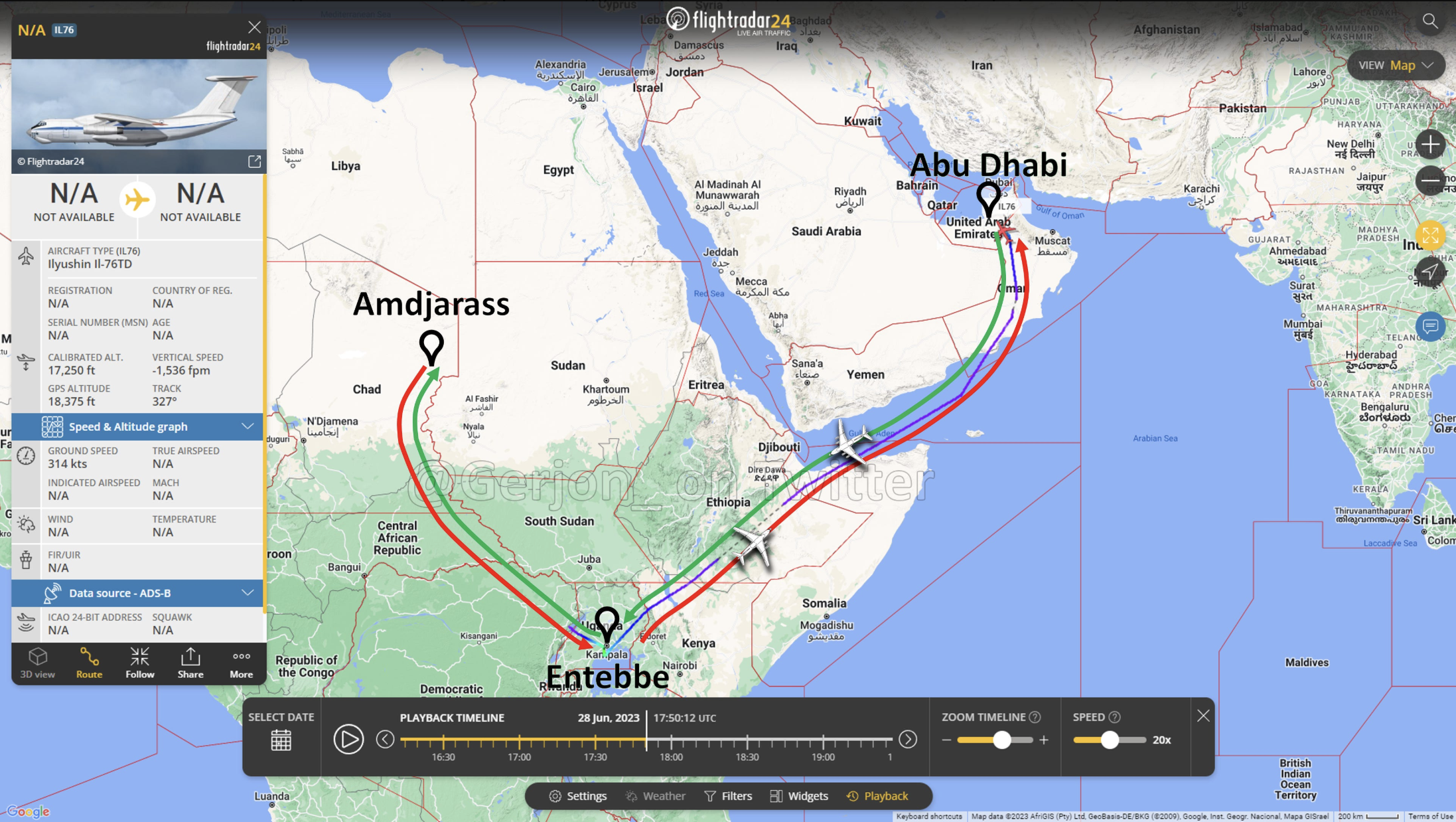
The UAE’s involvement in Sudan isn’t solely motivated by diplomatic or financial reasons; it is a direct military engagement conducted under a veil of plausible deniability. Leaked documents and satellite imagery reveal that the UAE has established a covert airbridge through the Andrass airport in Chad, ostensibly to support a humanitarian field hospital.
(Gerjon Aircraft Finds, Substack)
However, U.S. and UN investigators have confirmed that this facility serves as a front for the smuggling of advanced weaponry, including Wing Loong II drones, Chinese-made guided bombs, and thermobaric explosives. These thermobaric bombs, which produce high-temperature blasts far more devastating than conventional explosives, have been directly linked to the UAE’s joint logistics command in Abu Dhabi.
Beyond logistics, there are credible reports of boots on the ground. In 2024, the discovery of Emirati passports in the wreckage of a vehicle in Omdurman suggests that UAE intelligence officers were operating directly alongside RSF units. The UAE has also been accused of recruiting and deploying foreign mercenaries, including former Colombian soldiers, to bolster the RSF’s ranks. This support enabled the RSF to neutralize the SAF’s air superiority and sustain a siege on cities like El Fasher, where tens of thousands have perished in a single week.
The primary incentive behind UAE intervention is a calculated strategy to export Sudan's vast natural wealth, specifically its gold and agricultural land. Sudan is one of Africa's largest gold producers, and the RSF currently controls or taxes many of the nation's most lucrative mining regions in Darfur. This gold is then smuggled out of the country and laundered through Dubai's gold markets, where it is converted into hard currency to fund further military operations. In 2024, the UAE’s imports of Sudanese gold reportedly rose by 70%, with estimates suggesting that 90% of Sudan's official gold exports were transported through the UAE.
This extraction is facilitated by a network of over 95 complicit companies and front entities. Firms such as Capital Tap Holding, Al Zumoroud, and Al Yaqoot Gold & Jewellers are managed by individuals with direct ties to RSF commander Mohamed Hamdan Dagalo and his family. These companies mask illicit financial flows behind legitimate business facades, ensuring that the RSF remains financially independent of the Sudanese state. Simultaneously, the UAE is engaged in a massive land grab to secure its own food security. Emirati conglomerates like the International Holding Company and Jenaan Investment control hundreds of thousands of hectares of fertile Sudanese farmland. By backing the RSF, the UAE secures these agricultural interests and gains control over critical maritime choke points, such as the Abu Amamam port on the Red Sea coast, which serves as both a commercial gateway and a military logistics node.
To shield itself from international scrutiny, the UAE has utilized the Emirates Red Crescent and other humanitarian symbols as a facade for its covert operations. UN officials noted that the UAE established its field hospital in Chad without following standard protocols, and aid workers were frequently barred from entering the facility for “security reasons”. Evidence suggests the hospital was used to treat wounded RSF fighters while the nearby airfield handled daily cargo flights of munitions. This misuse of legally protected humanitarian emblems is a potential war crime under the Geneva Convention, and it allows the UAE to portray itself as a promoter of peace while actively fueling a genocide.
The crisis in Sudan highlights the limitations of international law and justice. On March 6, 2024, Sudan filed a case against the UAE at the International Court of Justice (ICJ), alleging violations of the 1948 Genocide Convention. Sudan argued that the UAE’s military and logistical support was the primary engine behind the ethnic cleansing of the Masait people in Darfur. However, on May 5, 2025, the ICJ dismissed the case in a purely procedural ruling. The dismissal rested on a legal technicality: international law is founded on the principle of state consent. While both nations are parties to the Genocide Convention, the UAE made a strategic reservation to Article IX upon its accession in 2005. Article IX is the “compromissory clause” that grants the ICJ jurisdiction over disputes regarding the convention's interpretation or fulfillment. By opting out of this clause, the UAE effectively exempted itself from the Court's compulsory jurisdiction.
Consequently, the ICJ ruled that the case “manifestly lacked jurisdiction,” leading to its removal from its General List. The decision was highly controversial, drawing sharp dissenting opinions from several judges. The dissenters argued that Article IX is the only mechanism for inter-state enforcement of the convention, and allowing a state to reserve against it renders the conventions erga omnes partes obligations (obligations owed to the international community as a whole) illusory and “toothless.” For the victims in Sudan, this ruling represents a setback, as it means one of the world’s most prominent legal forums couldn’t even examine the evidence of potential genocide.
The UAE and its role in Sudan demonstrate how a state can use economic leverage, front companies, and humanitarian facades against weaker states to execute a proxy invasion while successfully evading accountability. Furthermore, exploiting the consent-based nature of the ICJ enables the UAE to legally shield itself from accountability. Without a coordinated international effort to disrupt the financial arteries of conflict gold and enforce strict arms embargoes, the cycle of violence and the extraction of Sudanese wealth is likely to continue. As one Sudanese refugee told an Emirati minister, the people of Sudan do not want “charity” from those they believe destroyed their homes; they simply want the invasion to stop.
