
India Insights: Walking On A Tightrope, The Conflicting Relationship Between The United States And India Under Trump 2.0
x
Hellhole: “a place of extreme misery or squalor”, a word used by the conservative podcaster Michael Savage to describe India; a remark was shared by none other than President Donald Trump. While criticising the US’ birthright citizenship policy, Savage claimed: “a baby here becomes an instant citizen, and then they bring the entire family in from China or India or some other hellhole on the planet”. Trump is no stranger to controversial remarks regarding immigration, as it is one of the most important features of his platform. Nonetheless, India and the US have a long-lasting diplomatic and economic partnership, making the shared comments polemical. It is, however, comprehensible that the current instability in their relationship is due to several policies adopted by the US under Trump that have hindered several bilateral cooperations.
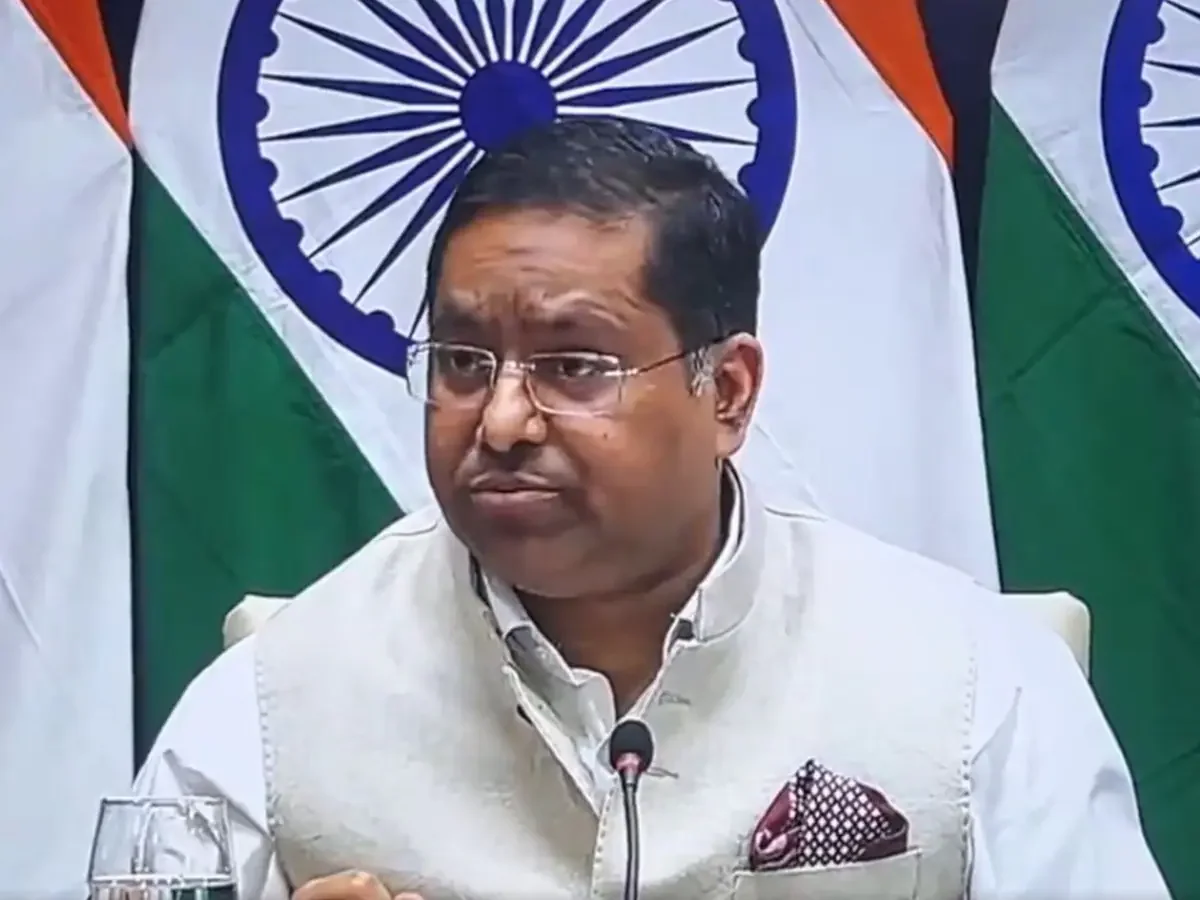
In the first instance, Randhir Jaiswal, India’s foreign minister, did not have a strong response to the comments; this led many to believe that the remarks would pass by unscathed. Nonetheless, Jaiswal later denounced the comments as “obviously uninformed, inappropriate, and in poor taste”. He then offered some clarification on how these remarks influence the nations’ relationship. The foreign minister concluded that “they [the comments] certainly do not reflect the reality of the India-US relationship, which has long been based on mutual respect”. From this development, the relationship between the countries came into the spotlight. Since Trump’s ascension to the presidency, the US’s foreign policies have been highly controversial and contradictory, mostly due to the constant deployment of tariffs in several countries; India did not escape the long list of affected nations. It is visible that the current relationship among the nations is rather tumultuous, which makes understanding their dynamics complicated. Since Trump’s election, the bond has become distressed.
History of the US-India Relationship
Since the country’s independence in 1947, the United States and India have had a complicated relationship, with several changes through the eras. Within the trajectory, there were numerous bumps on the road, such as the US’ dissatisfaction with India’s nuclear program, which led to North American sanctions. Nonetheless, during more recent times, the cooperation has evolved, especially in the 2000s. For instance, between 2005 and 2008, the nations agreed on the Civil Nuclear Deal (Hyde Act), which recognises India as a nuclear power. In addition, the deal guided the countries into developing a strategic partnership. Presently, India is foundational to Washington’s Indo-Pacific strategy, a geopolitical region that encompasses major nations, including the US’s greatest contemporary rival, China. Interestingly, both the US and India have uncertain relationships with Beijing; one may say India-China relations are unpredictable due to regional power and border disputes, whereas US-China conflicts are towards the position of global hegemony. Hence, it would not be a preposterous analysis to claim that India and the US have united forces against a common “enemy”.
Current Economic Relations
A foundation of Trump’s new administration is the intense tariffing of many countries, where India was also targeted. In August of last year, the US imposed a 50% on Indian exports for two major reasons: participation in the BRICS and the purchasing of discounted Russian oil. At the time, Modi defended the decision to buy oil from Moscow, as it was the best decision to protect its wide population. However, this directed India into an unstable territory, given that the US is the nation’s largest trade partner. To counter Trump’s tariffs, Modi saw an opportunity to promote self-sufficiency within India, raising vexation on the US side.
During a phone call, Trump and Modi have agreed on an interim trade deal, where the US would cut tariffs from 50% to 18% as India consents to stop purchasing Russian oil. However, since the agreement reached in early February, India has yet to stop importing oil from Russia; this has not generated any retaliation or comment on the side of the US. It was also pledged that India would purchase $500 billion in North American products over the course of five years. Nevertheless, new developments occurred, leading the nations to regroup in April to discuss the implementation of the deal. As of the 24th of April 2026, negotiators from both sides have met to discuss the clauses, which have, seemingly, become a tug of war. On one side, India expresses a desire to have privileged access to Washington’s market, whereas the US is attempting to make India purchase more North American energy. An agreement is yet to be reached; however, the countries are in constant communication to eventually seal the deal.
Current Diplomatic Status
The current immigration policies in the United States have generated numerous debates regarding immigrant rights, as the detention centres and deportation methods are inhumane. As of April 2026, Indian citizens account for 70% of H-1B visa holders; this visa allows US employers to employ, for a determined period, international workers in “specialty occupations”, requiring a high level of knowledge. H-1B visas are commonly used in the technology sector, a field where Indians comprise a good portion. Trump’s sweeping crackdown on immigration impacted the issuance of H-1B visas, which generated uncertainty among the over four million Indians who live in the US. Currently, visa appointments are being scheduled for 2027, a way in which the North American government discourages immigration, as anti-immigration is a cornerstone of both Trump administrations. Additionally, within the whole of 2025, 3258 Indian nationals were deported back to their country; out of this number, 2032 immigrants were flown back in commercial aircraft, whereas 1226 landed in Indian soil in Immigration and Customs Enforcement (ICE) or US Customs and Border Protection (CBP) flights. 1000 of the deported individuals were chained and handcuffed. Modi’s administration has expressed disapproval of illegal migration, siding with the deportations.
Another crucial factor regarding the nations’ diplomatic dynamic is the US’s involvement with the India-Pakistan conflict. Within the decades-long disputes between the neighbouring countries, it is understood that the situation will be solved bilaterally, leaving no room for mediators. Nevertheless, Trump repeatedly claimed that he had been acting as the arbitrator, aiming to stop the war. India expressed deep discontent with Trump’s stance and denied any involvement by the United States. In addition, the growing relationship between Pakistan and the US jeopardises Modi and Trump’s collaborations. In June 2025, Pakistan’s army chief, Field Marshal Asim Munir, and PM Shehbaz Sharif were invited to the White House, where the President hosted them. Additionally, amidst the US-Iran confrontation, Pakistan has acted as a middle party in negotiations, having brought both parties to Islamabad. India and Pakistan have a historical rivalry, which, if the US keeps growing closer to Pakistan, their relationship with India may hit its biggest bump on the road.
Overall, Trump and Modi are two strong personalities that are bound to clash. The perfect word to describe the current stage in their relationship is “tense”, as both nations are having conduct that may exacerbate one another. It is as if they are engaging in a game of “Battleship”, just waiting for the other to hit the bomb.
