
Far East: OpenAI and Singapore Test the Future of AI Deployment
Soulful Pizza
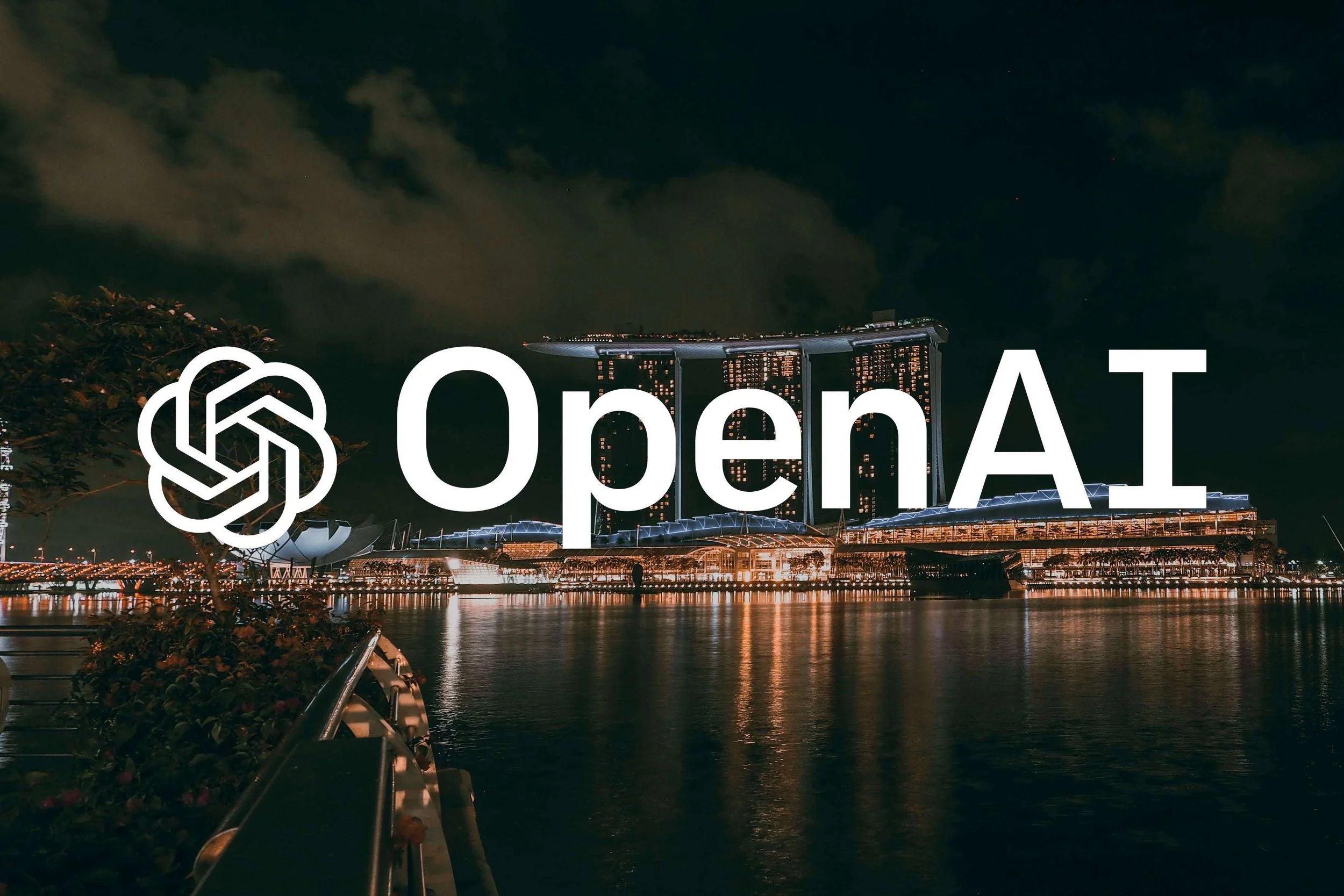
On May 20, 2026, OpenAI announced its collaboration with the government of Singapore to develop Singapore's artificial intelligence ecosystem. With an investment of over $300 million for building applied AI systems, training talent, and expanding the AI use in the public sector, OpenAI stated its belief that Singapore will become one of its global hubs for "forward-deployed engineers".
According to OpenAI and Singapore's Ministry of Digital Development and Information (MDDI), the Applied AI lab, to which the investments are allocated, is not a traditional research lab focused on building new foundation models. Instead, it is designed to deploy existing AI systems into real-world sectors, aiming to make AI beneficial for Singapore's national priorities’ development, particularly in fields of healthcare, finance, public services, and digital infrastructure. Bringing together OpenAI engineers, government agency workers, local company workers, and researchers, MDDI and OpenAI are declaring a shared goal to develop AI applications that solve specific challenges that the country is facing, such as a lack of healthcare decision-support systems and multilingual Southeast Asian applications.
Why Singapore?
Singapore is considered as one of the world’s most AI-ready economies. According to Singapore Economic Development Board (EDB), the nation ranks first in the world for national infrastructure and for global connectedness. Being considered as the gateway to Southeast Asia’s diverse markets, Singapore is known for efficiently facilitating global trade and regional expansion. The country has a network of 29 FTAs and 98 DTAs, including major economies like the United States, Europe, China, and Japan. An FTA is an agreement between countries that reduces or eliminates trade barriers, such as tariffs or quotas, while a DTA is a treaty between two countries that prevents individuals or companies from being taxed twice on the same income. Thus, Singapore’s network of FTAs and DTAs indicates a high level of connectedness to the global economy, enabling the country to become a regional headquarter for international trade.
For instance, in 2026, Microsoft launched its first AI research lab in Southeast Asia called Microsoft Research Asia - Singapore (MSRA Singapore). The goal was to to drive AI innovation across various industries such as healthcare, logistics and finance. MSRA Singapore is working on projects such as digital governance plans and large‑scale AI systems usage in public sectors, and there has already been some innovative integration of AI with daily government work in the country. The Government Technology Agency of Singapore (GovTech Singapore) launched “Pair generative AI assistant” in 2023, which serves as a tool for civil servants when writing, researching, coding, and conducting analysis.
At the same time, Singapore is actively growing its local AI talent pool and welcoming global talent. By 2029, Singapore aims to develop 15,000 skilled AI professionals to meet industry demand.
How OpenAI's Investment Could Reshape Singapore's Workforce
One of the most essential components of the OpenAI partnership with Singapore is the creation of more than 200 Singapore-based technical positions. The difference between these engineers and traditional AI researchers is that they don’t work to develop new models – they work directly with organizations to integrate AI into everyday operations. For example, some of their tasks include customizing AI systems for specific industries, connecting large language models, and developing internal AI assistants. Thus, their roles became a combination of software engineering, product development, and client consulting. Behind the new positions is a new set of skills emerging in the job market.
Singapore’s workforce has developed in tandem with AI to increasingly require special skills like prompt engineering, model validation, AI system integration, and AI governance. As AI becomes integrated into healthcare, finance, and public services, demand for AI governance specialists grows. According to researchers, the most valuable employees considered by tech companies are those who can combine domain expertise with AI capabilities. The core expertise behind the new skills set varies. In regard to AI governance, risk management, technology policy, and AI auditing are fairly common. Yet, in terms of educational background, people with academic experience in law, public policy, information systems, and business now have increased accessibility to the AI workforce.
For engineers with a background in computer science or engineering programs, skills such as Python, SQL, and Cloud platforms have become more like an entry skill to the workforce, while business skills such as client communication and project management are becoming increasingly necessary.
Despite new opportunities, concerns about displacement remain. According to DBS, Singapore’s open-market hub is the closest to combining AI capability with institutional trust at scale globally. Experts comment that the country’s small size could become a strength as AI can limit the workforce while “doing more”. With AI excelling at automating routine cognitive work, many jobs with administrative tasks or customer service now face inevitable changes. While AI is expected to create new opportunities in areas such as AI governance, implementation, and cybersecurity, Global financial institutions such as HSBC and Standard Chartered have acknowledged that AI adoption will eliminate many roles. Therefore, Singapore now faces a challenge in ensuring that workforce reskilling and job creation can keep pace with automation.
Beyond employment concerns, the rapid expansion of AI raises broader questions about sustainability and the potential environmental cost. The computing infrastructure required to support advanced AI systems consumes large amounts of electricity and water. According to the International Energy Agency (IEA)'s 2025 report, global electricity demand from data centers is expected to increase to more than double by 2030, reaching around 945 terawatt-hours (TWh), with AI being the primary driver of this increase. Furthermore, as governments and businesses face the tendency to rely heavily on AI to support decision-making, concerns surrounding excessive automation rise, worrying that this trend could weaken human judgment and accountability. For Singapore, the challenge indicates the importance of advancing technological development while staying sustainable and transparent to public.
In this sense, Singapore is not only testing and enhancing the capabilities of AI. Its current position reflects a question on whether a modern economy can successfully balance innovation, productivity, and employment in the age of rapid technological transformation and development.