
Across ANZ: AI Data Center Development Threatens Australia
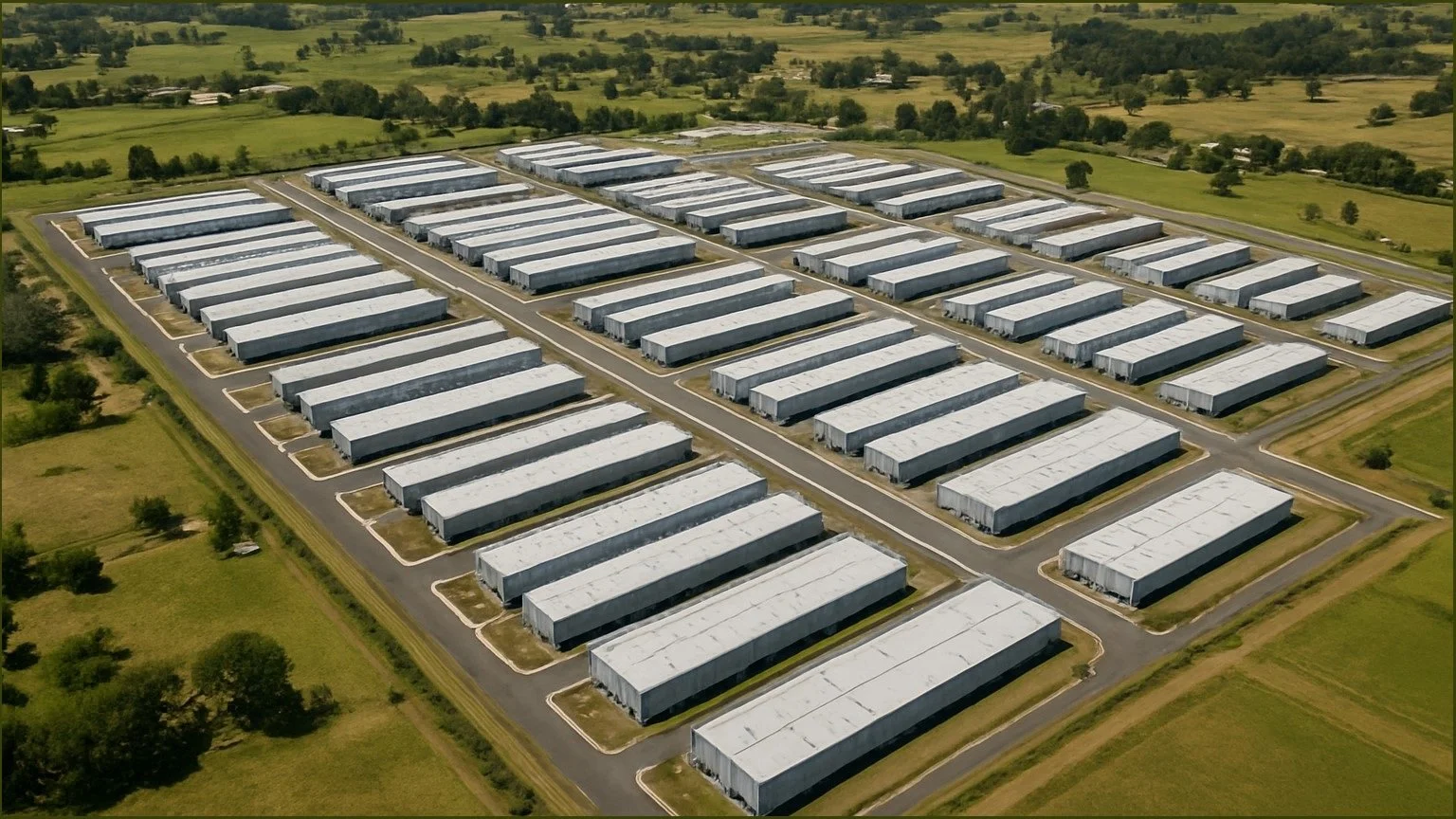
Artificial Intelligence (AI) has been a topic of great interest around the world, booming in popularity and usage due to publicly available large language models such as ChatGPT. Major AI developers such as Amazon or Microsoft have selected Australia as a prime location for the construction of new AI infrastructure, with plans to invest heavily and begin the construction of AI data centers. To do this, the lobbyist group Data Centres Australia has acted as a representative for these industry giants, communicating with government officials to initiate the construction of data centers across the country. However, as these projects begin cropping up nationwide, citizens have begun voicing concerns about these data centers, ranging from economic impacts to the sheer amount of space these constructions occupy.
Data centers are by no means self-sufficient, consuming massive amounts of water and electricity in order to remain in operation. The water usage of these behemoth-infrastructure developments are a particular worry to Australians, as the nation already suffers from water shortages. Data center industry officials have developed the water usage effectiveness (WUE) metric to quantify water usage of data centers relative to their overall computing capability. Many modern data centers operate at or near a perfect WUE due to closed-loop cooling systems that do not require input of water outside the initial creation of the system. Despite this, the initial water usage would still be difficult for Australia, and the lack of proper testing behind these systems poses a risk that many Australians are unwilling to take.
Water is not the only resource to worry about, AI data centers use huge amounts of electricity as well. The Australian Parliamentary Committee on Adopting Artificial Intelligence noted that AI data centers presently represent about 1.5% of global electricity usage. These estimates also state that the energy required to maintain a single data center yearly is equal to that required to heat 50,000 homes for a year. Statistics like these highlight the immense toll data centers incur, and with several new data centers being proposed across Australia, it is imperative that these numbers are taken into account.
The Parliamentary Committee cited statistics clarifying the impact data centers have on global greenhouse gas emissions. Greenhouse gas emissions by data centers have trended upwards each year, leading to additional environmental concerns for data centers. The United Nations University Institute for Water, Environment and Health published an in-depth report of AI’s overall environmental impact on June 3rd, 2026, highlighting the unsustainability of AI in the present day, as resource usage continually trends upwards. By creating an accessible and understandable report of AI’s total impact, the UN hopes that it can be used to inform future frameworks for sustainable, environmentally friendly, and innovative practices so that they may benefit all individuals.
One of the most glaring issues of AI data centers are their enormous footprints, with the largest data centers spanning hundreds of acres. Despite these facilities being so massive, they have still found themselves placed in or around population densities, leading to immediate pushback from communities forced to neighbor them. Their size and form makes them an eyesore to communities, with some being built adjacent to, or in rarer cases directly atop, important community gathering places such as parks or natural landscape. Ultimately, issues such as these arise from improper zoning and poor planning, with citizens hoping the government will hear their concerns and properly address them.
Australia is already home to 274 AI data centers, ranging from a 2 acre footprint at the smallest to a nearly 25 acre facility at the largest. As new data centers are proposed, planned, and eventually constructed, their unruly size becomes a deeper concern to more and more Australians. To make up for this, the Labor Party has begun attempts to rein in AI companies, placing limitations and regulations upon them that aim to offset negative impacts of these data centers. One prominent plan involves forcing data center developers to invest in renewable energy sources so that their electricity costs may be covered, however the rate at which these sustainable energy sources are being developed is far behind that which data centers are being constructed at.
As of March 23rd, 2026, the Department of Industry, Science and Resources laid out the National AI Plan, outlining the government’s plans for AI. This plan hopes to ensure that infrastructure development for AI is done sustainably and with the best interest of Australians in mind. Seeing as almost all major AI development companies are foreign entities, it is deeply important for the government to lay down key ground rules so that data centers do not end up disadvantageous to Australia.
On May 13th, 2026, Parliament referred the issue of AI and data centers to the Environment and Communications References Committee for further inquiry. The committee is tasked with examining the adequacy of existing regulations and assessing the impacts of data centers on Australian communities, industries, energy systems, and the environment. This evaluation will result in a report being made by November 16th. Using the data compiled within the report, the federal government will hopefully be able to issue new legislation regarding AI and data centers, taking into account any oversights in current regulations that were made apparent by the report. This evaluation is testament to the fact that the Australian government is taking the matter of AI data centers seriously, however current concerns may go unanswered for quite some time until the committee makes their report.
