
Mideast: The High Costs And Steep Challenges Facing Syrian Reconstruction
Ahmed akacha
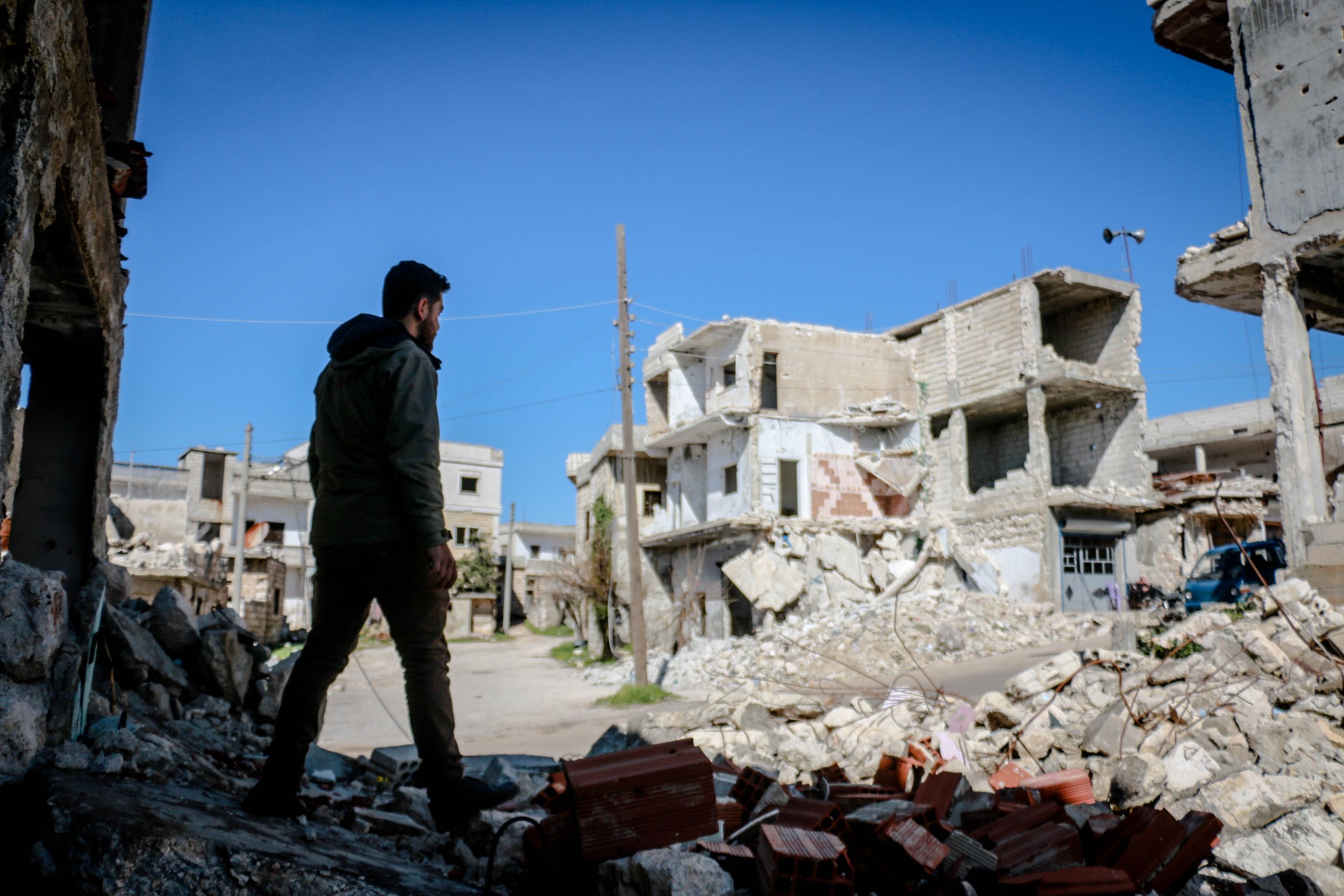
Following the overthrow of the al-Assad regime only a year and a half ago, the transitional government of the Syrian Arab Republic inherited a landscape of destruction and a people desperate to rebuild. The Syrian Civil War, which raged nearly 14 years, saw roughly 90% of the nation’s infrastructure severely damaged or destroyed entirely — devastating the ability for millions of Syrians to carry out even the most basic functions of everyday life. Now, the People’s Assembly has laid the foundation for extensive projects to rebuild public transportation, highways, local roads, and bridges as well as hundreds of billions in tax-free foreign investment to revitalize the Syrian energy and agriculture industries.
The first half of 2026 marked a turning point for the future of Syria’s internal infrastructure with the announcement of the country’s official Statement of Recovery Priorities in March and June bringing the launch of the Emergency Bridge and Local Road Plan and the National Highway Rehabilitation Plan. The present state of infrastructure, however, is still overrun by the rubble of the past and continuously damaged by the environmental catastrophe it poses.
Over the course of the war, more than 140,000 public buildings were destroyed, including over 7,000 schools, and after over 600 attacks on hospitals and other healthcare facilities, millions of Syrians remain in need of healthcare and educational resources that no longer exist or are desperately overrun.
That isn’t including the housing that has been devastated, with more than 328,000 homes estimated by the United Nations to have been made completely uninhabitable, leaving over a fifth of Syria’s entire population homeless as a result — more than five million people. As of April, over 12 million people in Syria also had severely limited access to water, sanitation, hygiene, and waste services, with 2025’s drought stressing a system already functioning with immense difficulty. As such, the end of the al-Assad regime may have brought governmental change, but the suffering and everyday hardships caused by the war are likely to continue to be felt for years as the provisional assembly’s reconstruction plans slowly come into effect.
These plans are just the start of a massive physical rebuilding that is estimated to cost between $140 and $400 billion and take upwards of a decade, if not multiple. The World Bank Group’s conservative best median estimate for the cost of such a massive reconstruction falls at $216 billion, but that estimate only focuses on physical damages across housing, non-residential structures, and critical infrastructure, meaning it doesn’t include the cost of rectifying the current housing shortage, which would be steep.
The plans also focus primarily on several specific areas and infrastructure in drastic need as first projects, namely cities such as Aleppo, which were devastated by bombing during the war, as well as the M45 highway, a critical trade, resource, and transit artery that connects the nation from the Nassib border crossing with Jordan in the south to the Bab al-Hawa crossing with Turkey in the north. Reestablishing a reliable and safe roadway to reconnect the country with itself and outside nations has been set forth as a foremost concern, with complementary expansion plans to link Damascus, Palmyra, and Deir Ezzor being established alongside repair work. In order to comply with international standards of safety and technical engineering, the Syrian transitional government is accepting bids from specialized international companies to construct these roadways, inviting the foreign investment Syria’s economy desperately needs.
Foreign investment is expected to be the backbone of Syria’s reconstruction as the cost more than 10 times exceeds its GDP at its lowest estimates. Nations near and far have answered the call for investment, from France to Russia, but it is the fellow Gulf Nations, including the United Arab Emirates, Saudi Arabia, Kuwait, and Qatar, who lead the charge, investing tens of billions in redevelopment funds between them to support the real estate, public transit, tourism, and energy sectors and, hopefully, bring Syria fully back into the international economic fold.
As of February, Saudi Arabia committed over $2 billion in investments meant to support the construction of a 4,500-kilometer fiber-optic backbone, ajoint-venture airline, a coastal desalination plant, and two airports in Aleppo. Qatar will also help return Syria to the air with commitments to reconstruct the Damascus International Airport, as well as help turn the lights back on, as they have madea seven billion dollar pledge to rehabilitate electricity generation systems. Damascus’s reconstruction will continue with the support of the UAE in addition, which has committed to a two billion dollar contract to construct a new subway system for the city, which, upon its completion, is expected to serve as many as 750,000 commuters daily.
These plans, however, do not come without risk. Investors and international affairs authorities alike have concerns over a lack of regulation and institutions being established by the young government to support these expansive plans that will handle billions of dollars and seek to transform the very functions of the state. As strategic analyst Güney Yıldız wrote for Forbes, “Capital arrived before institutions did.”
This puts the potential for the mishandling of funds or failure much higher than if there were established oversight, rules, and guidance already tested by past projects. And yet, there is no end to the billions in foreign investment being poured into Syria projected any time soon, leaving investors and Syrians alike desperate to see if such a vulnerable state will be able to make strides on unstable legs while more and more cash gets strapped to their back.
