
South Pacific: Papua New Guinea’s United Deaf Community
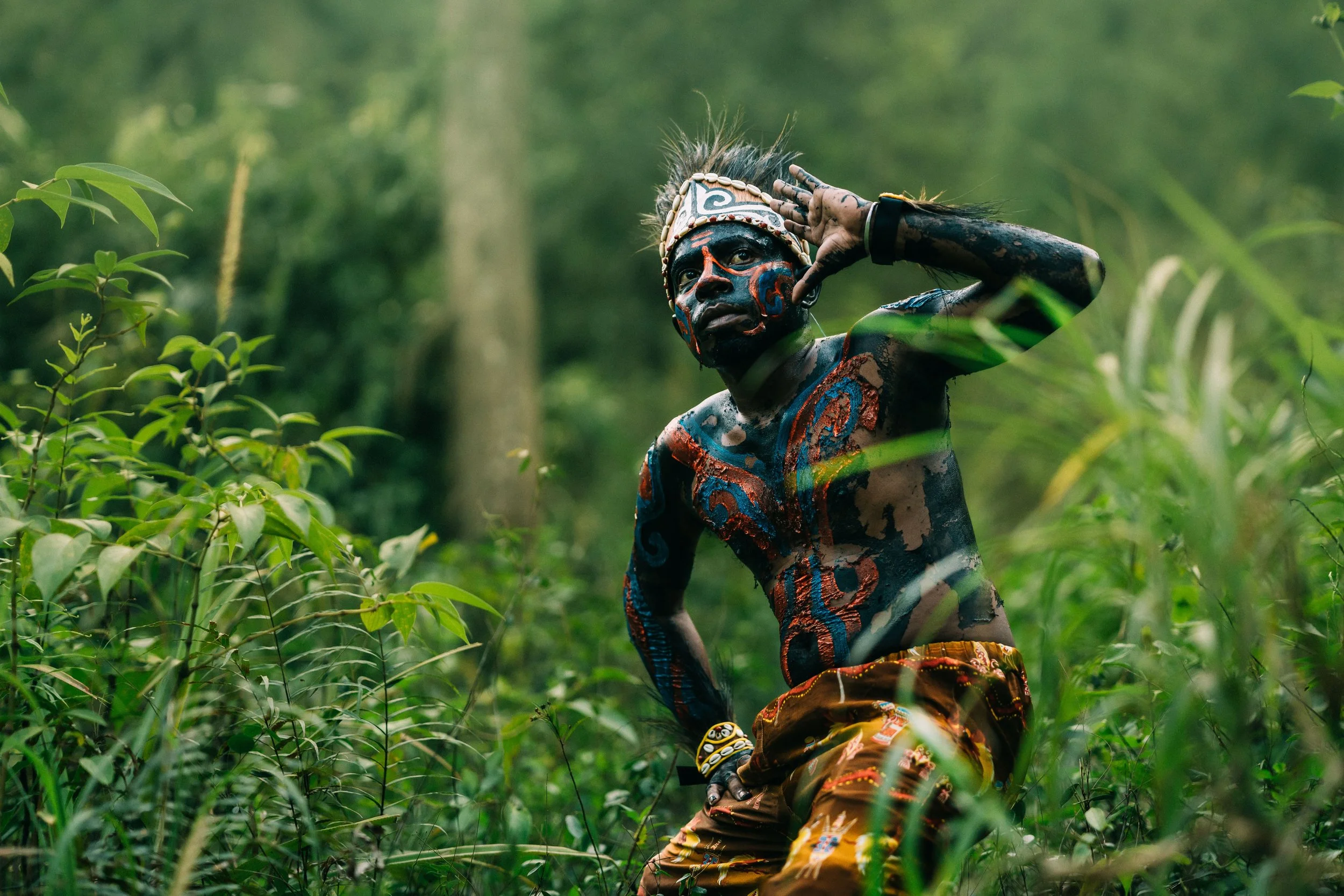
Adiardi Zulfansyah
Papua New Guinea (PNG) is a nation of around ten million people, yet there are over 800 spoken languages in the small Island Nation. This complex linguistic context has often been a topic of fascination and awe, especially considering how neighbouring country Australia has over 800 Indigenous languages but currently, over half of them are on the brink of extinction. But the linguistic layout of the nation has unintentionally created a fracture towards the deaf community. The question of communication between all 800 languages for the deaf community is and was never straightforward with competing foreign influences that have left a fragmented landscape that advocates are only now beginning to piece together and change the narrative.
For context towards deaf communication, post-colonial PNG saw missionaries introduce Auslan – Australian Sign Language – in the 1990s. This was carried in largely by Australian church organisations and NGOs establishing the country's first deaf schools. However, this was not necessarily a gift for the community, as it arrived by default not by official policy. Australian organisations constructed the system of schools, teachers and curriculum, somewhat forcing a creation of deaf students in Port Moresby and Lae to have Auslan become their first formal language.
This became an issue as this was not the only form of communication existing for deaf people.
In parallel to Australian missionaries, separate missionary networks – such as American evangelicals – introduced elements of American Sign Language into other local communities and church settings, creating a second competing system with no coordination between them. Meanwhile, in rural highlands and coastal villages across PNG's vast and difficult terrain, deaf communities had long been using localised home sign systems. These variations were specific through communities organic, family-level gestural languages which then developed independently and naturally. These were not primitive substitutes. Linguists who have studied the Western Highlands sign languages have found rich, structurally coherent systems shaped by local kinship structures and community life.
This resulted in division through denomination, not ethnic or geographic lines. What sign language was taught depended less on geography and more-so on what church built the nearest school.
This fragmentation began to be addressed, slowly, in the 2010s. A national standardised form of Papua New Guinean Sign Language – known as PNGSL – was developed through collaboration between deaf communities and educators, drawing primarily on Auslan as a base but incorporating local home signs and influence from Tok Pisin, the country's creole lingua franca. In 2015, PNGSL was officially recognised as one of Papua New Guinea's four national languages, alongside English, Tok Pisin, and Hiri Motu – a significant moment of institutional recognition for a community that had long been overlooked. By then, PNGSL was being used as the primary language of instruction in deaf schools and deaf units within hearing schools.
But the reality of official recognition remains some distance away. Research from the University of Bristol published in 2025 examined inclusive education provision in a model primary school in PNG and found that deaf learners were particularly disadvantaged – not because of a lack of goodwill among teachers, but because access to any form of sign language instruction remained deeply inconsistent. Teachers encountered deaf children in their classrooms with no training in PNGSL themselves, constrained by what the researchers described as "multi-level" systemic weaknesses. The recognition of PNGSL on paper had not yet translated into trained teachers, adequate materials, or institutional infrastructure at the school level.
This gap sits within a broader educational crisis that PNG is grappling with. A World Bank-supported project launched in 2025 noted that an estimated 72 percent of ten-year-olds in PNG cannot read or understand age-appropriate texts, and that only 18 percent of young adults have completed secondary education. In that context, the needs of deaf children – who require specialist instruction in a visual language – are easily deprioritised and brushed off. Deafness in PNG is not merely an underappreciated communication worry, it highlights the problems of an already fragile education system. However these problems are unequivocally difficult to address without targeted, sustained investment.
What makes the PNG case particularly striking is how completely PNGSL has broken from its origins. When Auslan arrived in the 1990s it was absorbed, stretched, and remade — folded into Tok Pisin grammar, fused with the home signs that deaf children had developed within their own families, and shaped by a community that had no reason to preserve a foreign language's original form. Linguists who have studied the result describe something that bears Auslan's fingerprints but is, structurally and lexically, its own thing entirely — a language that emerged not by design but by the pressures of lived experience across an extraordinarily diverse country. Grokipedia's profile of PNGSL estimates around 30,000 native users as of 2015, a community large enough to sustain a language but still too small, and too spread across difficult terrain, to have built the full infrastructure one needs around it — the interpreters, the teaching materials, the trained educators. Official recognition in 2015 was a milestone. The ecosystem to support that recognition is still catching up.
The churches and foreign aid organisations that originally helped build the deaf education system and infrastructure are not entirely seamlessly shifting to one deaf sign-language. Some have even purposefully rejected the shift towards a standardised PNGSL, however, this is to be expected as it is a familiar pattern across the South Pacific where the tools of colonial education have often proven stubborn to dislodge. For the deaf community and advocates the challenge lies not with the content of creating a language but reclaiming the institutional ground on which it is taught.
The situation in PNG is not unique in the Pacific. Academic research on sign languages across Melanesia has found similarly fragmented landscapes in the Solomon Islands, where deaf communities are also navigating between imported sign systems and locally developed ones. But PNG's scale makes it so complex and interesting – the stakes are higher than anywhere else in the region.
What is emerging is a community-led movement to consolidate PNGSL from within. Deaf educators and advocates are pushing to document the language more widespread and systematically, help build teaching resources, and promote consistent implementation across schools – work that the Ethnologue entry on PNGSL describes as having moved the language from an afterthought and toward institutional stability, even if that stability remains incomplete. It is slow, underfunded work, largely invisible to observers not particularly affected by this fragmentation, taking place in a country that rarely features in international media unless a disaster or political crisis demands it.
But it matters. Language is innately more than just a form of communication, it is the crux of culture and identity, especially as it is the language taught by our surroundings. The question of which sign language the deaf community chooses to overarchingly learn, as well as who is allowed to learn it and who controls it is inexplicably linked to who they are allowed to be. The country is still negotiating what nationhood means across the vast 800 spoken languages, the silent language spoken by its deaf citizens deserves more than an afterthought.