
Anil Sharma
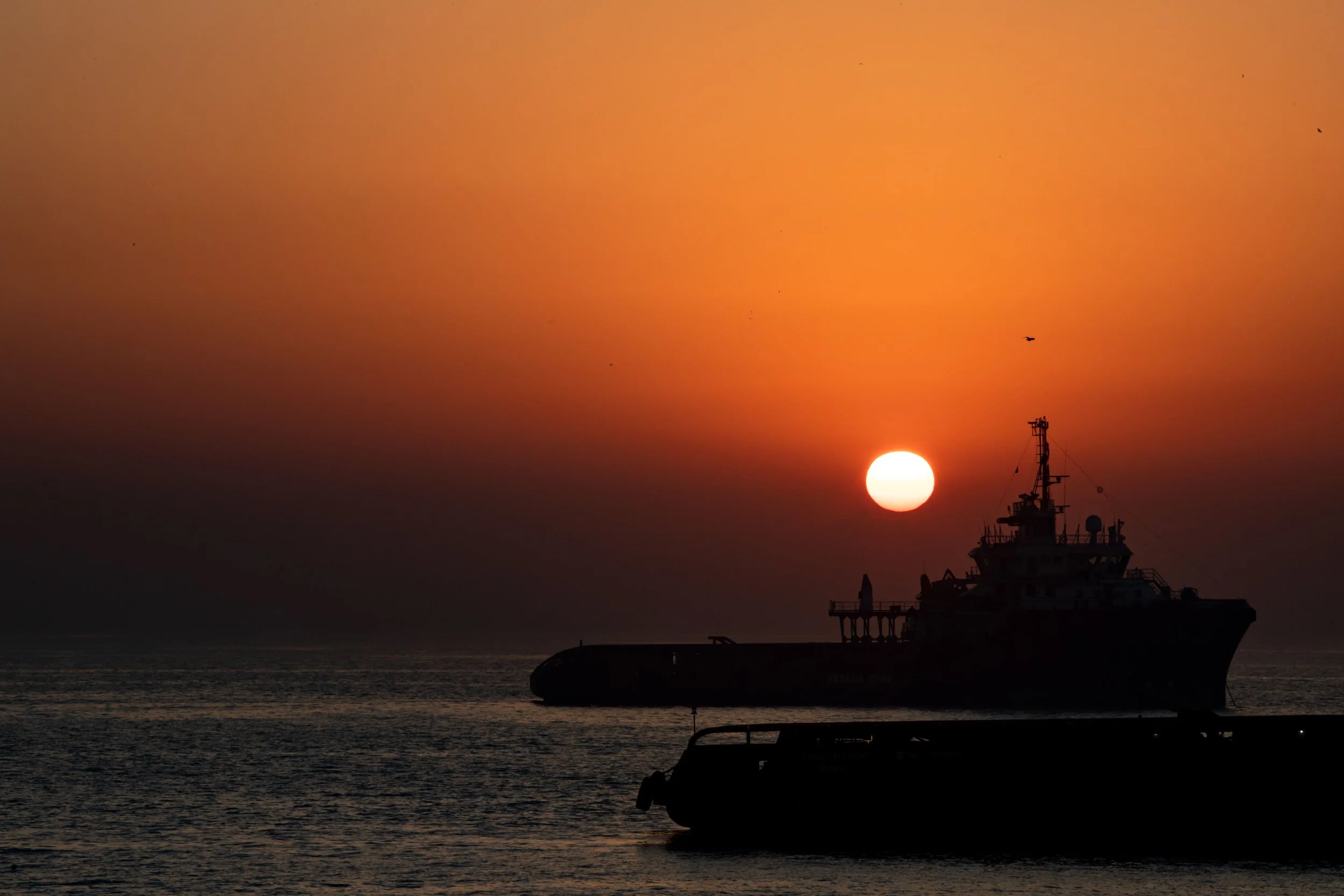
The war between the United States and Iran is shedding blood, but it is not red, it is black. As one of the most sacred paths for the oil industry, the Strait of Hormuz solidified itself as one of the most crucial areas for the international economy and diplomacy. Subsequently to its blockade, the Strait became the Queen in the game of chess played by both nations. Within this heated rivalry, other nation states have been caught in the crossfire, India being one of them. The dangerous waters that the Strait has now become have seen the death of three Indian citizens since the ignition of the war on February 28, 2026. The strikes that led to these causalities came from both participants of the conflict; the instances have had different outcomes, however the dubious communication were a constant in both accounts.
Iran’s Strikes
On Tuesday, July 14, the ministry of external affair (MEA) disclosed immense unhappiness with Iran given the continued strikes on vessels that carry Indian on their crew. The ministry has expressed that India is deeply worried on the recent attacks on the Strait of Hormuz, which hit the vessels MT Mombasa and the MT AI Bahiyah. The ships were navigating through the strait when the attacks, currently attributed to Iran, occurred. The strike of the MT AI Bahiyah resulted in one causality and one injury out of the 12 Indian seafarers aboard the vessel. Regarding the MT Mombasa, there were 18 Indians aboard it, where nine have suffered non-fatal injuries, and two of those men were reported to have sustained severe trauma.
A spokesperson for the MEA has voiced immense discontentment and disapprobation with Iran’s attack of the vessels. "We strongly condemn these attacks and acts of violence targeting seafarers and disrupting free and safe navigation through international waterways like the Strait of Hormuz”, said MEA’s representative. The authority also made public knowledge that Iran’s Embassy in New Delhi has been contacted in hopes of discussing the attacks and how to ensure safer passages for Indian seafarers. MEA stated that the deputy chief of mission of the Embassy of Iran in New Delhi was summoned on the morning of the 14th of July. The Embassy is yet to respond to the summoning and there has not been any official response from the Iranian side. All this convolution led the authority to also reinstate their call for peace, as well as their concern regarding the violation of diplomatic principles. The statement reads: “We also reiterate our deep concern on account of the resumption of attacks and escalation of hostilities in the West Asia region and call for immediate cessation of violence and a return to dialogue and diplomacy in the interests of peace, security and stability in the region”.
Nonetheless, although MEA highlighted their desire for regional peace and stability, the economic impact derived from the conflict is also a factor for India’s call for ceasefire. India’s economy, mostly regarding the oil market, has seen changes following the ignition of the war. For instance, it is project that India’s annual GDP growth will be cut in nearly 6%, given the skyrocketing of oil prices and fertilizers, which directly hinders the nation’s economy as it is heavily agriculturally based; India also is Global South’s largest oil consumer given the extent of its transportation and energy industry. The transportation sector alone consumes close to 50% of India’s oil imports.
United States’ Attacks
The strikes conducted by the United States occurred in similar fashion as the Iranian opposition. The Palau-flag carrier tanker, MT Settebello, was struck by Washington’s armed forces on June 11, 2026, as the vessel was cruising through the Gulf of Oman. Aboard the ship, there were 24 Indian seamen, who composed the entirety of the crew, and, following the attack, there were 21 survivors. The location of the MT Settebello was the key component for the American strike, as it is overwhelmingly near the Strait of Hormuz, a blocked area given the Washington – Tehran war. Reiterating, the Strait is of immense strategic importance to Iran, since, through blockading it, Tehran develops a cascade of global economic implications, as the path is responsible for 20% of the world’s oil flow. An overpowering deterrence mechanism on the Iranian side. Hitherto, any vessel within or near the Strait is a possible target to both opposing forces.
The difference between Iran and the United States’ attacks lies in the response received by India, which, in Iran’s case, was none. However, Washington attempted to justify the event. When addressing the casualties led by their attack, U.S. Central Command (CENTCOM) explained that there were communication attempts with the MT Settebello, and the other three tankers who were struck that very day. The tanker Marivex, also carrying Indian nationals was attacked, nonetheless, they were no fatalities nor injuries. Furthermore, CENTCOM claimed that all vessels involved did not follow the American instructions, leading to suspicion and, eventually, the strikes.
Following the series of American bombings, a spokesperson for India’s foreign ministry enlightened the public with the authority’s view. Randhir Jaiswal spoke on behalf of the ministry to journalists, where he called for peace and stronger and more effective diplomatic dialogue, not only between the nations involved, but with the international community as a unity. Furthermore, Jaiswal disclosed the situation between Delhi and Washington. After the event, the United States’ Embassy was summoned to give their official stance and position, to which India obtained no answer. It has been longer than thirty days since the summoning, which makes a response from Washington highly unlikely.
IOS Marine FZE, the MT Settebello’s administration company, has declined all claims made on the American side, explaining that there were no communication attempts. They have also called for investigation on the matter.
India’s Recent Position
Even though oil is intrinsic to the functioning of India’s economy and society, the nation has prohibited voyages to the Strait of Hormuz. As of today, July 17, 2026, India has barred all its seafarers from working on vessels that go through the Strait, given the high degree of perilousness. The country has also urged ship recruitment services and ship owners to not hire any personnel that have Indian nationality.
It is unknown when the doors will reopen for Indian seafarers to brave the dangerous waters of the Strait of Hormuz, as the country does not wish to lose anymore of its seamen due to air bound strikes in a war where it is not even a participant.
