
India Insights: Thawing Ice? – Evaluation Of Trump And Modi’s Relationship
ANDREW CABALLERO-REYNOLDS
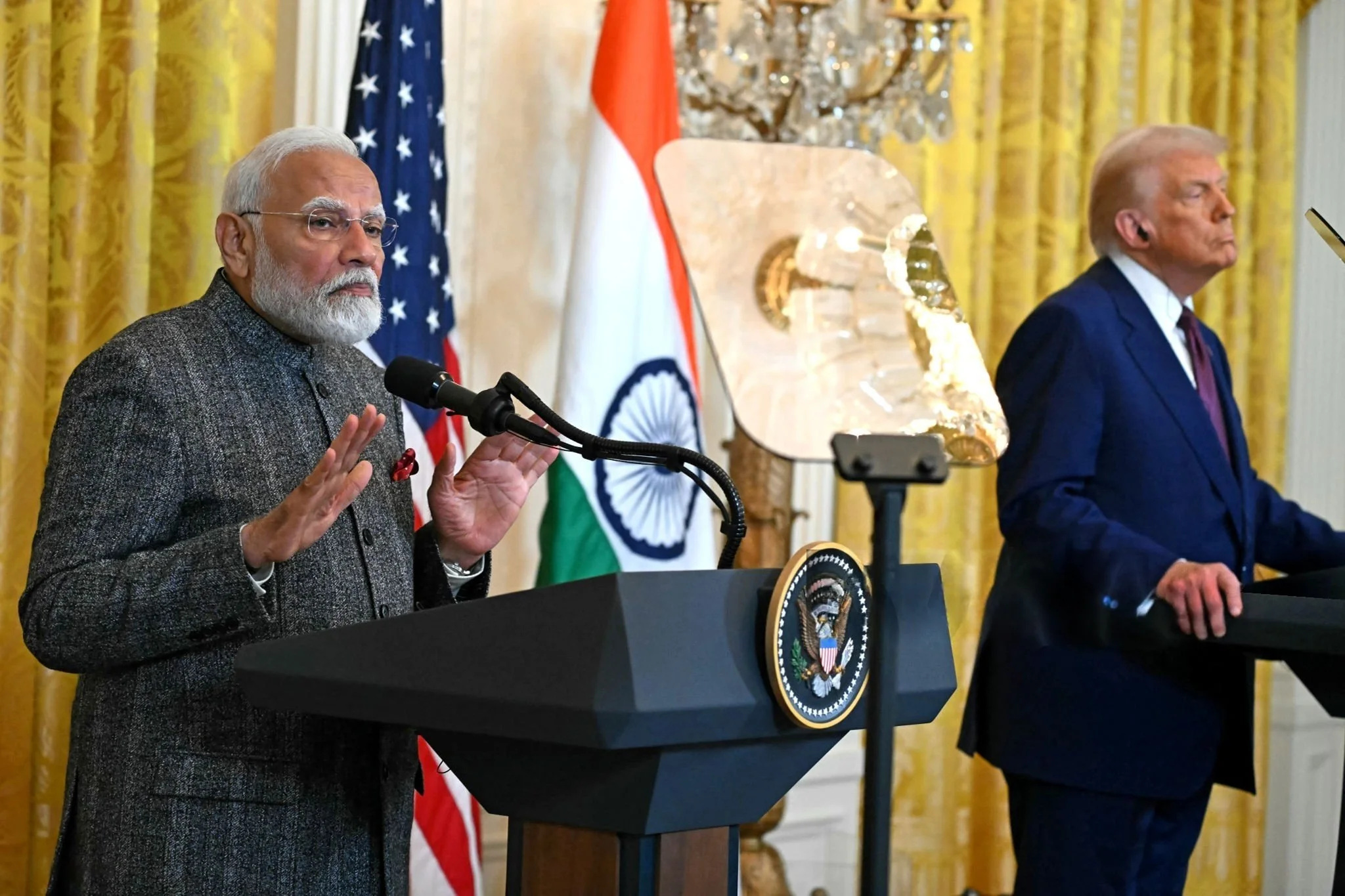
Under the international spotlight, lies the United States, the precursor of numerous controversial policies and actions in the geopolitical stage. Although an eminent nation, India, however, doesn’t share the position in the world’s podium. Nonetheless, the current affiliation among India and US is not absent of polemics. Since the publishing of the article “walking on a tightrope – the conflicting relationship between the United States and India under Trump 2.0”, there were several new events. Whether said relationship has become more unstable or not, it is up for interpretation, as there were both positive and negative developments. When analysing through historical lenses, one may be inclined to believe that, indeed, the nations’ partnership has worsened since Trump’s new ascension to power, and the most recent controversies have been pushing towards the negative end of the spectrum. On the other hand, if an individual forms its opinion based on the fresh occurrences within diplomatic forums, most notably the G7 summit in France, it is likely to believe that, although delicate, the relationship has seen worse days. In February 2025, Narendra Modi and Donald Trump the leaders held a meeting at the White House, making Modi one of the firs rulers to visit the US following the election. During his visit, Modi disclosed that himself, and India, were content with Trump’s re-election. In 2026, Trump and Modi have spoken thrice, with the G7 summit being they’re first in person meeting.
When asked about the bilateral meeting, Trump has demonstrated satisfaction with the progress made and promised that he soon will visit India. The US President additionally said that the countries have been negotiating new trade deals, even calling Modi a “tough negotiator” when speaking to reporters. Moreover, Trump was also posed with a question about military aid or alliance, the US’ 47th President said that if India was attacked, the US would provide help. “If anybody attacks that man, we're going to be there... Now, if there's a new leader, I'm not sure about it”, said Trump. Even though the summit has illustrated optimism for the improvement of US – India’s partnership, some events may also point to the continuation of a fragile and unstable relationship. For instance, on June 11, 2026, the United States’ military killed three Indian sailors, following an attack in the Gulf of Oman. In total, there were 24 men, where 21 men were rescued and three killed.
The Settebello Attack
The MT Settebello, the tanker struck by the American military, is a Palau carrier ship that carried 24 Indians aboard. The vessel was close to the Strait of Hormuz, currently under blockade, due to the conflict between the US and Israel against Iran. On the week of the attack, the United States also struck two other vessels, however, it did not lead to any casualties. Given the strategic importance of the Strait of Hormuz, Washington “blacklisted” and sanction a significant number of ships/boats. The MT Settebello is not within the list. Alongside the Settebello strike, US’ army also conducted attacks to Marivex, another tanker with an all-Indian crew. The Guinea-Bissau flagged Javier, was the third oil vessel struck by Washington’s navy. US Central Command (CENTCOM) disclosed that they tried to communicate with tankers, who failed to comply with American instructions. CENTCOM justified the attack by claiming that they suspected the three disabled vessels were carrying Iranian oil passing by the Gulf of Oman, meaning that all tankers were violating the country’s blockade against Iran.
Randhir Jaiswal, India’s foreign ministry spokesperson, has told journalists that India’s foremost concern is ensuring safety and peace, calling for the attacks to end. “We also call for dialogue and diplomacy so that we can have an early return to peace and stability in the region”, said Jaiswal. The spokesmen then explained that New Delhi attempted twice contact with the city’s US Embassy, which, at first instance, did not provide any response. IOS Marine FZE, Settebello’s manager, denied all of US’ claims, further calling for an international investigation of the event. India’s official stance was to call for peace in the region, Modi, in contrast, opted to not state anything publicly. Nonetheless, during the bilateral meeting with Trump, it has been reported that Modi has stated the necessity to implement improved safety regulations for civilian sailors in conflict regions. This later action resulted in scrutiny of Modi’s diplomatic policies, where he is too lenient with US’ behaviour.
Trade Discussions
From calling India a “hellhole” to promising to pay them a visit, Trump frequently contradicts his own actions and comments, confusing geopolitical analysists and politics aficionados. The US’ international partnerships have become more fragile since the most recent election, due to its intense employing of tariffs, controversial policies, and military interventionism. Within the impacted nations, one sees India. From the start of his presidency, Trump went on a tariffing-spree, affecting the country’s importation and exportation, leading to the affliction of several nations’ economies. The tariffs towards Indian goods started at 50% decreasing to 18% in February when Modi and Trump agreed on an interim deal, under the condition that India ceases its purchase of Iranian oil; this. Is yet to happen, but the deal went through regardless.
Recently, the US has developed a tariffing policy that is aimed at tackling forced labour. This will be deployed to dozens of countries, including India and the UK, and will increase the price of some goods somewhere between 10-12.5%. China and the UK have denied that any of their manufactured goods are produced with forced labour. India has not made any comments. Some have been raising concerns over the effectiveness of the tariffs, whereas others are more focused on how these tariffs will impact US’ relationship with its partners. As India has already had issues with Washington’s incessant tariffing, even though they have been decreased. It is likely that, if fully implemented, this policy will further hinder the diplomatic and economic partnership between India and the US. Throughout the meeting during the G7 summit, the leaders discussed trade deals, however, this new policy already posed as a setback to negotiations, as nothing was agreed upon.
US-India relationship is utterly complex and delicate, currently being hampered by the ongoing international conflicts and Washington’s meddling in domestic and global economy. Whether things are looking bright or dull, is up to the chosen analytical lenses, as arguments can be made for both sides. However, considering all factors, the seemingly fine partnership may deteriorate at any moment, analogous to a sleeping volcano.
