
Far East: Powering Rangpur and Bridging Bangladesh's Regional Development Gap
Bloomberg
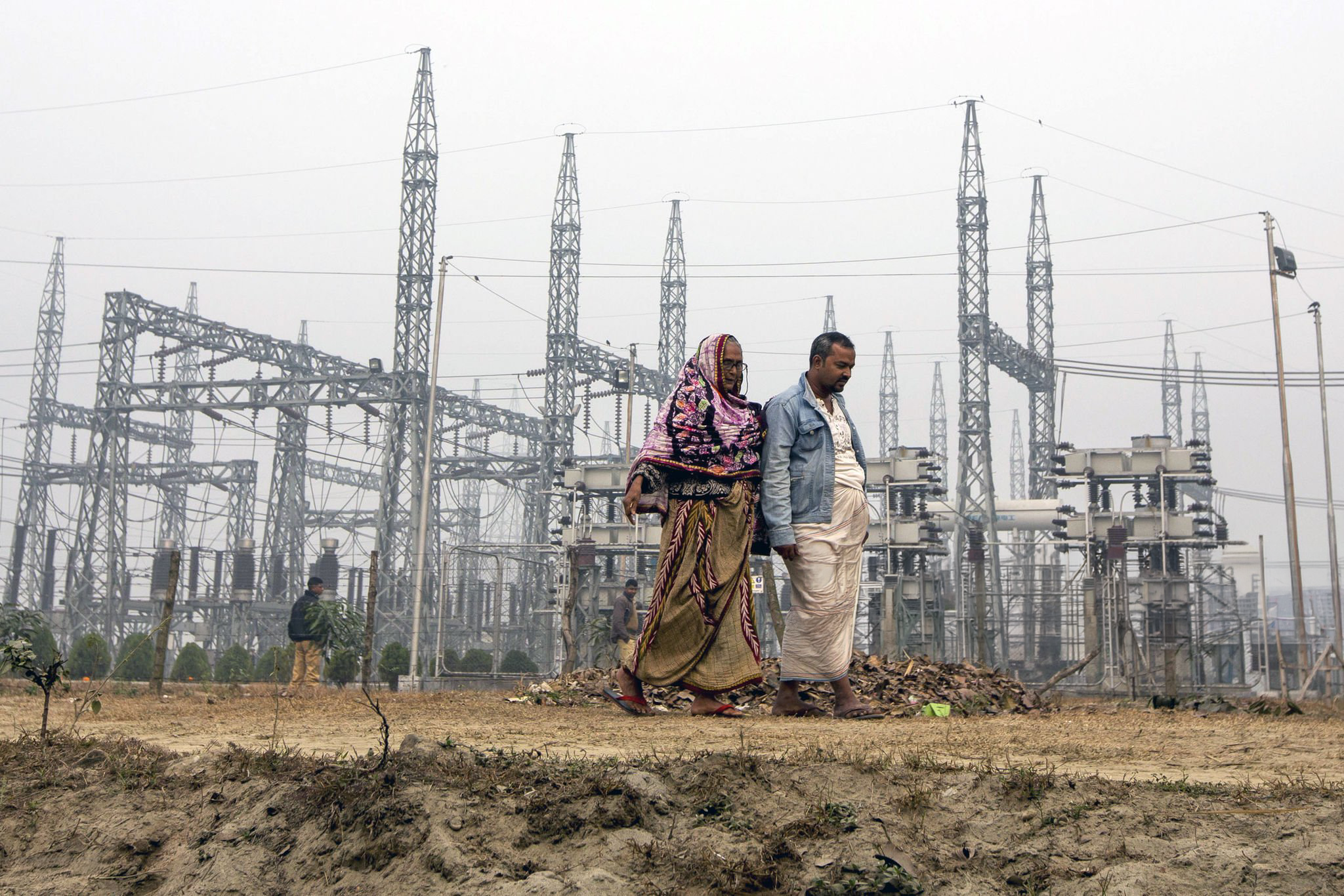
In July, 2026, The Bangladesh’s government decided to upgrade and modernize 9 power substations in Rangpur, aiming to secure and further stabilize electricity supply for the country. Under Northern Electricity Supply Company PLC’s (NESCO) “Network Infrastructure Development and Modernization of the Power Distribution System project”, the upgrade’s contract value is around Tk 141.33 crore ($11.5 - 12 million), covering not only design, engineering, and installation, but also testing and commissioning.
NESCO, established in 2016, is a state-owned power distribution organization headquartered in Rajshahi, Bangladesh, covering 16 districts. It is not responsible for power generation or transmission, but for distribution of electricity to consumers across different levels: residential, commercial, industrial, and agricultural.
After spending years expanding electricity generation and now achieving nearly-universal access, Bangladesh’s priority is now shifting from generating to building a more reliable and efficient electricity distribution network that can support regional economic development.
Overview: Bangladesh’s Geography
Bangladesh is the eighth-most populated country in the world, and it is also the only country ranked among the top ten in both population density and total population. The country’s economic activity are mostly concentrated around Chattogram and Dhaka, with northern districts being historically more under-developed compared to other regions.
Bangladesh is vulnerable to climate changes and natural disasters, especially floods and cyclones. A major reason contributing to this valnerability is its so-called “low-lying delta geography”. The country sits on the Ganges-Brahmaputra-Meghna (GBM) Delta, which is the world's largest river delta. Specifically, around 80% of the country consists of floodplains, and around 66% of land lies less than 5 meters above mean sea level. During the monsoon season, the major rivers in Bangladesh carry enormous volumes of water from the Himalayas, which makes flooding a regular occurrence. Frequent floods damage infrastructure like roads, railways, bridges, farmlands, and schools. They also significantly interrupt electricity supply, with electrical substations and transmission lines being destroyed, and the electricity instability usually lasts for days or even weeks.
Additionally, Bangladesh's southern coastline faces the Bay of Bengal, which is one of the world's most cyclone-prone regions. Cyclones usually bring rainfall, storms, and strong winds, which cause damage to substations, distribution network facilities, and transmission towers.
With high population density and electricity demands, the country faces long-term challenges when maintaining and protecting energy infrastructure, particularly in coastal districts. Bangladesh has always put climate resilience as one of the prioritizations in energy planning, and the recent substation modernization program under NESCO is one of the instances.
The Rangpur Project: Why the Northwest?
Operated under NESCO, the full name for the Rangpur Project is Northwest Distribution Network Modernization Project. It targets northwestern districts in Bangladesh, such as Rangpur, Gaibandha, and Syedpur, which are less industrialized than other districts. The northwest is an important agricultural region in the country, which requires reliable electricity for food processing, irrigation facilities, fertilizer production, and food storage. Furthermore, these districts have outdated distribution networks, and the old equipment is reported to waste electricity through heat and inefficiencies. Yet, population growth and agricultural mechanization further pushed demand, making changes to the electricity system more urgent.
Historically, economic activity in Bangladesh has been concentrated in Dhaka and Chattogram. According to a World Bank analysis, the Dhaka - Chattogram corridor accounts for 56% of total employment in the country, while serving as the country's largest clusters of manufacturing and export-oriented firms. Additionally, the Chattogram Port, as Bangladesh's main maritime gateway, is responsible for more than 90% of the country's international trade volume and 98% of its container traffic.
Therefore, economic development has always been uneven in Bangladesh, and it’s one of the nation’s long-term goals to reduce the gap between Dhaka and Chattogram and other regions, such as Rangpur, where growth has taken place at a slower scale and intensity. Against this backdrop, Bangladesh's NESCO upgrade plan in Rangpur can be viewed not simply as a technical upgrade, but as part of the broader efforts to achieve a more geographically balanced economic development.
A Comparison: Bangladesh and Bhutan
Bangladesh and Bhutan, two South Asian countries, both face challenges in their scale and intensity in developing and delivering electricity networks. Bangladesh is located between India and Myanmar, with a long southern coastline along the Bay of Bengal. As one of the world's most densely populated countries, with a population of roughly 175 million people living in an area of about 148,460 square kilometers, Bangladesh needs to supply electricity to a very large population concentrated within a relatively small area. Infrastructure in the country is also heavily affected by flooding, river erosion, cyclones, and rising sea levels.
Bhutan, on the other hand, has almost completely different geography than Bangladesh. Bhutan is a landlocked Himalayan country located between China to the north and India to the south, east and west. It is relatively sparsely populated, with settlements scattered throughout the mountain regions. The challenges for infrastructure in Bhutan are mainly caused by its mountainous and Himalayan geography. Not only are settlements geographically isolated from one another, construction of roads and power lines must cross steep mountains and valleys, which are more expensive to build and maintain in the long term compared to Bangladesh's geography. However, there are a number of fast-moving rivers, the Himalayan rivers, flowing down from the high mountains in Bhutan, such as the Manas River system and Mangde Chhu. Thus, Bhutan's steep mountains and fast-flowing rivers make it advantageous in hydropower development.
The comparison reflects that electricity reliability is never achieved through a single model. Bangladesh's current priority is to modernize a crowded and high-demand distribution network system, while Bhutan needs to face the physical challenges of maintaining stable connections across mountainous terrain. Both countries are now moving beyond the first stage of electrification, and their priorities have shifted towards finding methods to maintain a stable and reliable power system, especially when facing population expansion and increasing climate-related risks. Together, the two countries are illustrations of how different geography can shape electricity infrastructure and governments’ priorities.
For Bangladesh, the Rangpur project symbolizes a transition in the country's development strategy: from expanding electricity access to improving the quality and reliability of that access, at the same time balancing geographically uneven electricity developments, particularly in regions outside the dominant economic centers.