
MANON ROCA
Since 2019, Lebanon has been brought to its knees. Rocked by shattering public trust in its banking system, freezing billions of dollars across citizens’ accounts, the devastating 2020 Beirut Explosion, oil price instability, and regional conflict, the Lebanese government is now grappling with one of the worst modern economic crises. With the Lebanese lira losing as much as 98% of its value between 2023 and early 2024 and over 80% of its population living in poverty, the Lebanese government is now facing the steep task of rebuilding credit, infrastructure, and — perhaps most crucially — public trust.
Lebanon’s economy and state had been fragile for years up to 2016, built off of foreign money sent home from expats abroad, Gulf Nations with an interest in Lebanese security, and investors drawn by the lure of massive interest returns. The system relied on a flow of new dollars coming into the country, and in 2018, when foreign investors began to realize the instability and started quietly pulling their money out of Lebanese banks, that supply dried up.
By October 2019 the Lebanese government was desperate for revenue, instituting a tax on internet phone calls via Whatsapp — the backbone of digital communication for many Lebanese — and inadvertently stoking the flames of mass protests across the country. The protests sparked fear throughout the banking sector of a run on cash, and by November, outbound international transfers were banned, and digital foreign currencies held in bank accounts were locked inside the system. Today, an estimated 93 million dollars is still trapped inside their commercial banking system.
For nearly thirty years prior, Lebanon had functioned under a dual-currency economy, allowing people to earn, spend, and deposit in dollars or lira. This meant that for a significant number of Lebanese who had their life savings in foreign currency within Lebanese banks, these savings were made almost completely inaccessible to them in a matter of weeks. The financial security of an estimated 50% of Lebanese families were compromised as a direct result.
For those without personal connections or a high ranking position that might enable them to get around these rules, there are very few options for getting back the funds they originally had in their accounts. The options that are available are exceptionally inconvenient. If anyone wishes to withdraw their foreign currency, they may only do so at a cap of normally 500 to 800 dollars per month. At such a rate, it could take decades to reacquire personal funds from the bank. The other option available is the financially devastating choice to take a 80 to 90% loss in value by withdrawing their funds as lira.
With billions of dollars in savings taken out of the hands of their population virtually overnight, the Lebanese economic and humanitarian situation has continued to deteriorate, especially in the face of the disasters that have rocked the region since the economic crisis began. Between the Beirut Explosion that damaged half of the entire capital city as well as leveled their primary shipping port in 2020 and the intense military campaigns fought between Hezbollah and Israel over the past several years, Lebanese infrastructure has been crippled. Over 80% of the population now live without reliable access to healthcare, electricity and education, and 81% of households are facing eviction threats as of December 2025.
The Lebanese government has been dangerously slow to come to even an agreement on a plan to address and resolve the economic crisis, let alone implement one. For four years, the Deposit Recovery Act, or “Gap Law,” as it’s commonly called, has been stalled in a seemingly endless cycle of debating, drafting, and re-drafting, aiming to put together a repayment plan for currently frozen deposits. The current iteration of the legislation would see those with less than 100,000 dollars frozen paid back in installments over 4 years, but the roughly 15% of depositors who have over 100,000 in accounts would be less lucky, with anything over 100,00 having to be paid out in government bonds and asset-baked securities over up to two decades. Critics of this plan have noted, however, that the liquidity required to perform such a repayment plan is nowhere to be found within the Lebanese economic establishment at present.
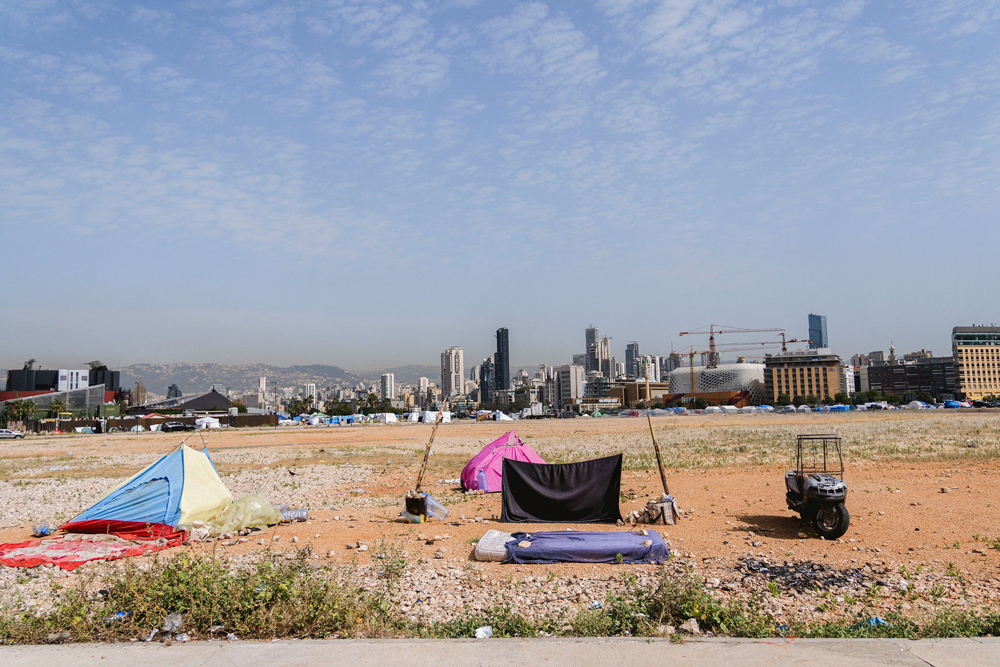
The biggest steps forward the government has managed to take have been reformations to its Bank Resolution Law that align it more closely with the IMF, hopefully setting the stage for a future multi-billion dollar international bailout, but as of mid-2026, focus has been decidedly shifted away from economic recovery to the practical needs of serving a populace facing the humanitarian and medical emergencies of war as well as reconstructing infrastructure, with a special emphasis on housing for the over one million displaced people in the nation.
As its economic decline continues, Lebanon is now a fundamentally different nation than it was only a decade ago. With the fragile stability of the 2010s gone and the wheel of progress stalled in the face of brutal regional conflicts, the National Assembly must now find a way to rebuild both their physical infrastructure and economy, along with the faith of a public, with little literal or metaphorical credit behind them.
