
China View: Who Bears the Cost of China’s Industrial Upgrading? Labor Displacement in the Era of Supply Chain Relocation
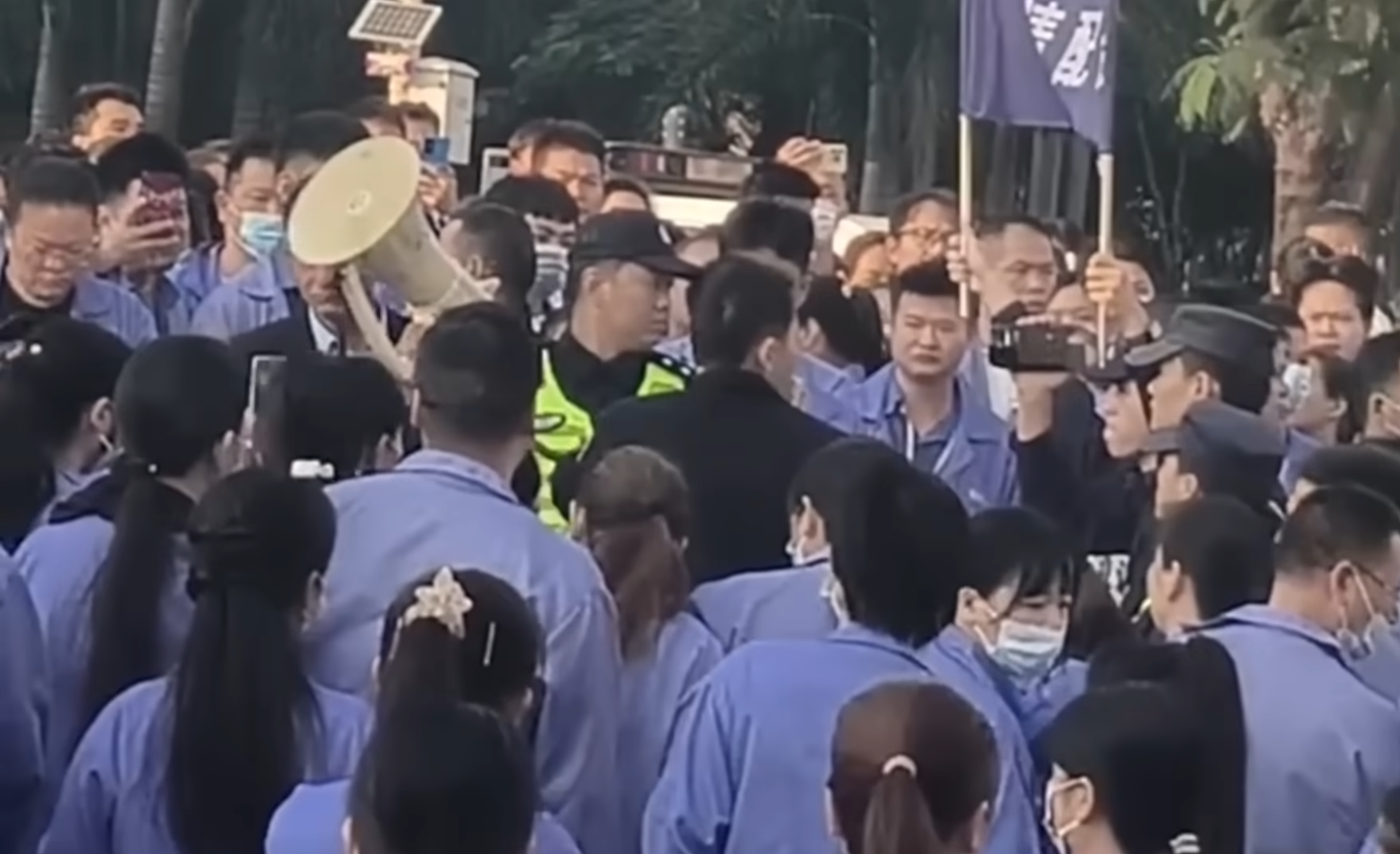
In December 2025, over three thousand laborers from Yilisheng Technology Company participated in a protest in Shenzhen. This protest shows the growing instability in China's manufacturing sector as laborers confront low wages and shifting industry trends. Yilisheng laborers accused the company of paying lower salaries due to the relocation of foreign-invested industries overseas, leading to decreased monthly earnings. The Yilisheng workers are protesting not only for meeting the required monthly working hours but also against China's manufacturing industry's wage structure characterized by low base salaries and high overtime. Factories reduce orders and move production capacity to Vietnam, placing the burden of industrial transformation costs on workers.
The protest by the three thousand Yilisheng laborers highlights challenges such as low base salaries and inadequate working conditions prevalent in China's low-end manufacturing sector. Moreover, Covid-19 and the international order have altered the global manufacturing supply chain. These global disruptions have directly impacted companies like Yilisheng, restricting the local labor working opportunities. Yilisheng encountered a similar issue as another Chinese manufacturing company.
According to the China State Administration of Foreign Exchange, the net amount of foreign direct investment (FDI) in China was only $14.7 billion USD in the first quarter of 2025, a significant decrease from the $34.06 billion reported in the fourth quarter of 2024; this represents a decline of more than 50%, with a quarterly reduction of 9.4 billion. The relocation trend of Chinese foreign investment companies to Vietnam has compelled employers in China to cut laborers' working hours, leading to wage reductions. Many of them, born in the 1970s and 1980s, have spent years working on assembly lines, grappling with the effects of these changes. They once helped build Shenzhen's manufacturing miracle, but now they find themselves excluded from the next phase. In Guangdong Province, known for its manufacturing industry, older and middle-aged frontline workers encounter a dual challenge: their extensive experience makes starting over difficult, and they lack the necessary salary for transitioning to other careers.
In March 2025, Guangdong province revised both the monthly minimum wage standard and the hourly minimum wage standard for part-time workers, setting the labor in Shenzhen at US$371.48 per month and in Guangzhou at US$368.53 per month. Among them, the labor adjustment in Shenzhen is US$371.48 per month, and Guangzhou's adjustment is 2,500 RMB US$368.53 per month. Despite Yilisheng's efforts to guarantee appropriate working hours and salaries, it falls short of meeting the monthly minimum wage standards established by Guangdong province, particularly concerning hourly wages. The base salary for workers at Yilisheng is approximately 2000 RMB per month, equivalent to around US$294.82. After October 2025, Yilisheng workers' take-home pay significantly decreased; a worker who had been employed for nearly three years earned about 4800-5700 RMB from June to September, but in October, it dropped to about 2407 RMB, roughly US$354.82.
Multiple workers have reported that production capacity at the Shenzhen factory is gradually shifting to Vietnam and have observed the relocation of machinery, management, and some processes. The report also cites researchers who suggest that fluctuations in orders, corporate cost strategies, and supply chain restructuring may collectively be responsible for the adjustment in working hours. According to the development of Chinese enterprises in Vietnam, China possesses more than 4,000 investment initiatives with a total capital of over US$26 billion, indicating that Vietnam absorbs large amounts of foreign investment. The increase in Chinese investment in Vietnam shows the reasons behind the relocation of several Chinese enterprises, resulting in job instability for workers in China. Chinese labor confronts a persistent structural dilemma: as Chinese foreign investment companies continue to relocate, the livelihoods of these workers are increasingly threatened, raising concerns about their future sustainability and well-being.
Conclusion
The influx of Chinese investment in Vietnam has led to job instability for workers in China due to the relocation of enterprises. This structural dilemma represents the challenges faced by Chinese labor as companies continue to move operations overseas, raising concerns about their long-term livelihoods and well-being.
