
India Insights: From Campus to Courtroom: The Cost of Student Protest in India
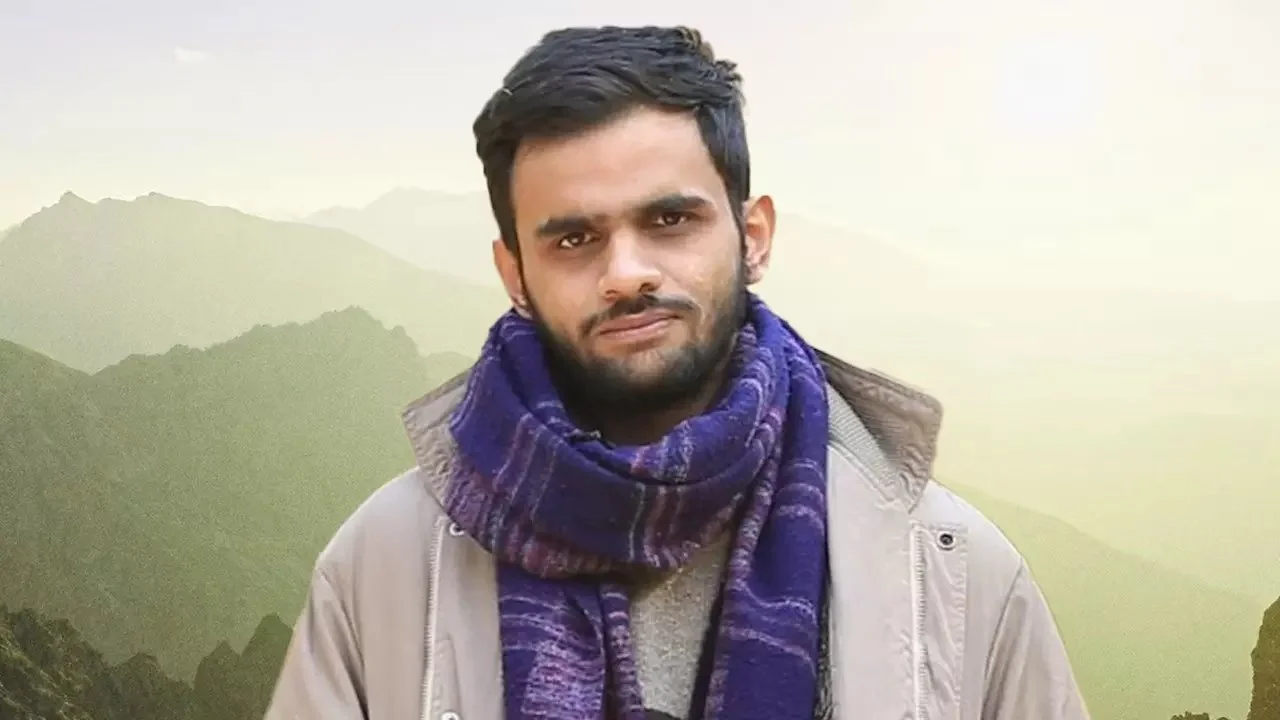
The newly inaugurated mayor of New York City, Zohran Mamdani, recently wrote a note to Umar Khalid saying, “Dear Umar, I think of your words on bitterness often, and the importance of not letting it consume one’s self. It was a pleasure to meet your parents. We are all thinking of you. Zohran.”
Who is Umar Khalid, and why are we thinking of him?
Khalid is one of the many student protesters who participated in peaceful demonstrations against new citizenship legislation, which sped up the process of attaining citizenship for various persecuted individuals from different communities from Afghanistan, Bangladesh, and Pakistan; the list of communities included Hindus, Sikhs, Parsis, Buddhists, Jains, and Christians, with the key exclusion of Muslims.
The introduction of this legislation sparked protests led by Muslims all over India, which turned violent when Hindu right-wing mobs started attacking them. This led to the filing of 758 criminal cases against these peaceful protesters, with over 2,000 arrests. Delhi police alleged that the protest leaders, often young students, were behind a conspiracy to create religious tensions to overturn the current government. Under this charge, they arrested around 18 young protesters and charged them under the draconian Unlawful Activities (Prevention) Act (UAPA); UAPA automatically deems the arrested individuals terrorists, making it exceedingly difficult to get bail.
Umar Khalid was a research scholar at Jawaharlal Nehru University (JNU) and the leader of the Democratic Students’ Union (DSU). He also founded the campaign “United Against Hate”. As of today, he has been in prison for five years along with Sharjeel Imam, another student protester. On January 5, 2026, his and Imam’s bail plea was denied while their co-defendants were granted one.
Narrowing Spaces For Student Activism
As historian Howard Zinn said, “Protest beyond the law is not a departure from democracy; it is absolutely essential to it.” Protests are of utmost importance to a democracy, especially in the face of unjust laws, and youth activism has historically played an important role in driving social change. For example, the American civil rights movement of the 1960s saw numerous young people fighting against racism and segregation in the public arena. Even today, the youth stand ahead in activism, as seen in figures such as Greta Thunberg.
Yet, Khalid’s arrest and continued incarceration stand as evidence of how forums for student activism are narrowing in democracies such as India. When student activism is treated as a conspiracy against the government, rather than dissent against laws deemed unfair, the punishment begins way before any legal sentencing. Here, the main penalty is the years-long incarceration, repeated denials of bail and the slow process of the legal system. Even if one day bail is granted, there is significant damage to someone’s education, career and life, especially under a law such as UAPA, which is vague enough to be applied to dissent against the elected government.
Today, student activism is dealt with through much more stringent actions, therefore hindering student politics and freedom of expression. Another recent example of the erosion of academic freedom and democratic values is the arrest of 10 students at the Tata Institute of Social Sciences (TISS) in Mumbai. In October 2025, these students held an event to commemorate the death anniversary of former professor and activist G.N. Saibaba. They were booked for conducting an unauthorised event, an event which was neither violent nor a protest but a mere ceremony to respect a former professor.
Furthermore, at Jamia Millia Islamia University (JMI), students were suspended for protesting without authorization from the administration in December 2024. Moreover, a memorandum was released in November 2025 saying, “no protests, dharnas (form of protest in which people sit down in a specific location to demand justice), raising slogans against any constitutional dignitaries shall be allowed in any part of the university campus; otherwise, disciplinary action against such erring students shall be initiated.” This memorandum documents the shift towards harsh crackdowns against student protests and demonstrations. Once considered the bastions of student activism, universities such as TISS, JNU and JMI are suppressing dissent in the academic sphere and using legal/academic consequences to do so.
Such a repressive culture clamps down on the students’ critical engagement with the socio-political issues within the country. Organizing protests now comes attached with the fear of legal and academic consequences along with public vilification. This would only serve to prevent students from critically and peacefully engaging with the political processes of the country. Universities, which are supposed to encourage critical thought, are now spaces that invoke fear of speaking up.
Public vilification of student protestors limits political disagreements to questions of loyalty towards the country, making it easier to justify the use of extraordinary measures to clamp down on any political activity within universities and academic circles. Therefore, Umar Khalid’s imprisonment reflects a shift in how student activism is dealt with in India today. When the youth is punished so severely for questioning the state, it speaks to the core ideas of democracy, which prize the voices of the masses in the functioning of that state.
Finally, Mamdani’s letter to Khalid did not get him bail; rather, it invoked criticism from the government for Mamdani to stop interfering in another country’s democracy. However, it demands acknowledgement of Khalid’s incarceration and punctures the silence the law is trying to impose. It shows that even if the actions of universities and the law against these student activists may have been normalised, Khalid is still in the memories of everyone inside and outside the country who refuse to think of him as anything but a student who wanted to question the country’s actions. This also encourages us to draw parallels between the strict action against student dissent in India and the US, where student activists were threatened with legal and academic action amid pro-Palestine protests. It points us to a global pattern in which young dissenters are increasingly being met with extreme consequences. Mere tools of democracy are instead considered active conspiracies against the government or nuisances to shut down.
