
Far East: Kazakhstan’s Geopolitically Contested Energy Transition
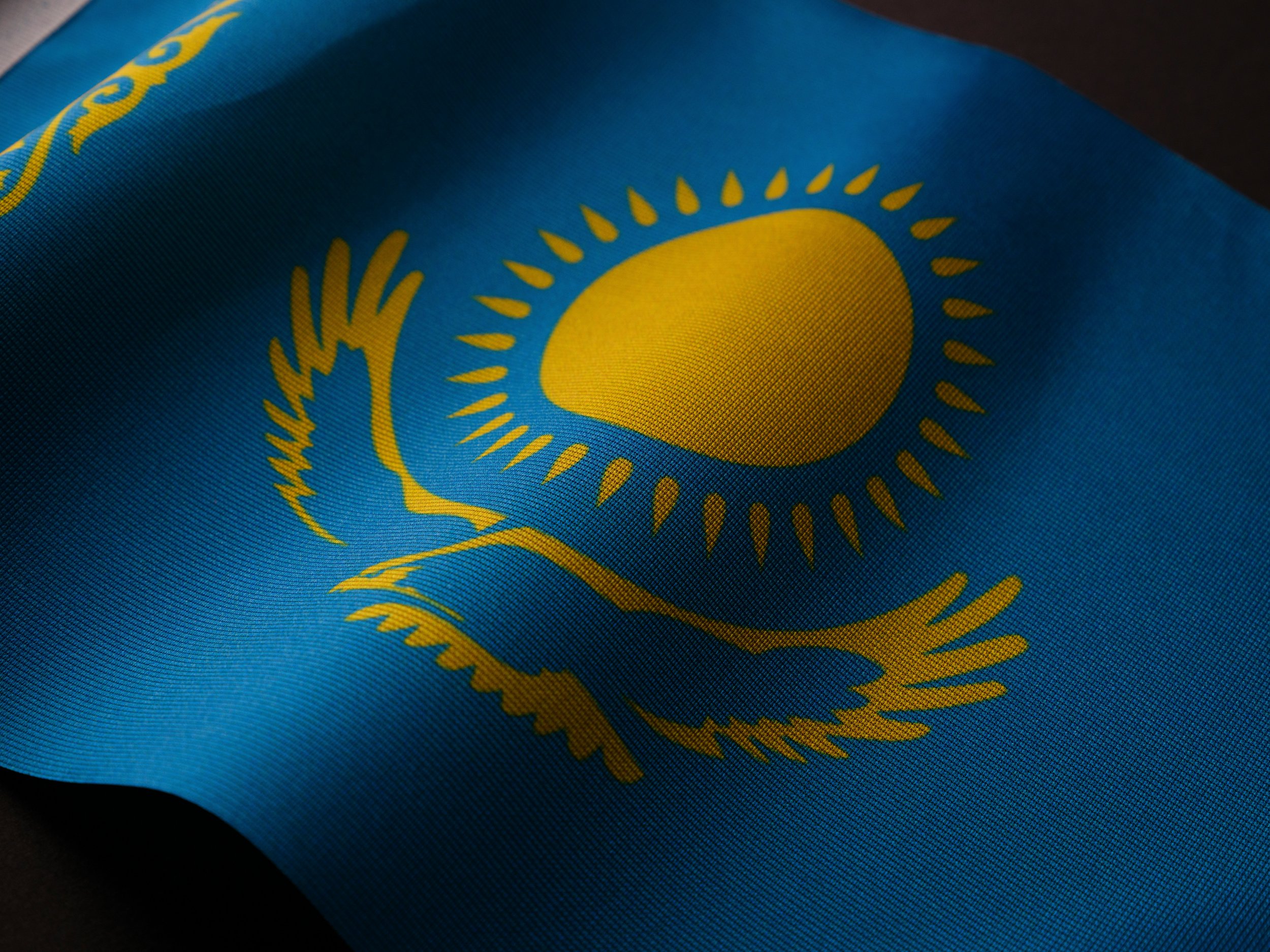
engin akyurt
Kazakhstan, the world’s largest landlocked country in the world, has an area approximately 2.7 million km² that equates in size to Western Europe. It’s also the world's largest continuous dry steppe region. The word “Kazakh” (Қазақ / Qazaq) derives from Old Turkic and originally referred to a “wanderer” or “free individual.” Over time, it evolved to denote “steppe wandering,” reflecting the deep cultural connection between Turkic nomadic life and the Eurasian steppes.
The steppe covers more than 40% of Kazakhstan’s territory. In the early 2000s, Kazakhstan’s economy was heavily driven by oil and gas, which contributed around 20-25% of GDP and roughly 65% of total export revenue. How ever, since COVID_19 hit and devastating economic crisis followed, the country has actively sought more sustainable solutions across financial, social, and environmental dimensions. In recent years, Kazakhstan has been transitioning toward a rapid expansion of its solar and wind projects across its steppe area, which became one of the vital sources underpinning its economy. In 2022, The World Bank estimated a 1.5%-2.0% GDP increase in Kazakhstan, but the final figure reached 3.2% in 2023.
As a once fossil fuel-dependent nation, Kazakhstan’s goal of developing renewable energy translates into an urgent need to significantly reduce its structural dependence on the oil industry. This shift also signals an environmental commitment to build a more sustainable and diversified economy. The main components of Kazakhstan’s renewable energy source (RES) projects are wind farms, solar plants, hydropower plants, and bioelectric power plants. Furthermore, the nation is considered as one of the best-suited regions to develop renewable energy. Located along the wind belt of the northern hemisphere, Kazakhstan’s favorable geographic conditions provide strong and consistent wind resources that support the large-scale wind farm construction across its vast steppe regions.
This advantage has manifested in prominent and measurable outcomes. The growth rate of electricity from RES projects is astonishing. For example, within a year between 2015 and 2016, electricity generation from renewable sources in Kazakhstan jumped 111%. By 2030, the government aims to increase the total share of RE generation to 11%. Within the next 26 years, the government wants to reach its alternative energy balance to 50%.
The Zhanatas project provides a useful case study of these developments in Kazakhstan. The project is a 100MW wind power farm located in southern Kazakhstan, and was completed in 2021. At that time, it was Central Asia’s largest wind farm. The project was mainly invested by two banks and operated by a Chinese electricity company, highlighting Kazakhstan’s early leadership in large-scale wind development. Completed in 2025, Uzbekistan’s 500MW Zarafshan Wind Farm now replaced the title and became Central Asia’s Largest wind farm.
A number of foreign nations are attracted to Kazakhstan’s renewable energy development. Some initiated joint green project advancement. China Guangdong Nuclear Power Group (CGNPG), which is a state-owned energy enterprise, established an agreement with Kazakhstan’s Samruk-Kazyna National Welfare Fund in 2009 to jointly develop wind, solar, and water resources as alternative energy use. In 2014, the Agency for Energy of the Federal Republic of Germany began a collaboration of wind and solar energy’s development with Kazakhstan. In 2024, primarily focused on solar and wind energy, the UK funded approximately $25 million USD to Climate, Energy, and Water Security for Central Asia for the next 3 years.
Challenges
However, the reality of Kazakhstan’s RE development is less promising than it seems. According to the extensive strategy Kazakhstan’s government proposed in 2013, the objective to “shift fossil fuel reliance to an environmentally sustainable economy” is closely tied to the goal to build hydroelectric facilities that are cost-effective and ecologically friendly. According to the UNDP Kazakhstan report in 2018, renewable energy accounts for only 0.6% of all power installations, and 95% of that comes from hydropower projects.
Such dependence on hydropower must be understood within the broader context of Central Asia’s transboundary water politics. The water geopolitics issue in Central Asia is one of the major obstacles. Countries like Tajikistan and Kyrgyzstan, located in mountainous regions where major rivers originate, historically released water downstream to countries like Kazakhstan, Uzbekistan, and Turkmenistan for irrigation. In recent years, because upstream countries became increasingly reliant on hydropower generation and energy self-sufficiency, downstream countries consequently face intensified water scarcity. In Kazakhstan’s arid and semi-arid regions, desertification and droughts persist and are worsened by constant climate change and human activity. Therefore, hydropower as a sustainable resource raises substantial questions.
In numerical terms, the proportion in which RES electricity takes up in the total electricity production in the country is far lower than initial expectations. Between 2019 and 2020, the share rate growth will be less than 1%. By October of 2019, 936.8MW were installed, yet the plan was to reach 1700MW by 2020.
In addition, another obstacle is the lack of electric power engineers for renewable energy development in Kazakhstan. Particularly, there is no separate specialty on renewable energy across national educational programs. Many students go through general training in universities such as Almaty University of Energy and Communication or Karaganda State Technical University before recruitment. This educational gap constrains the supply of professionals with renewable energy-orientated expertise, delaying project deployment and reinforcing reliance on foreign speciality.
Prospects
The importance of examining RE projects lies beyond their immediate functional outcomes. A number of recent scholarships claim that green energy can reshape state power on the ground. The ability to develop renewable, more sustainable, and ecologically friendly approaches to utilize resources reflect the state’s power to implement policies, levy taxes, and allocate resources. Although some scholars argue that such developments represent reinforced state authority and promising economic growth, others alarm the threats posed by green extractivism. This argument states that, as an increased number of companies start to brand themselves as "sustainable", “green”, “energy transition”, nature becomes more exploited as the system naturally allows harnessing climate change as profit-making opportunities. In the case of wind energy projects in Kazakhstan, construction of wind farms benefitted central regions, while causing substantial landscape degradation in peripheral regions.
Against this theoretical backdrop, Kazakhstan’s renewable energy expansion has been met with uneven reception on the ground. Most supporters come from the background of central government, foreign investment, and international financial institutions, who believe that RES development can promote economic diversification. In particular, European and Chinese investors are drawn to Kazakhstan’s vast steppe landscapes, which are highly suitable for large-scale project implementation. However, the tensions embedded within Kazakhstan’s green energy narrative continue. Especially in peripheral areas, opposition emerges where wind farms are built. Communities in these areas often subsequently face land appropriation and environmental disruption, and they have limited resources and opportunities to participate in the policy decision-making processes, reinforcing concerns associated with green extractivism.
Compared to its neighbors, Kazakhstan remains in a leading position in renewable energy development, particularly in solar and wind power. Uzbekistan is also advancing in solar and wind energy, yet its efforts are constrained by inadequate infrastructure and high domestic energy demand, further slowing down the widespread implementation. Similarly, Kyrgyzstan and Tajikistan depend predominantly on hydropower, but due to their mountainous geography that heightens susceptibility to seasonal water shortage and regional water conflicts, the RE development in general faces substantial limitations. In conclusion, these contrasts highlight Kazakhstan’s relative advantage: its regional advantage enables it to align renewable energy expansion with economic resilience and energy diversification, even as challenges such as limited technical expertise, infrastructure gaps, and environmental sustainability persist.