
Lukáš Lehotský
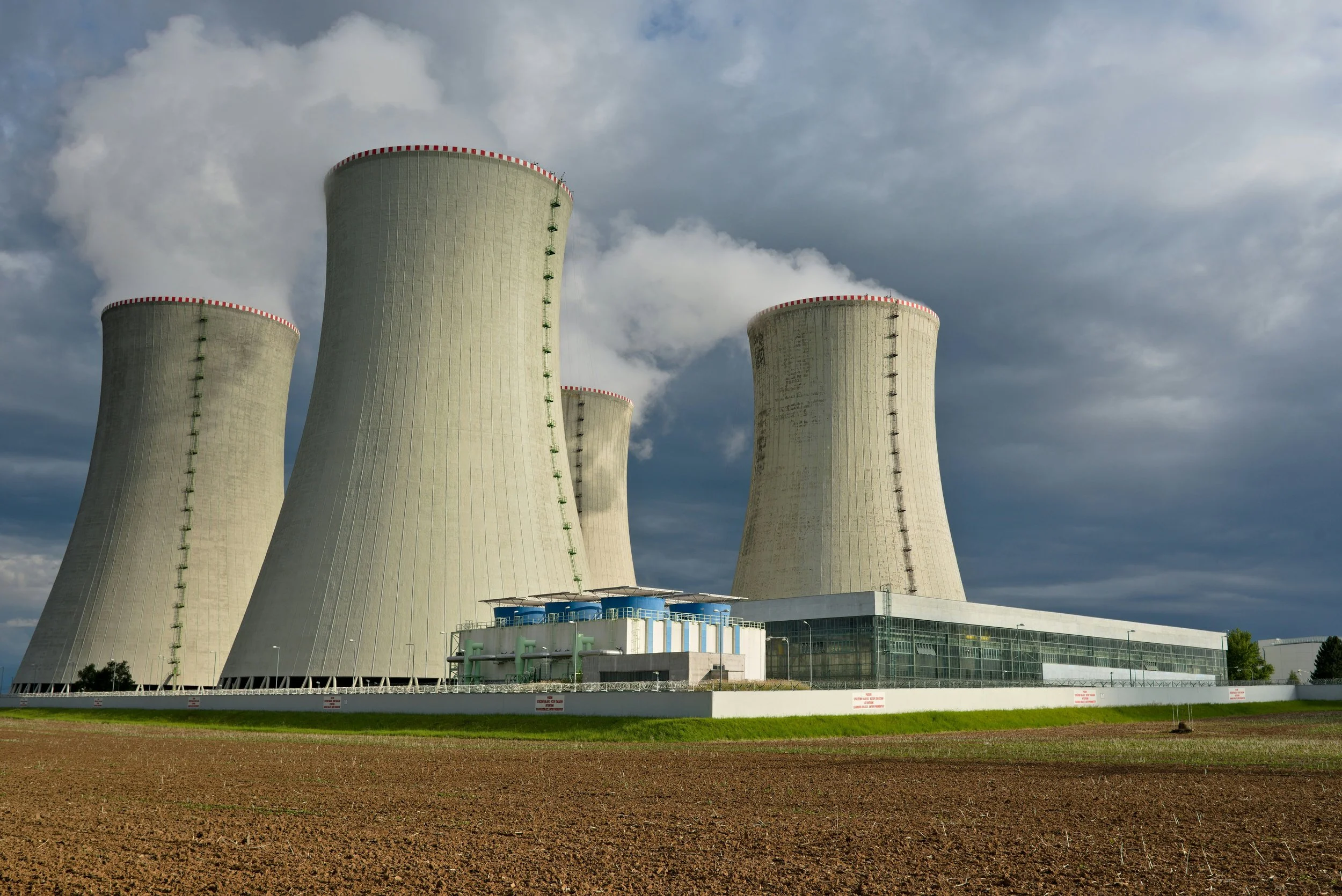
In November, it was announced by the UK government that the island of Anglesey – also known as Yns Mon in Welsh – on the northern coast of Wales, had been selected as the chosen site for a new, small-scale nuclear power station, known as a small modular reactor (SMR), the first such station to be built in the UK, and indeed, the first nuclear power station of any kind to be built since 1995.
SMR plants are compact power stations, built as prefabricated units designed for on-site installation, and so can be constructed and put into operation far quicker than regular nuclear reactors. Originally, it had been proposed that the new SMR plant be built in England, at Oldbury in Gloucestershire. Now however, it has been confirmed that the UK government has instead chosen the site of Wylfa, an old nuclear power plant first built in Anglesey during the 1960s and 70s and closed back in 2015. After numerous plans to revive the site were abandoned, the Labour government is now pressing ahead to make this site part of its expansion of the new, publicly owned GB Energy company, with a new £2.5 billion investment.
The move has largely been welcomed as a transformative boost for the Welsh economy, with the new station expected to bring not only hundreds of new jobs at the site itself, but also up to 3000 jobs for the local economy. Once it becomes operational in the 2030s, the site is expected to be able to power as many as three million homes, more than twice the number in Wales as a whole.
The announcement was welcomed by Eluned Morgan, the Labour First Minister for Wales, who stated that "this is the moment Ynys Mon and the whole of Wales has been waiting for. New nuclear is a step into the future, with secure jobs and secure energy guaranteed for the next generation. We have been pressing the case at every opportunity for Wylfa's incredible benefits as a site, and I warmly welcome this major decision to invest in northwest Wales. Wales is once again leading the way."
Other Welsh politicians remained cautious however on whether the UK government will actually make good on its promises for the area. Llinos Medi, an MP for the Welsh nationalist party Plaid Cymru, stated constituents will "rightly treat this story with caution until we see concrete action". Rhun ap Iorwerth, the Member of the Senedd for Ynys Mon and leader of the Welsh nationalist party Plaid Cymru, further acknowledged that this was "just the start of the process," having previously called for further development at the site, only for this to seemingly have not been a priority for the UK government.
"Today's announcement is significant for people on Ynys Mon and across Wales,” ap Iorwerth stated. "Since I was elected over 12 years ago, the future of the Wylfa site has remained a live issue on Ynys Mon. Whilst we've learnt from past experience that we need assurances now that this plan will actually be delivered, there's no doubt that there's a real opportunity here that we have to take advantage of."
He emphasized the need to “make the most of the economic growth and job opportunities for young people that come with a new development at Wylfa,” adding that “the Welsh government also has a crucial role to play in these discussions. I want to make sure that Welsh government has real input, with Welsh interests placed at the heart of the development."
At the same time, there have been questions raised over how far such plans are consistent with the stated goals of the Welsh government to have 100% of its energy coming from renewables by 2035. Just two months prior, the Welsh government had separately announced its Net Zero Wales plan, a five-year plan aimed at reaching net zero by 2050.
The plan aims to create a “greener, stronger, fairer Wales”, with a range of proposals: from building thousands more low carbon homes, to planting new woodlands, abolishing single use plastics, and helping to develop green skills in businesses.
The Welsh government has maintained that its aims of achieving net zero emissions do not conflict with, and indeed, are complimentary to the UK government’s policies to “deliver a program of new nuclear projects” for the goal of “powering up Britain.” It has been pointed out that whilst nuclear energy is classified as non-renewable, these plans will still move the country forward towards the goals of decarbonization, since it does not produce much in the way of carbon emissions.
However, there has continued to be criticism of this, both from major environmental groups such as Greenpeace and groups local to Anglesey such as People Against Wylfa B (PAWB), which have maintained that the UK should be pursuing an energy system based solely on renewables.
In discussing the role Wales should play in the UK’s expansion of nuclear energy, as well as the implications of this for the Welsh economy, Dr. Douglas Parr, the Policy Director and Chief Scientist at Greenpeace UK stated that the UK should “go hell for leather for a 100% renewables system,” claiming that an entirely renewable energy plan is not only “perfectly feasible,” but also, “would be done at lower cost if it was done without nuclear.”
This was echoed by Linda Rogers, a member of PAWB and of the Wales Green Party, who pointed out that Wales is particularly capable of this due to the investment it already has in renewables, and that the plans by the UK were simply “a political decision,” considering countries such as Denmark, Norway, Iceland already planning to switch to 100% renewables.
The dangers of nuclear waste were also emphasized, with Rogers stating, “I have not heard anybody who supports nuclear power saying they would support a nuclear waste disposal facility in Wales. The responsibility for that seems to be, ‘As long as it is somewhere else.’” Parr further stressed the “significant downsides” that might exist for projects such as Wylfa, adding, “I think it is expected that spent fuel is going to be on site until about 2150, so it is a long time to worry about something where you have to ensure safety and security on site over considerable periods of time. And, frankly, nobody cares very much if something goes wrong with a wind farm.”
Similar concerns were raised about plans for further small-scale reactors to be built elsewhere in Wales, with groups such as Friends of the Earth Cymru launching a petition earlier in 2025 against proposals for four new SMRs in the South Wales valley of Cwm Llynfi, near Maesteg.
Ultimately, however, the government appears to have already made its decision on this issue, on the basis that an expansion of the nuclear energy sector will be an essential part of the move towards achieving both net zero targets and domestic energy security.
Whilst an energy system capable of producing net zero emissions will be aiming to comprise predominantly wind and solar power, nuclear energy will nevertheless continue to be essential for providing a reliable supply of energy “when the wind is not blowing or the sun does not shine”. At the Nuclear 2025 conference held in London in December, a month after the announcement of these plans for Wales, the Energy Secretary, Ed Miliband reiterated that this will continue to be central to the plans for GB Energy, stating the government "have only just begun when it comes to our ambitions for new nuclear in the UK."
