
The Commons: Lords Get The Sack
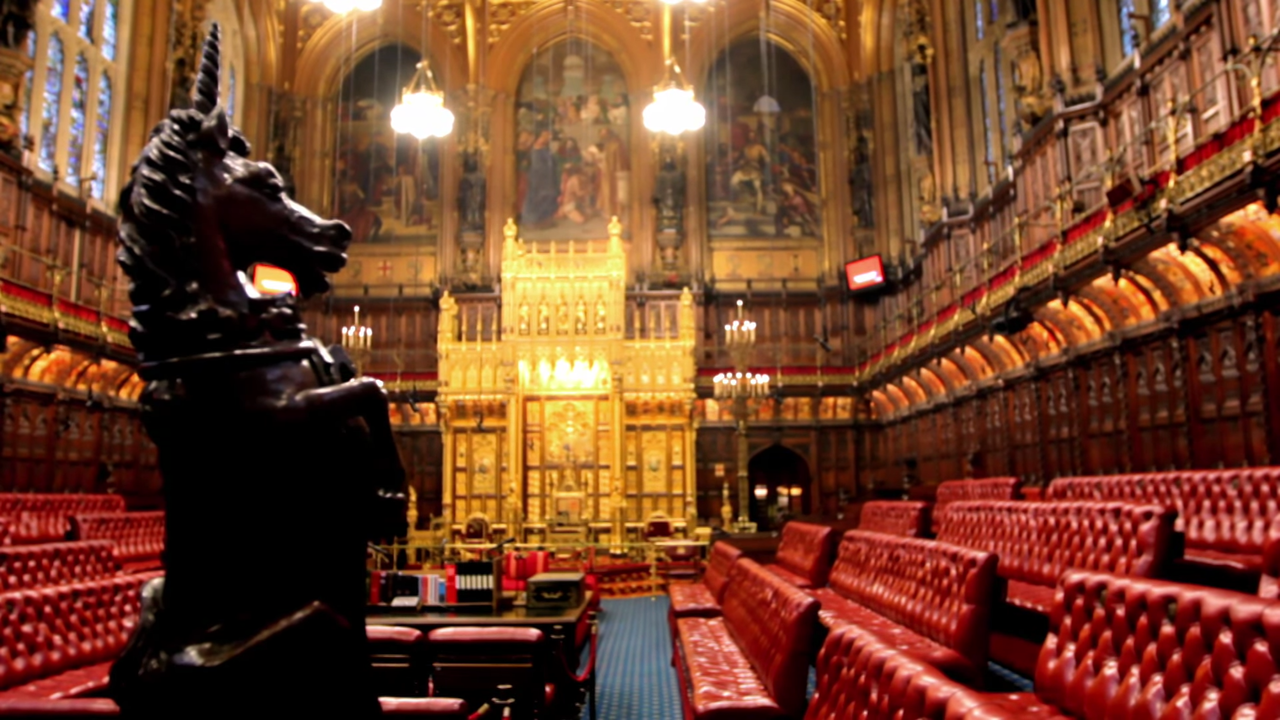
Last week saw a quiet yet significant reform to the UK's Parliamentary setup, after the government pushed through a bill removing hereditary peerages from the House of Lords. This unique feature of the UK's unwritten constitution has now been entirely done away with, after almost 700 years.
The House of Lords originated as the chamber for aristocrats and bishops, dating back to the Middle Ages, at a time when Parliament existed primarily as representation for such classes of people, having evolved in the aftermath of the signing of the Magna Carta. Since this period, hereditary peers were given representation within the upper chamber of the English and then British Parliament, on the basis of inheritance only; with some individual members peerages dating back as far as the 13th or 14th centuries.
The ability to affect legislation purely on this basis had long remained a sticking point in the UK, particularly as the power of the House of Commons grew, and it came to represent the whole of the population after the passing of Universal Suffrage. At the beginning of the twentieth century, the Liberal government of the time pushed through a bill ensuring that the elected House of Commons held sway. The Lords still gave further readings to bills from the Commons, and could send them back for review before they were passed into law, but ultimately could not veto the decisions of the democratically appointed House.
Nevertheless, many continued to argue that unelected aristocrats still should not hold the sway they did, and further reforms were introduced over the course of the twentieth century. In 1958, life peerages were created - members of the House who were bestowed titles rather than inheriting them - and in 1963, the Peerage Act was passed, pushed through by Labour politician Tony Benn, which allowed aristocrats to actually renounce their titles, and stand for election in the Commons.
That same year, the Conservative Lord Home took advantage of this to become the next Prime Minister, with it having already become the convention that the Prime Minister ought to be from the House of Commons. This has also been the case for most senior Ministerial positions since, with only a few notable exceptions; such as in 2023, when former Prime Minister David Cameron, no longer an MP, was made a life peer in order to be appointed as Foreign Secretary by Rishi Sunak, an act which raised concerns about how he could then be held to account.
In spite of these reforms however, hereditary peers remained automatic members of the House of Lords, with the right to vote on laws and parliamentary procedures, purely on the basis of their birth. The UK has been one of the only countries in the world to retain this system, with the only other exception being the small south African country of Lesotho. The most serious attempt at changing this came in the 1990s, upon the election of Tony Blair's government.
Blair's manifesto, like Starmer's, had contained a pledge to remove hereditary peers from the House of Lords. At that time, with the chamber including both hereditary peers, and others who had been given life peerages, the size of the chamber had swelled to as many as 1200 members; of which 750 were hereditary peers.
The bill introduced by the Blair government in 1998 to reform this had originally aimed at removing all hereditary peers, however this was met with strong resistance both from the Lords and from the Conservative Party. Ultimately, the bulk of hereditary peers were removed; however 92 were allowed to remain. Subsequent attempts at reform were attempted under the Brown government and the 2010 coalition; these remaining hereditary peers had remained in place however.
Now, the Starmer government has followed through on the pledge in its manifesto committing to the removal of these remaining hereditary seats. The government's House of Lords (Hereditary Peers) Bill was this month passed by Parliament, and received Royal Assent on 18 March. There had again been some pushback from the Lords on this, with the bill being sent back to the Commons last year, with amendments being made over this, as well as on a number of other issues, such as unsalaried ministers being members of the House.
Following this further consideration, the act has allowed some remaining hereditary peers to hold on to their positions until they die, however, going forward their seats will no longer be able to be inherited by their descendants. The government also confirmed that a number of life peerages will be allocated to the Official Opposition and to the Crossbenchers, and that there will be an increase in the number of ministerial salaries that can be paid.
The House of Lords has long been criticized for its privileged and unelected status; criticisms that have been levelled at life peers as well as hereditary ones. Some within the House itself have repeatedly called for reforms, with Lord Courtenay, the Earl of Devon, having described the chamber as "gendered" and "discriminatory,” stating that it should "step away from the negative associations with nobility and high rank, associated with land and power.”
The government has described the act as “one of the biggest reforms to Parliament and UK democracy in a generation.” Angela Smith, the Labour Leader of the House of Lords, stated that the House “plays a vital role within our bicameral Parliament, but nobody should sit in the House by virtue of an inherited title. That is why the government committed to removing the remaining hereditary peerages, completing the reforms that were started over a quarter of a century ago.”
Critics have argued however that these reforms still do not go far enough. The government had pledged to bring in stricter age requirements, with a maximum age of 80, to tighten rules on participation, and to further bring down the number of life peers also sitting in the Chamber, with there previously having been more than 800 sitting members in the Chamber - the largest legislature in the world besides the National People’s Congress in China.
Baroness Smith has insisted that further changes will be made, particularly on the issue of age limits, adding that, “this bill is a major first step towards reform of the Lords, with further changes to follow - including on members’ retirement and participation requirements.” However, these additional reforms are still under review by a cross-party committee of peers that is expected to continue deliberations until the end of 2026. Some have also raised concerns about it being the peers themselves who will be making judgements on this. “I’m rather hesitant about institutions having committees themselves to decide their future,” stated Labour peer Larry Whitty.
Meanwhile, some of the other pledges made by Labour in 2024, are apparently not even being considered. Labour had pledged to entirely replace the Lords with an “alternative second chamber”, that would be “more representative of the regions and nations,” but it's now being reported that this will not be pursued until Starmer's second term in office, should he get one.
Labour had also pledged to reform how life peers are appointed, this being a power that currently lies with Downing Street, and which successive governments have used to pack the chamber with members of their own parties in order to push legislation through. This is something that Starmer's government have continued to make use of themselves however, having nominated 47 Labour peers since taking office.
“The appointment process on the whim of the prime minister of the day just isn’t acceptable,” stated former Labour MP Paddy Tipping. “There needs to be a much more thoughtful and transparent way of doing that.”
