
EU Currents: Finding The Tipping Point In Greenland
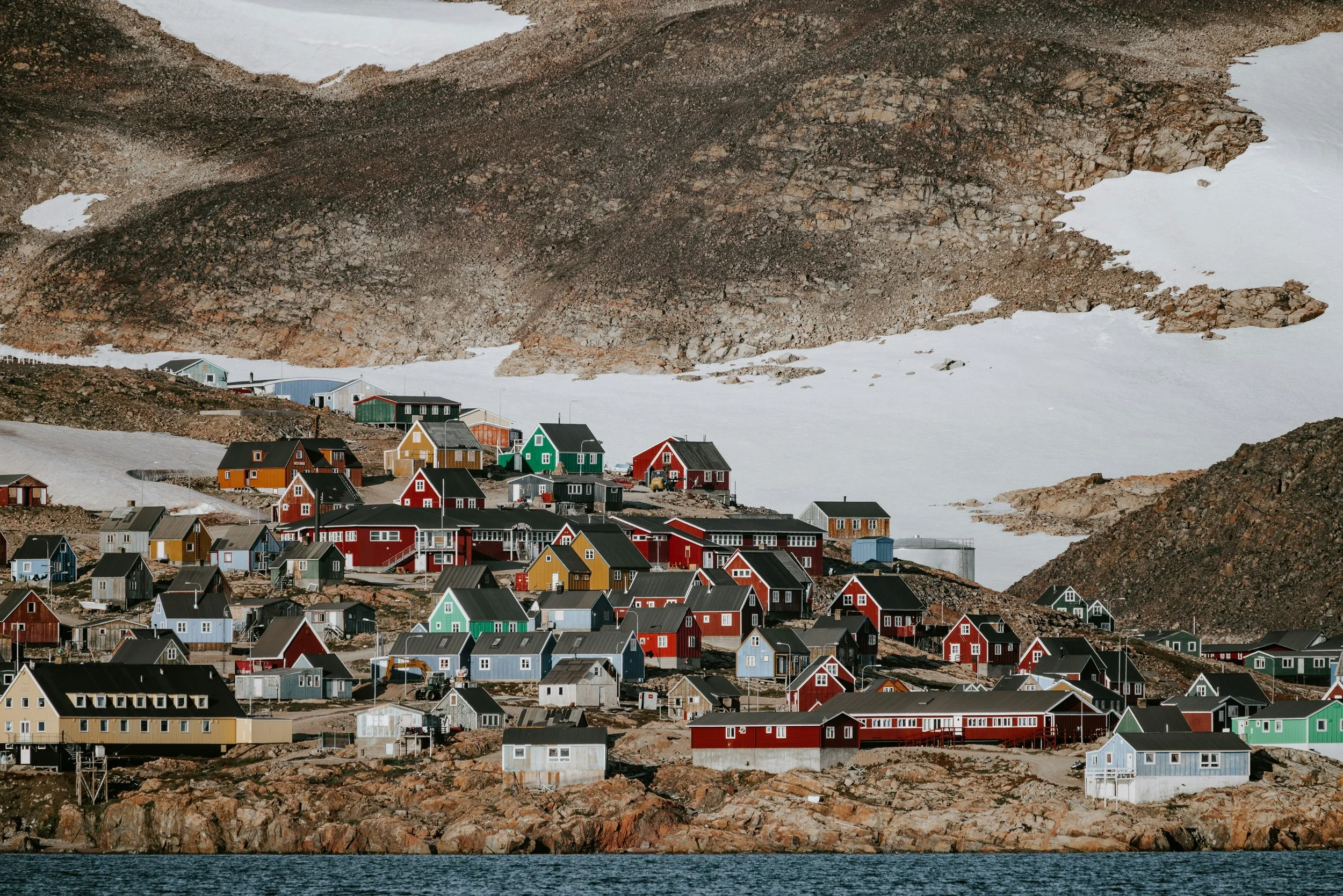
Annie Spratt
Background
This summer, scientists will head to Greenland to begin a two-month scientific expedition to study how Greenland’s glacial melt is affecting the Atlantic Ocean and by extension, the global climate.
The researchers will utilize an array of technologies to help them understand the complexities of Greenland’s glaciers. Airborne drones, autonomous robots, satellites and instruments that can be placed in the ice will be just a small part of the resources at their disposal.
The expedition is part of an ongoing five-year research project, Greenland Ice Sheet to Atlantic Tipping Points (GIANT), which is being funded by the Advance Research and Invention Agency (ARIA). The team will be made up of 17 partner nations and will be led by the British Antarctic Survey.
GIANT’s efforts will concentrate on two different glaciers in Greenland: one near Kangerlussuaq and the Petermann Glacier in the northwestern region of the island.
Greenland’s ice shelf has been a keystone topic in climate change research. The melting of its ice caps has contributed to a 20 percent increase in the global sea rise, and if they were to completely melt, global sea levels would rise by 7.4 meters. Between September 2023 and August 2024, more than 80 billion tons of ice were lost.
Coastal delta regions across the world will be hit the hardest, as these areas are utilized for farming, transportation and urban development. Even major cities like New York, Jakarta and Manila are under threat.
The Importance of the Prudhoe Dome
One of the most watched parts of Greenland’s melting ice shelf has been the Prudhoe Dome. This ice cap covers an area of 2,500 square kilometers, roughly the size of Luxembourg. If the Prudhoe Dome was to melt, sea levels could rise by up to 73 centimeters. As each centimeter of sea level rise exposes six million people to global flooding, the importance of the Prudhoe Dome cannot be overstated.
Scientists have pulled samples from the surface below the ice sheet, allowing them to literally “peel back” the layers of the Prudhoe Dome, utilizing a technique called luminescence dating.
This technique allows scientists to study the electrons of sediment, which gives the scientists an estimate of how long it has been since that sediment was exposed to daylight. Utilizing this technique, researchers discovered that the last melt of the Prudhoe Dome occurred around 7,000 years ago, during the Holocene period.
During this time, the global temperature was around three to five degrees higher than today. While humans were around during this time, the effect on climate was largely minimal, with humans existing in the early stages of an agrarian society.
With current global temperatures rising, along with global emission levels since the beginning of the Industrial Revolution, it is projected that by the year 2100, the world will likely reach that temperature again.
Jason Briner, a professor at the University of Buffalo, co-led a 2023 study on the Prudhoe Dome and believes that the climate change of the Holocene period was much calmer than the threat posed for the future.
“For natural, mild climate change of that era to have melted Prudhoe Dome and kept it retreated for potentially thousands of years,” Briner said, “It may only be a matter of time before it begins peeling back again from today’s human-induced climate change.”
Freshwater Runoff And The Ocean’s Currents
A more short-term effect of Greenland’s ice melt is the introduction of freshwater into the ocean, a phenomenon which has far reaching climate effects. The Subpolar Gyre, a major current system within the Atlantic Ocean, will be most affected by ongoing freshwater runoff.
Presently, the Subpolar Gyre carries heat from the tropics and acts as a regulator for temperatures in Europe and in North America. Increasing amounts of freshwater runoff will affect this system dramatically, blocking the formation of warm, dense water that regulates these temperatures.
Experts believe that if Greenland’s ice caps continue to melt at their current pace, the Subpolar Gyre could change immensely within the next few years, drastically affecting the system’s ability to continue to function properly.
GIANT’s objective is to establish a prototype of an early-warning system that could give scientists advance notice of rapid glacial change.
Professor Paul Holland, who leads computer modelling efforts for GIANT, acknowledges that while the learning curve could be tough, this advancement in technology is important for climate science.
“Trying to build modelling systems that can capture abrupt glacier change is bold and risky. The science is intricate and there’s a real chance we won’t be able to predict sudden ice losses,” Holland said.
Impact On The Future
The hope behind this technology is that European governments will be able to take the data gleaned from these early warning systems and therefore be better prepared to mitigate the effects and consequences of climate change.
The reward of being better prepared for the realities of climate change greatly outweighs the risk involved with trialing these early warning systems. Sarah Bohndiek, a representative for ARIA’s Forecasting Tipping Points program, acknowledges that current technologies leave scientists and policymakers at a disadvantage and renders them “poorly equipped to handle the potentially irreversible consequences” of climate change.
