
European Central: EU-Western Balkans Summit Deemed Successful Amid Heightened Tensions
EPA-EFE/BORIS PEJOVIC
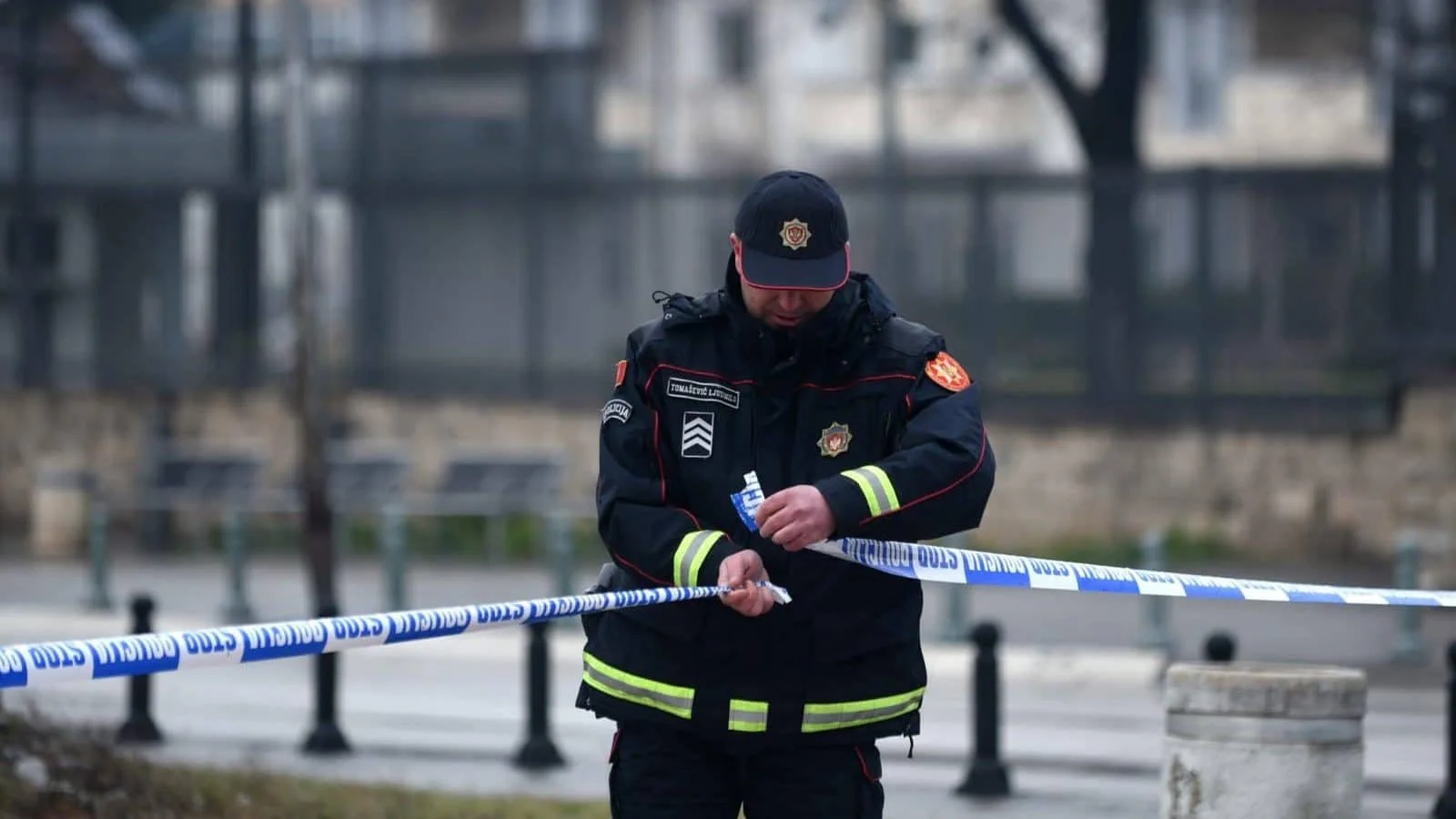
Days before the EU-Western Balkans summit held in Montenegro on June 5, Serbian President Aleksandar Vučić was reportedly advised by Serbia's Security Information Agency not to attend due to alleged intelligence indicating potential security threats on Montenegrin territory. Just hours before that, Montenegro barred dozens of Serbian nationals from entering the country, citing security concerns linked to the summit.
Although Vučić ultimately traveled to Montenegro without incident, the developments once again highlight the distrust that has defined relations between Belgrade and Podgorica for years, before and after Montenegro gained independence in 2006. Recognition of Kosovo as an independent state by Montenegro just two years later strained the relations even more, in a region where the number of EU candidate states has steadily increased over the last 20 years.
At the summit itself, though, the Western Balkan leaders put their tensions aside to show the EU officials how serious their hopes for future EU membership are.
Security Threats and Tensions Ahead of the Summit
In what the Montenegrin police described as a necessary measure related to the heightened security procedures ahead of the summit, the authorities stopped a flight arriving from Belgrade and prevented 87 Serbian men from entering the country on Wednesday, June 3. According to statements, those on board were carrying banners bearing the slogan "Srbija pobedjuje" ("Serbia Wins"), associated with supporters of Vučić's Serbian Progressive Party, which is openly opposing Montenegrin sovereignty.
In retaliation, Serbian police tightened its control at the border with Montenegro and introduced stricter checks, which created long lines of Montenegrin citizens driving through the border to Serbia.
The dispute intensified after Serbia's Security Information Agency publicly revealed that it had advised President Vučić against travelling to Montenegro.
According to the agency, Serbian authorities had identified a high security risk linked to "hostile activities of foreign intelligence services and criminal clans in Montenegro". They also described insufficient cooperation from Montenegrin authorities regarding security assessments.
Despite the warning, Vučić decided to attend the summit, arguing that Serbia's participation was too important to abandon. He emphasized the significance of the discussions with European leaders at a time when the EU is continuing membership accession negotiations with a number of states in the Western Balkans.
Although the summit proceeded without incident, the quick developments and public disclosure of security threats by Serbian authorities reminded European leaders in particular of the region’s complicated situation that has persisted for decades.
Independence and Persisting Divisions
The tensions at play here are rooted in Montenegro's persistent efforts to break away from its union with Serbia, which was formed after the fall of Yugoslavia in the early 1990s. When Yugoslavia disintegrated following the end of the Cold War, the former states that formed the 20th-century federated country became independent, including Croatia, Slovenia, and Bosnia and Herzegovina. Serbia and Montenegro, though, remained politically unified and formed the Federal Republic of Yugoslavia, whose establishment was mainly shaped by close ties between the then-leaders.
With time, diverging foreign and domestic political visions, combined with long-standing debates over national identity, created tensions that persisted throughout the 1990s up until the early 2000s. Despite external efforts to unite the two nations — the EU-brokered arrangement that renamed the nation to the State Union of Serbia and Montenegro, for example — coexistence became increasingly dysfunctional, leading to a referendum called by Podgorica in 2006. With 55.5% of Montenegrins voting in favour of independence, Montenegro became a sovereign country,
Belgrade was not in favour, and while it formally recognized the result, independence did not eliminate disputes in the region, perhaps the most important of which emerged in 2008 when Montenegro recognised Kosovo’s independence, another nation that broke away from Serbia through referendum amid Belgrade’s objection.
Serbia still rejects Kosovo’s independence and considers the nation an integral part of itself, which continues to be a persistent source of friction. Montenegro, amid efforts to add EU membership to its NATO membership and distance itself from Russia following the war in Ukraine, has supported Kosovo's participation in regional initiatives, including the EU accession bid in which Kosovo has made significant progress.
Serbia, while also formally aiming for an EU membership, has at the same time preserved close political and economic ties with Russia, and declined to join EU sanctions against Moscow, a move largely seen as a balancing act from President Vučić.
EU Accession Efforts over Hostile Relations
At the summit, devoted to regional cooperation on security, geopolitics and economics, EU enlargement dominated the discussion between leaders of the Western Balkan nations — Serbia, Kosovo, Montenegro, Albania, Bosnia and Herzegovina, and North Macedonia — and high-level EU officials, including the French President Emmanuel Macron, the German Chancellor Friedrich Merz, and the European Commission President Ursula Von Der Leyen.
While no major breakthroughs emerged from the meeting, the gathering served largely as an opportunity for both sides to demonstrate their increased desire for close cooperation. For the Western Balkan states, EU membership would bring many economic benefits. On the EU’s part, officials have been framing enlargement as a crucial step toward greater European security, in the wake of the prolonged Russian invasion of Ukraine, which has brought a war worryingly close to the bloc. Although the EU enlargement was presented as the key issue of this EU-Balkan gathering, the prolonged tensions between Montenegro, Serbia and Kosovo and the security threats emerging shortly before the summit, have not significantly impacted the summit in its substance. This perhaps shows how keen these Balkan nations are on their potential EU membership and their willingness to hide persisting hostile relations among themselves.
