
EU Currents: Examining The “Grind”
Robert Bahn
Background
In the Faroe Islands, a traditional hunt for pilot whales has raised questions about whether certain cultural traditions should be protected in the face of scrutiny from outsiders. The grindadráp or “grind” is a hunt that has been conducted in the Faroe Islands since at least 1709.
Fishing and whale meat has been a staple of the Faroese diet for more than 1,000 years. To this day, the nation’s GDP is driven by their robust commercial fisheries for salmon, mackerel and herring. These industries account for more than 90 percent of the island’s exports and provide employment for more than 15 percent of the island’s labor force.
On May 27, one of the largest hunts of white-sided dolphins took place, in which more than 700 dolphins were driven towards the shore and killed across three separate hunts. The hunt in Torshavn, capital of the Faroes, claimed more than 406 dolphins.
As they are an independent territory, the Faroe Islands have been able to escape the laws of Denmark and the greater European Union, which banned commercial whaling decades ago. The grind is a subsistence hunt, which also allows many associated practices to continue outside of established regulations.
Cooperation With International standards
This is not to say that the grinds are a free-for-all. Faroese authorities have strict stipulations governing the hunts and how they are conducted. According to local Faroese regulations, all participants must be at least 16 years of age and must complete a pilot whaling course, demonstrating the proper methods of dispatching a whale and knowledge of whaling legislation. Only four species of sea mammals are approved for hunters: the long-finned pilot whale, the Atlantic white-sided dolphin, the white-beaked dolphin and the bottlenosed dolphin.
International laws set by agencies like the North Atlantic Marine Mammal Commission (NAAMCO) and the International Whaling Commission (IWC) are also followed. For instance, Faroese authorities regularly allow international observers from NAAMCO to observe pilot whale hunts and the NAAMCO Committee on Hunting Methods provides a source of dialogue between hunters and veterinary experts.
The entire hunt is also heavily synchronized and coordinated by local authorities and Faroese citizens. Once a pod is spotted, authorities in Tórshavn are contacted. Those authorities will consult with community leaders and determine whether a grind will commence. Most often, that decision will depend on if there is a need for meat across the islands.
If a hunt is initiated, teams in each of the 23 whaling bays are activated. Four foremen staff each bay and are assisted by volunteers from nearby villages. The foremen conduct estimates of pod numbers and determine where the pod should be driven based on local currents. Once a final determination is made on how to conduct the hunt, participants head out in boats and corral the whales into defined locations determined by the foremen.
The Struggle With Outside Opinion
Outrage around the hunts has, as stated earlier, come from outside observers, and has mostly centered around the methods of the grind. Organizations such as the Sea Shepard, an advocacy group focused on the well-being of marine life, have protested the act since the 1980’s. Protest activity has picked up in the last five years, which, according to some citizens of the Faroe Islands, has galvanized local support for the practice.
“I think it is people outside the Faroese that have made whaling a cultural identity. I think that the organizations such as the Sea Shepard have united people together,” said Dr. Joan Joensen, a former affiliated professor of culture and history at the University of the Faroe Islands.
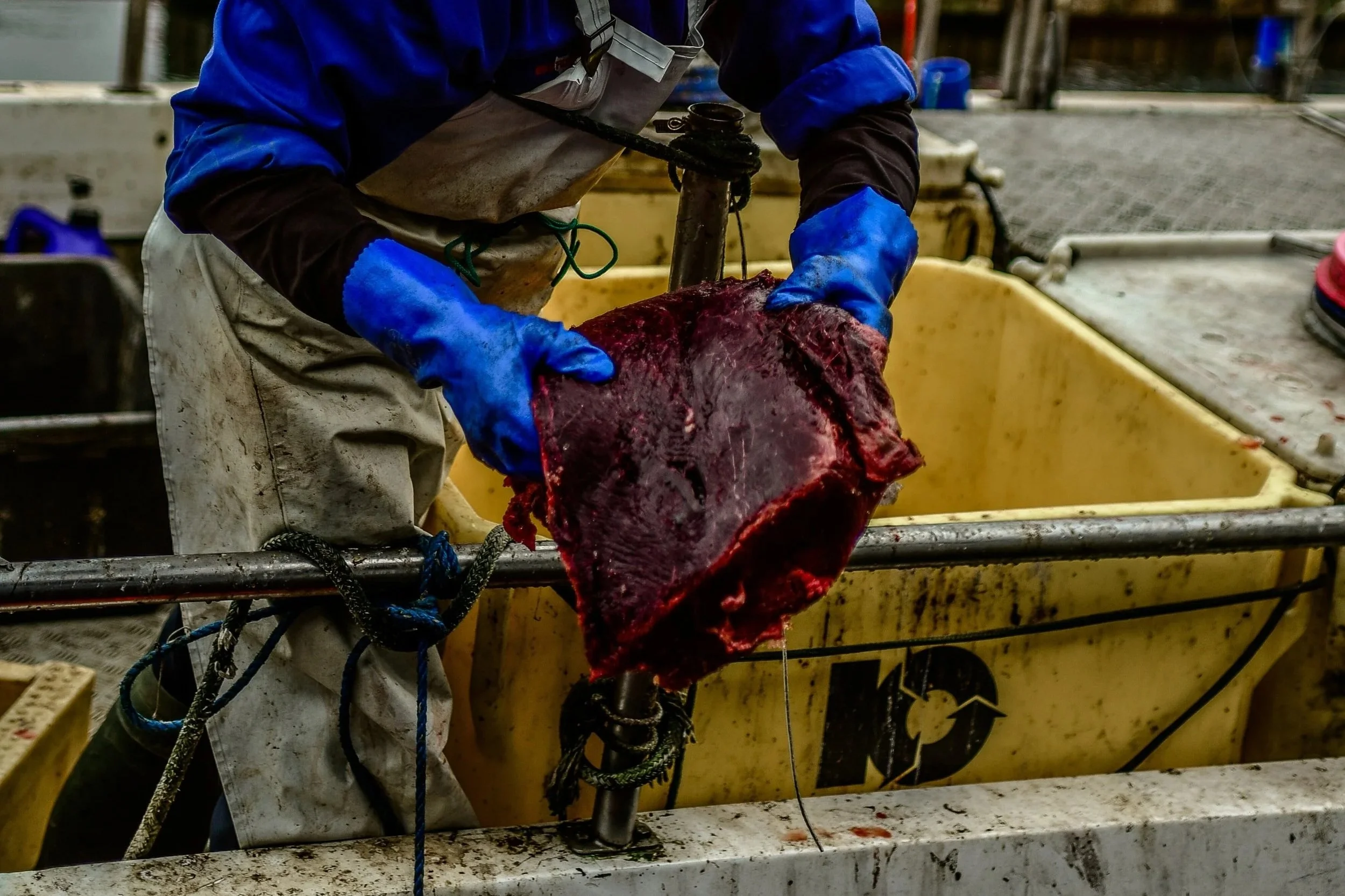
During a typical grind, the whales are driven towards the shallows in small boats and killed with knives. The hunts often draw crowds, with many observers electing to help the hunters by bringing the whales to the shore through water that is heavily tinged in red.
Though the sight can be jarring to some and can color the perception of those that aren’t used to the practice, locals insist that the actions of a grind are no different from the actions taken to procure meat that ends up in grocery stores, and that those who criticize grinds are being willfully ignorant to how many food items are produced.
In a 2016 interview for The Spectator, hunt participant Heri Jojensen summarized the perceived disconnect: “In Europe, killing an animal has become so unfamiliar to people. They are used to eating meat coming out of plastic in a shop. It’s very convenient for them; they don’t need to think about the reality of slaughterhouses.”
Aside from the cruelty argument, detractors have attempted to point to the fact that eating whale meat is dangerous due to the elevated chance of ingesting mercury and other dangerous chemicals. This risk has accelerated in recent years with increasing pollution in the world’s oceans. Additionally, with more food sources available in the modern era, some argue that there are too many risks involved with eating whale meat to justify it when safer foods are more readily available.
Commitment To Sustainable Hunting
Despite the critiques of the practice, the Faroese have been careful to not overhunt the pilot whale population. Of the entire North Atlantic pilot whale population (380,000), about 100,000 live in the area surrounding the Faroe Islands. The annual catch has averaged around 600, less than one percent of the local population of pilot whales.
Despite concerns around the practice and the image that it may often present, the grind is undeniably a defining piece of Faroese culture. Given its location in an unforgiving, wind-swept corner of the North Atlantic, the grind has become the symbol of Faroese resilience.
“In the Faroese self-identity, you will find that our history is a struggle to survive in these islands, to build a nation,” said Páll Nolsøe, former communications advisor for the Faroese government. “When I was a child here, my grandfather told me, ‘Without the pilot whales, we will probably all starve to death.’ There is hardly anything that defines us as much as our food: We are what we eat.”
