
The Commons: Britain’s Response to Modern Protest Movements
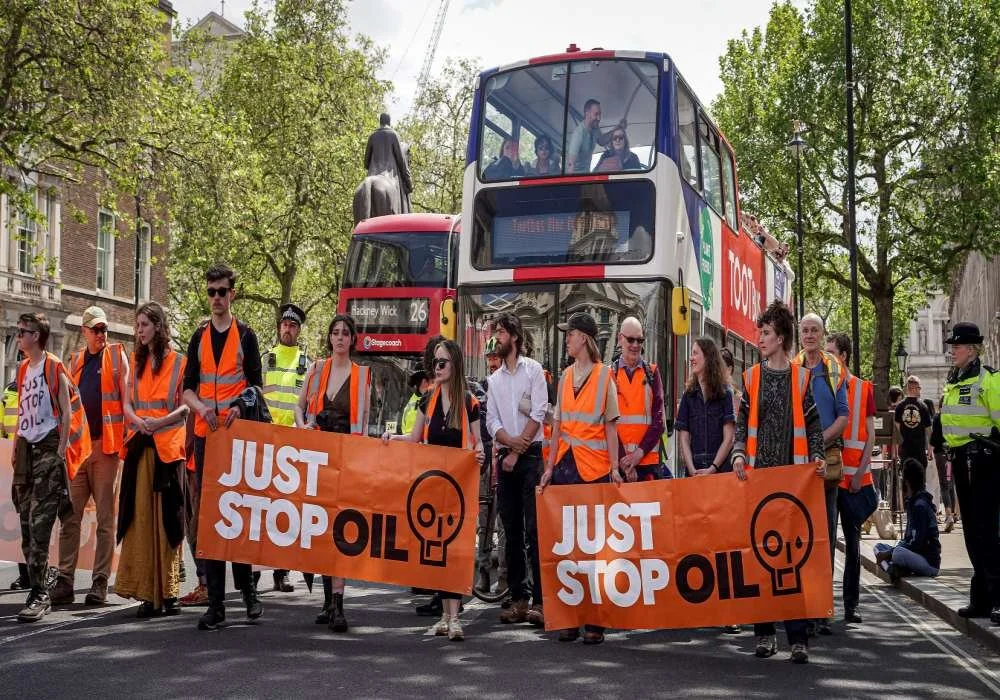
Just Stop Oil was a British environmental activist group focused on climate change and urged the government to end the usage of fossil fuel licensing by using non violent resistance and traffic observation. Their campaign of resistance ,which started in 2022, involved activists seeking protests that caused the most disruption to the general public. They are part of a recent surge in a particular form of activism: nonviolent disruptive protests. These protests are disruptive, not violent but going beyond simply handing out flyers but calling attention by disrupting the notions of everyday life.
While supporters of these protests argue that these methods are crucial to reflect to the public the urgency around issues such as climate change, critics contend that such demonstrations inconvenience the public and place pressures on emergency services, often resulting in a detrimental cost to these services. Britain’s response to these protests has increasingly reflected this tension between democratic expression and public order. The introduction of legislation such as the Public Order Act 2023 expanded police powers to restrict protests considered capable of causing serious disruption, raising wider debates surrounding the limits of protest within a democratic society.
Why was The Public Order Act 2023 introduced?
In recent years, there has been significant debate whether current legislation prioritises the rights of protesters over the rights of the general public, protecting transport networks and infrastructure. This question was further established after HM Inspectorate of Constabulatory and Fire Services recommended tweaking legislation to allow free speech from protesters, but also protecting the public in turn, suggesting that protests “tip too readily in favor of protesters”. To address the concerns around current protest legislation, the government initiated 2 major reforms to bring additional powers to the police to be able to manage large disruptive protests.
What reforms did the Act introduce?
Introduced a statutory offence of public nuisance
Introduced new offences in accordance with disrupting national infrastructure ex. “Tunnelling”
Introduced new Stop and Search laws for police to search for protest-related items without grounds of suspicion.
Introduced the Serious Disruption Prevention Order, preventing people convicted of a protest-related offence from engaging in further protests.
Supporters of the reforms argued that existing legislation did not allow the police to respond to disruptive forms of protest. Ministers argued that the measures were designed not to prevent lawful and peaceful protests, but to protect and control the impact of emergency services, transport networks and the daily public from these forms of disruption in protests. The government argued that the right to protest must be balanced against the rights of others to access public infrastructure without serious disruption.
'Governments are obliged to facilitate peaceful protests, while, of course, protecting the public from serious and sustained disruption. But the grave risk here is that these orders pre-emptively limit someone’s future legitimate exercise of their rights,” -UN High Commissioner for Human Rights, Volker Turk
The Response from New Reforms
These changes sparked controversy and caused protests and groups such as ‘The Good Law Project’ to protect their right to protest peacefully. With the reforms making the first major changes to the Public Order Act 1986 since 2003, the Bill posed significant threats to rights to protest. Critics argued that new legislation would threaten to “neuter protests in ways that would render them ineffective” and marked hypocrisy from the government.
The debate surrounding modern protest movements ultimately raises questions about free speech and democracy. While governments have a civil responsibility to maintain public order and prevent civil unrest, people have relied historically upon protest as a means of challenging authority and bringing neglected issues into public debate. UN High Commissioner for Human Rights, Volker Turk, issued his thoughts on the legislation. Turk argues that the Public Order Bill is ‘incompatible’ with the UK’s international human rights obligations regarding people’s rights to freedom, expression, and peaceful assembly.
Supporters view the legislation as a necessary response to increasing disruptive tactics, while critics argue that the expanded restrictions risk limiting a fundamental democratic right. As protest movements continue to evolve, the challenge for parliament and policy makers will be determining how far is too far with legitimate disruption and what is deemed unacceptable.
“”
Disruption or Preserving Public Order?
The reaction of Britain to movements like Just Stop Oil means that the problem of balancing order and dissent is not yet resolved. It is not just a matter of whether people should be allowed to protest; the issue also raises questions regarding the extent to which people are entitled to protest, especially where it affects others' daily lives. Throughout British history, protests, in particular, disruptive protests have played a fundamental role in driving political and social change. However, with evolving infrastructure and forms of disruption in protests, governments are expected to protect the general public from types of disruption.
The Public Order Act 2023 represents the government’s interest to prevent major disruption to infrastructure whilst acknowledging the right to protest public rights and finding the balance between the two. As protest movements continue to evolve, so too will the debates on the balance between the two. It is not a matter of whether there should be protest in a democracy but how democracies can preserve both the right to protest and the interests of society as a whole.