
Liberty Exposé: The Question of Succession
The battleground of American politics is constantly evolving, and the coalitions and wings which constitute our two-party system are anything but static. As time marches on, policies and priorities that once defined party lines cease to resonate with the following generation of American voters, whose concerns and anxieties redefine the national conversation. But this is not a byproduct of the 21st century’s political landscape. Far from it. Since its founding, the American Experiment has been punctuated by watershed moments where newfound domestic and foreign challenges have compelled political parties to adapt and reinvent themselves to better reflect the changing constituent zeitgeist.
Amidst these pivotal moments in American history, political leaders have tapped into these shifts, distilling new electoral coalitions capable of redirecting the trajectory of their respective political parties. President Franklin D. Roosevelt navigated the economic anxieties of the Great Depression, forging a “New Deal Coalition”, politically rebranding the Democratic Party into an electoral powerhouse that would dominate the White House for decades. Flash forward to the 1980s, and President Ronald Reagan’s fusion of fiscal conservatives, Cold War hawks, and an emerging religious right would lay the framework for modern American conservatism. Meanwhile, President Barrack Obama built a coalition of support comprised of multiracial demographics, young voters, and highly educated professionals that redefined the modern Democratic Party’s electoral base. It is hardly surprising that each of these three presidential titans served consecutive terms. By reconstituting their political parties around the contemporary concerns of their voter base, they cemented powerful coalitions capable of securing electoral support for years to come.
Like his presidential predecessors, our current Commander-In-Chief represents another such movement of monumental political realignment. By tapping into the unheard concerns of a populace increasingly distrustful of traditional political institutions, campaigning on key issues of immigration reform and economic relief amongst the working-class, President Trump was able to found a coalition in 2016 through populist rhetoric and a charisma that would eventually unite the disparate wings of the Republican Party under the modern “MAGA” banner.
But political coalitions built around a singular figure rarely survive the aftershock once said leader exits stage-right. With Trump constitutionally barred from seeking reelection in 2028, the Grand Old Party faces a dilemma that will define their politics for years to come: who can fill the “huge” vacuum of unifying leadership and secure a formidable 2028 Republican candidacy once Trump leaves office?
The Trump Card
“I am your voice!” — Donald Trump
Trump centered his 2016 campaign around being a political outsider, positioning himself as the answer to issues many Americans felt traditional politicians either overlooked or were unconcerned with. Although not the only candidate propelling populist ideology, Trump’s message rekindled within the American people a strong desire for an administration that would focus on American interests and American interests alone. Despite being discounted by establishment Democrats and Republicans alike, Trump was able to defy every odd and poll, striking a chord with voters that delivered him the presidency.
But it was more than just the substance of Trump’s talking points that secured his victory over Hillary Clinton; it was the delivery of the rhetoric itself. The direct and informal nature of Trump’s orations, a stark departure from the stump speeches of traditional politicians, reached through televisions, radios, and computer screens into the hearts of the American people. In his own words, Trump presented himself as the arbiter of an economic and cultural resurgence within America. Combined with the showmanship and media acuity developed from his tenure as the star of The Apprentice, Trump’s style of speech portrayed a political approach that for many Americans was viewed as a needed alternative from contemporary establishment colleagues and adversaries.
The electoral victories brought about by the populist dogma and charismatic nature of Trump also anointed him as the unifying figurehead of the modern Republican Party. From the onset of his first term, to his out-of-office support during the Biden administration, and the near total backing of his second term, the Republican Party gravitated towards and enshrined itself within the cult of populist personality Trump cultivated. Traditional conservatives and neoconservatives that were once staunchly opposed to Trump, such as Senator Lindsey Graham (R-SC) and Senator Ted Cruz (R-TX), now count themselves amongst the rank-and-file of the president’s most ardent supporters. Even Vice President J.D. Vance, a self-proclaimed “Never-Trumper”, changed his tune to the deafening beat of the “MAGA” drum. An endorsement from Trump has proved a deciding factor in previous midterm elections and will undoubtedly contribute to the outcome of the 2026 primaries.
“Make America Great Again” and “America First” have moved beyond mere campaign slogans coined by Trump, transformed into a force of change that has united both American voters and the various coalitions within the Republican Party. But if Trump has served as the ace in the hole for the GOP, who can match his political instincts and keep the deck intact once the ace is finally of the table?
The Heir Apparent
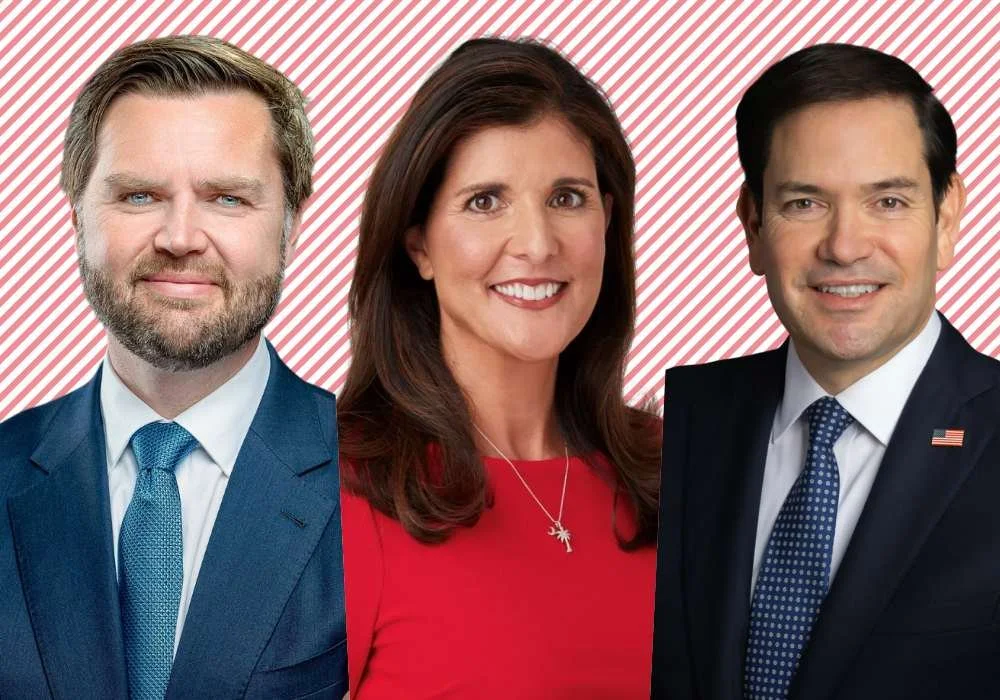
Currently, Vice President Vance, trailed by Secretary of State Marco Rubio, are polling as the two favorites for the 2028 Republican presidential nomination. But whether they, or other possibilities like Florida Governor Ron DeSantis and even Donald Trump Jr., are clothed by the Republican National Convention in presidential purple is not the question analysts or media anchors should be asking. The more important question is what must a 2028 Republican hopeful build their campaign around to carry forward the momentum of Trump’s political movement?
Any nominee must recognize that the cornerstone of the Republican Party has shifted from it’s traditional voter base and into the realm of the working-class. There’s a reason the populist ideals of Trump were so well-received by American voters. The potential nominee must continue the Trump policies of economic populism, centering on creating both employment and housing opportunities for their lower-income constituents. It took no small amount of time for blue-collar workers to cast red ballots, but Republicans can instantaneously lose their support if they fail to adhere to what attracted these voters to Trump in the first place.
Following this line of thinking, a 2028 Republican hopeful must safeguard the promise of “America First”, both in their current actions and future campaign promises. This commitment must be more than just another catchy slogan, considering that recent polling indicates a decreased Republican desire for involvement in foreign affairs. Nearly 7 in 10 Americans cite a minimum of one economic concern as their top priority, and only 25% of Republicans have an optimistic view of the government’s ability at addressing these concerns.
Numerous current Republicans share Trump’s agenda, but very few have the charisma and political aptitude that allowed Trump to connect with voters beyond the traditional Republican bloc. Such a candidate should not attempt to parrot Trump’s style of oration, but must nevertheless convey in their words and actions an inspiring confidence among both Republican voters and the party’s ideological factions, a unifying aspect of Trump’s political career. Without a strong and charismatic replacement, the GOP risks fracturing the support of those who would vote for this would-be inheritor and the necessary congressional backing to see their legislation is made law.
Each generation of Republican voters has altered the party’s trajectory, and the Republican voters of tomorrow are no different. Traditional stances against abortion and LGBTQIA+ rights are policies that do not constitute the concerns of many younger Republicans, individuals believing that the rights of “life, liberty, and the pursuit of happiness” apply to every American, regardless of gender identity or sexual orientation. As the outlook and concerns of younger Republicans depart from their older conservative counterparts, it falls to the future Republican nominee to adapt their party in order to cement younger conservative support for the 2028 presidential election and the elections that follow.
The Republican Party’s greatest obstacle in 2028 isn’t simply finding another Trump. It’s finding a candidate that can replicate the multifaceted political strategy which catapulted Trump into two non-consecutive terms and coalesced a fractured Republican party under his ideology and leadership, without abandoning the concerns of the GOP’s working-class and younger voter base.
Whoever can achieve this monumental undertaking will secure more than just the Republican nomination. They’ll stand as heir apparent to the movement Trump has founded.
