
Liberty Expose: Up In Arms
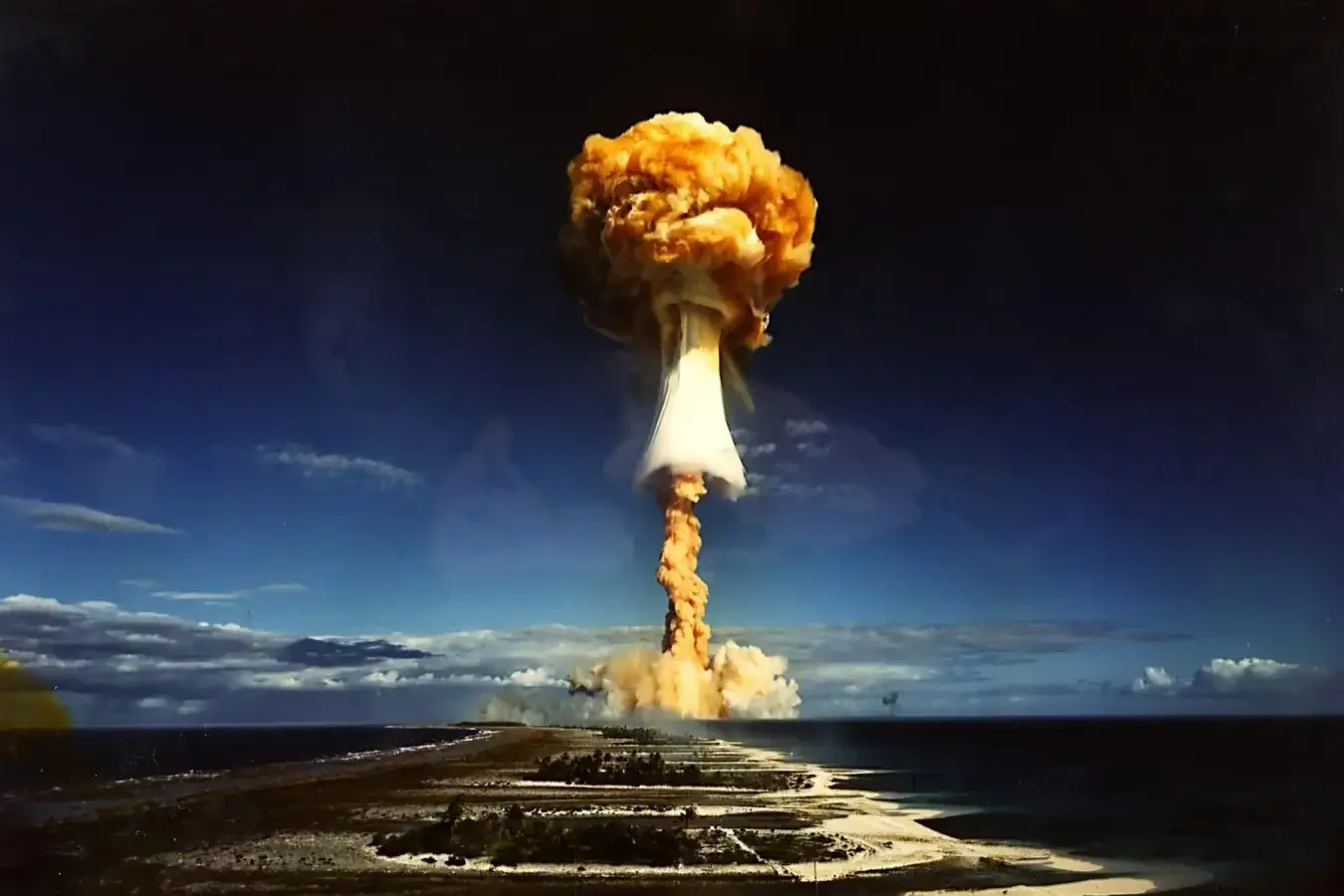
Mutually Assured Destruction (MAD). The idea that any conflict between two nuclear-armed nations would result in nothing less than cataclysmic devastation for both parties, annihilating everything and everyone unfortunate enough to be caught in the blast radius. This doctrine of deterrence has governed international law and nuclear policy for decades, allowing cooler heads to prevail during both the Cold War and our own modern era.
The looming threat of assured Armageddon was not without initial consequence, leading to the massive stockpiling of nuclear warheads by the United States and the Soviet Union. Regardless of what would remain after the irradiated smoke had cleared the battlefield, neither Cold War combatant could rest easy at night knowing their ideological opponent possessed a greater nuclear arsenal. It was not until the Détente era of the 1970s that the gradual process of nuclear disarmament would begin to take place. Following the precedent set by the 1968 Treaty on the Non-Proliferation of Nuclear Weapons (NPT), and spurred on by the well-found concerns of international bystanders, Soviet and American governments agreed to a series of treaties and summits, culminating in the bilateral reduction of nuclear armaments and a slow thaw to the icy conflict of the Cold War.
But although ‘Duck-and-Cover’ drills are now a textbook staple for younger Americans, and a less-than-pleasant memory for their older counterparts, anxieties over future nuclear conflicts are a growing concern. The ongoing conflict between Iran, the United States, and our Israeli allies, was orchestrated in part to prevent the realization of a nuclear-capable Iranian regime. But contentions in the Middle East are not the only contributing factor towards a potential spike in worldwide nuclear proliferation. America’s recent intervention in Venezuelan politics, combined with shifting geopolitical allegiances and the fraying of a once taught American hegemony on nonproliferation, has fostered a growing perception amongst nations that security can no longer be outsourced. That the deterrence of nuclear capability is the only true guarantor of national sovereignty.
That maybe the only thing nations can mutually assure each other of, is the desire for a level nuclear playing field.
The Race Is On
“The coming half-century will be an age of nuclear weapons.” — Emmanuel Macron
What was once accepted as fact now finds itself under scrutiny, as nations possessing, proliferating, and pursuing nuclear armaments all question whether the current status quo of nonproliferation best serves their sovereign needs. But why the sudden change in heart? Following the end of the Cold War a furtherance in nuclear disarmament seemed to be the global standard.
This standard of nuclear norms was a defining aspect of the second nuclear age, a period spanning post-Cold War until 2021. However, our own stage is firmly framed within the context of the third nuclear age, an era dominated by increased nuclear modernization and proliferation among possessor States, the fracturing of previously binding arms agreements, and the potential threat brought on by non-nuclear capable countries acquiring their own arsenals.
As international conflicts escalate the aspects of our current nuclear epoch, the world’s collective temperature towards nuclear armaments naturally rises a few degrees higher. Such a shift is obviously most evident among the current nine nuclear-armed countries. Under President Macron’s leadership, France will adopt a new nuclear strategy of “forward deterrence”, expanding their nuclear arsenal and extending the blanket of nuclear deterrence to European neighbors. China has long outpaced France’s current warhead count of under 300, as the emergent superpower already possesses 600 warheads and an arsenal “growing faster than any other country’s”, according to a 2025 report by the Stockholm International Peace Research Institute. To the north, Russia continues to dominate the nuclear arms race, focusing on modernization efforts for their fleet of 4, 309 warheads and counting. In South Asia, the nations of India and Pakistan match each other furiously, both increasing their nuclear arsenal in hopes of outpacing the other.
Non-nuclear powers have also entered the conversation, as nations reconsider whether their sovereignty and interests can be defended by allied foreign nuclear deterrents and treaties alone during a time of heightened international conflict. Saudi Arabia has previously expressed interest in obtaining nuclear weapons, with Saudi Crown Prince Mohammed bin Salman stating that if Iran obtained any nuclear armaments, “we will have to get one.” Within Turkey, regional tensions have resulted in Foreign Minister Hakan Fidan remarking that the country may need to pursue their own nuclear arsenal. In East Asia, support for obtaining nuclear weapons soared to 66.9% of South Korean citizens in 2024 as the ever-present nuclear threat of North Korea looms above the 38th parallel, and debates within the Japanese government question the nation’s nuclear policy. Prime Minister Takaichi Sanae stated in late 2025 that the nation’s long-standing non-nuclear arsenal principles were “a policy guideline at this stage.”
Nations across the Eastern and Western hemispheres are reconsidering their own perspectives towards nuclear deterrence. Regardless of whether these nations possess a nuclear arsenal, recent international flashpoints have cemented the belief within their borders that nuclear weaponry is the only sound means of deterrence against foreign adversaries. Regional conflicts in the Middle East and the ongoing Russia-Ukraine War were cited by President Macron as catalysts for a revitalized French nuclear deterrence. But intercontinental disputes aren’t solely responsible for an increase in worldwide nuclear proliferation. There is a burgeoning skepticism towards the United States’ capability and capacity in projecting the power of nuclear deterrence to our allies abroad.
The Trump administration’s new National Defense Strategy highlights the need to “Increase Burden-Sharing with U.S. Allies and Partners”, signaling to our allies that the American umbrella of nuclear deterrence may not reach as far as it previously had, and that, for them, it may be time for an upgrade. From Poland to Australia, American allies are turning inwards for the solution towards the security of waning foreign nuclear deterrence.
A World Without Order
“The deadly arms race, and the huge resources it absorbs, have too long overshadowed all else we must do. We must prevent the arms race from spreading to new nations, to new nuclear powers and to the reaches of outer space.” — JFK
This increased nuclear proliferation is backdropped by a sphere of eroding American influence over nuclear deterrence, as a once rich tapestry of nonproliferation treaties unravels in unison. The expiration of the New START Treaty, the most recent iteration of US-Russian arms control agreements, will most likely lead to what arms control experts refer to as “a modest upload and more deployed nuclear weapons in the coming years.” Without the guardrails of a mutually binding arms agreement, the prospect of a renewed, unregulated, and uncapped nuclear arms race may quickly become a reality. The question of nuclear conflict is timeless, but according to the United Nations’ Secretary-General, the “dissolution of decades of achievement could not come at a worse time – the risk of a nuclear weapon being used is the highest in decades.”
Building upon this already volatile environment, the United States’ recent foreign interventions have compounded the question of nuclear deterrence for both our allies and adversaries. While the reasoning and benefit they have brought to the American people may be justified on their own terms, the surge of overseas American intervention have left global players with a message abundantly clear; that conflicts between major powers are far from theoretical, that foreign intervention is far from inevitable, and that the resolute confirmation of any nation’s sovereignty can no longer be guaranteed by former promises of allied nuclear deterrence.
The tried-and-true concept of MAD can not be relied upon either, as the unknown variables of rogue States and actors disrupt the gears of previous nuclear doctrines. During both terms, President Trump has centered his administration around the concept of “Peace Through Strength”. But if peace on Earth, and in America, is measured in megatons and potential radiation fallout, it grows more fragile by the day.
President Trump, for the safety of American citizens and colleagues and rivals across the world, must follow through with his previous intentions towards a binding US-Russian nuclear arms agreement, regardless of what domestic advisors or foreign pundits may put forth in the absence of the New START Treaty. If the administration prides itself on “America First”, then let our America be the first to spearhead a fourth nuclear age. By proposing a new, long-term treaty between Russia and every other nation possessing a nuclear arsenal, the United States could mutually assure the world that while nuclear deterrence might rule today, nonproliferation may govern tomorrow.
