
Third Way: The Prose And Cons of Political Literature
Political perspective, like any other strong belief, is built gradually as individuals are exposed to varying opinions and lived experiences. As young children, the largest influence in an individual's life is direct familial interactions. The opinions of one's parents become that individual's opinions as well. As life goes on and their social circle expands, they begin taking into account the opinions of their friends, teachers, and peers. However, one of the largest influences is that of the education one receives; specifically, the literary works they are exposed to and tasked with analyzing.
Throughout their secondary education, young adults are met with the task of analyzing unfamiliar and often intense literature, much of which involves political undertones, be it obvious or not. The themes of mental, emotional, and physical oppression ring true throughout nearly all of said works. But how much impact do such books have on the political identity of young adults in today’s society?
Literature offers a unique and accessible opportunity to broaden our worldview whilst remaining in similarly accessible locations, such as in a classroom or on one's living room couch. It is proven that those who travel and experience a variety of cultures typically boast a stronger sociopolitical awareness than those who have not had the same opportunities. A study done by the Pew Research Center in the spring of 2023 found that of the adults surveyed, those in the category of “globe-trotters” (individuals who had been to 5 or more countries) reported that 42% “felt close to people all over the world” compared to the 30% recorded by the category of “non-travelers”. This is largely because, through travel, people bridge connections and form opinions based on exposure to experiences, cultures, and discussions with individuals who exist outside the realm of their personal lived experiences. However, it is unfortunately not accessible for every person to travel to another country in order to have these moments of growth and awareness. For this reason, they turn to literature. One of the fundamental importances of exposure to literature, particularly political literature, is that such books allow them to think outside of themselves and their environment and step into worlds the likes of which they’ve never seen.
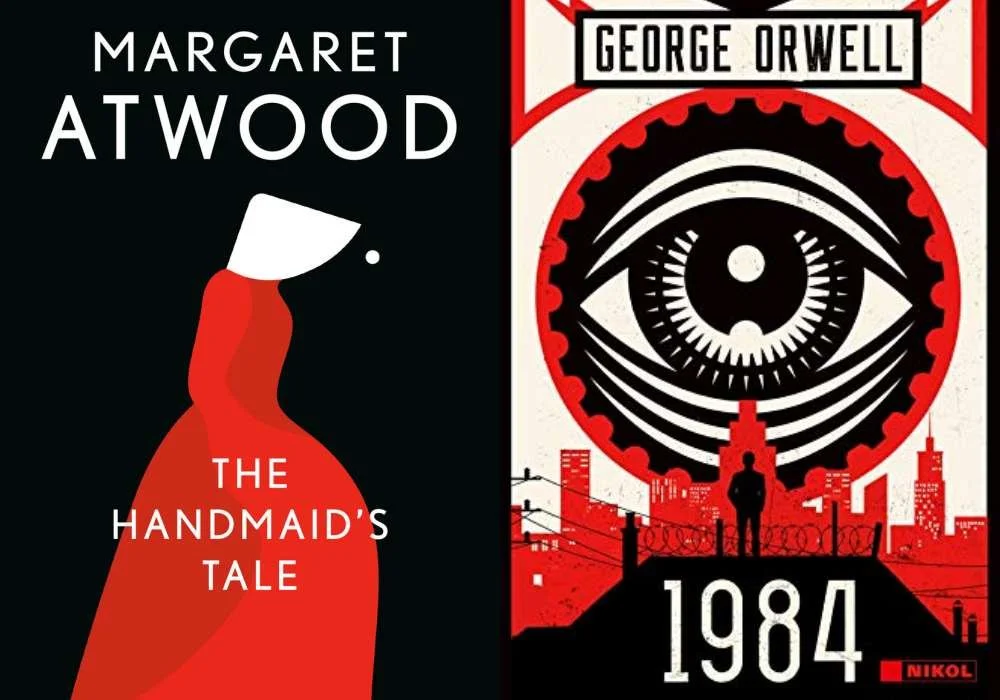
Political literature offers students an unparalleled opportunity to engage with intense modern topics within the confines of a safe and predictable sphere. Books such as George Orwell’s 1984, which follows the story of protagonist Winston as he navigates his life in a dystopian society where the government controls all aspects of life through intense and oppressive surveillance. 1984 discusses themes of personal privacy, rebellion, and the importance of being aware of and pushing back against propaganda. By reading this classic piece of literature, students learn the importance of public awareness, particularly in terms of government control. They do not have to live in “Oceania” or work at “The Ministry of Truth” to understand. They are instead privy to Winston’s innermost thoughts and feelings as they observe his existence under the regime of Big Brother.
As human beings, it is usually a rather simple task to ignore the issues that are not directly in front of us. This, however, results in a frequently misled and easily controlled society built on ignorance, be it willful or not. Famously referenced and originating in George Orwell’s 1984, the quote, “The Party told you to reject the evidence of your eyes and ears. It was their final, most essential command,” details truly the insistence of a government attempting to create a controllable society. The absurdity of asking one to ignore the injustice they see and experience plainly every day reads as a less covert version of the propaganda we see produced and distributed regularly in today’s political society.
Novels such as The Handmaid’s Tale by Margaret Atwood speak not only of physical control, but also of mental and emotional control as well. Through the character of Offred, we see the devastating result of a society fallen victim to a religious nationalist regime, wherein women are either wives, maids, or methods of reproduction, or exiled to die. The most horrific aspect of this book is that it has all happened in the world we know and live in today. When writing The Handmaid’s Tale, Margaret Atwood only drew from real situations that had already occurred, or were currently occurring within society at the time of the book's inception. At the time of its publishing, many viewed the book as unrealistic or extreme, a fact which Atwood herself stated during an interview, is no longer something she frequently hears. It is not shocking that such literature would be viewed as out of the realm of possibility; it feels incredibly disconnected from the world we know. It simply is not, however. It is all too real and all too possible. This is why the importance of becoming aware of these historical atrocities cannot be stressed enough. Philosopher George Santayana put it best when he said, “Those who cannot remember the past are condemned to repeat it”.
The importance of exposure to and continued access to educational reading material cannot be stressed enough, particularly as we progress through an ever-changing and often unpredictable political environment. Literature such as 1984 and The Handmaid’s Tale, to name only a few, offer young adults the opportunity to strengthen their political foundations and hone their beliefs. This benefits not only the individual but society, as it is met with a new wave of informed and confident voters with developed political opinions.