
Liberty Expose: No Laughing Matter
nbc
Comedy, as long as it’s in good taste, is typically timeless. More often than not, something that had people rolling on the floor laughing a century or two ago, can still garner the same response from a modern audience. The setup might have to be rearranged, but the punchline still hits home. Everyone has heard a joke from a family member, friend, or coworker that, regardless of how many times it was told before, still manages to produce a chuckle after the obligatory rolling of eyes. Political satire is no different.
Arguably the oldest, if not most enduring form of comedy, political satire has long enchanted and enthralled audiences across a wide spread of time and demographics. From the plays of Aristophanes challenging the Athenian status quo amidst stone amphitheaters, to the quick witted remarks of Medieval jesters throughout the royal courts of Europe, political satire has entrenched itself as a premier vehicle of cultural and political commentary. What better way to shed light on political developments or societal scandals than with a running joke everyone can laugh at?
Even in the United States, political satire has “been used throughout American history as a more gentle way of commentary”, its purview reaching back all the way to the founding of our nation. Satirical political cartoons were a mainstay of colonial criticism towards British rule in the leadup to and during the Revolutionary War, and the cartoons of Thomas Nast exposed the vast corruption perpetrated by Tammany Hall under the iron fist of William “Boss” Tweed.
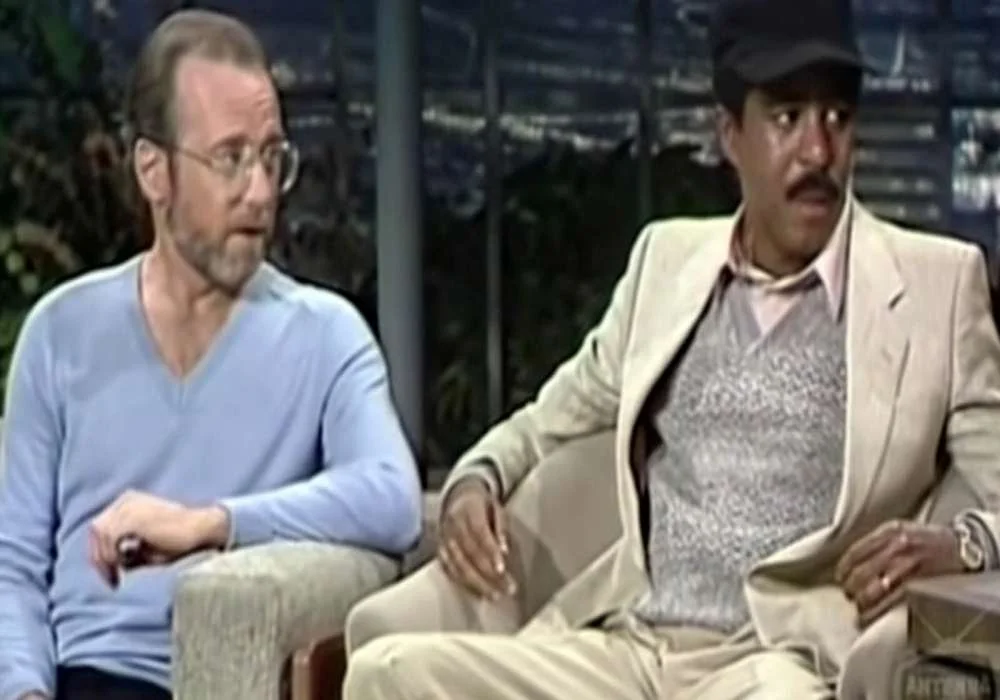
Comedians like Richard Pryor and George Carlin took political satire to the screen, and the form of comedy was consecrated as a staple of late-night programs after The Tonight Show host Johnny Carson’s monologues covering the Watergate scandal. Other late-night powerhouses of the 1970s, like Lorne Michael’s Saturday Night Live (SNL), delivered sketches rife with satirical commentary towards politicians and current events. No politician or public figure was safe from the comedic ridicule of the era’s equal opportunity crosshairs. Democrats and Republicans alike could share in a laugh together because neither one was ever the sole target. Late-night comedy programs became a cultural campfire, where everyone across the political spectrum could turn on, tune in, and drop into a half-hour segment of informative chuckles and smiles.
But over the last handful of decades there has been a polarizing shift, and a unifying campfire has dispersed into a curated member’s only club. The uniquely American ritual of late-night comedy, once governed by bipartisan quips towards political targets and happenings, has seemingly drifted into a “one side fits all” approach towards political satire. Jokes appear to only land in one direction, and desk monologues have transitioned into a launching pad of political partisanship.
Punchlines are predictable, applause is nearly guaranteed, and laugh tracks are no longer limited to giving the audience their cue; they dictate who they’re allowed to laugh at.
Punchline Politics
The political polarization of late-night comedy programs is a phenomenon fairly recent in the making, chronologically linked to the outbreak of political partisanship in the early 2000s that would later define the following decade. While Jay Leno followed Carson’s philosophy of ‘don’t be divisive’, and David Letterman centered his late night programs on the low-hanging fruit of “the easiest path, the most obvious joke.”, each host tackled politics in a nonpartisan and electorally inclusive way. It was not until Jon Stewart took the helm of The Daily Show that “the real change in political commentary on late-night began”.
Stewart’s brand of comedy intertwined satire with political critique. His heavy-hitting satirical coverage on the Bush administration and the Iraq War transformed his program into a “sharply pointed political machine”, exposing the bipartisan hypocrisy of politicians and media institutions. Stewart’s success captivated a large swath of younger viewers who appreciated that “a comic’s take on politics is nimble, bitesize and utterly clear. And Americans prefer to take their news with sugar”, and the attention The Daily Show received “gave birth to an entirely new genre of righteous comedy”, that other late-night programs were quick to capitalize on “out of fear of losing viewers.” Hosts such as Stephen Colbert, John Oliver, Seth Meyers, and Jimmy Kimmel all followed the trail of comedic political commentary blazed by Stewart in his tenure on The Daily Show.
Yet while all of these hosts began leaning heavily into political commentary, their comedic material was not entirely political nor partisan in nature. The catalyst for the fundamental change in the late-night landscape took root in the 2016 election-cycle and the then-candidacy of President Trump. Initially, and perhaps because Trump was largely viewed as an unlikely and unwinnable candidate, late-night television programs characterized Trump and his campaign with all the hallmarks of good-natured humor. Trump hosted SNL in 2015, throwing jabs towards his political opponents and accepting satirical mockery in turn. It seemed that the intersection of politics and late-night programs was comedically copacetic.
But the tone did not remain light forever. As Trump’s candidacy shifted from punchline to presidency, late-night hosts responded in turn, wasting no time in expressing their dissatisfaction with the outcome of the 2016 presidential election. In the years that followed Trump’s initial ascension to the White House, late-night hosts doubled down in their severity and frequency of criticism towards Trump. Meyers and Colbert were adamant in their distaste and “launched a relentless assault on Trump night after night since he was elected”, nor were they alone in their resentment, with comedians like Samantha Bee and Trevor Noah soon following suit. The Trump-fueled shake up of late-night comedy “triggered an extreme makeover for political satire, which is now more ubiquitous, more pointed, more passionate and often more partisan than ever before.” For four years, it seemed the equation for late-night ratings was as follows: Trump+Joke=Laughter.
Trump continued to remain the be-all butt of late-night television jokes in the aftermath of his 2020 election loss and the interim until his return to the White House in 2024. Not only did late-night comedy hosts reaffirm their partisan commentary towards the president, they cemented their own partisan political stance firmly on the left side of the aisle. Strangely enough, during Biden’s presidency the same programs that hounded Trump rarely targeted Biden in their jokes and monologues. Instead, late-night hosts platformed Biden and his 2024 campaign. Kimmel, Colbert, Meyers, and other hosts celebrated the election of President Joe Biden with a sigh of relief and another comedic cascade against Trump. The monolithic opposition against President Trump and the GOP continues to be broadcasted, and doesn’t seem to be slowing down anytime soon.
No Laughing Matter
But the proverbial dead horse can only be beaten for so long before those on the sidelines lose interest. How long can late-night comedians continue to berate Trump before their audience gets bored of the same old material?
Not long it would seem, as despite heavy reliance on Trump-centric monologues, late-night television has experienced a consistent decline in viewership in the past decade since Trump’s 2016 inauguration. As the New York Times observed, Trump’s presidency produced a “bumper crop” of liberal comedy programs, many of which have already been cancelled. Kimmel’s viewership has gradually declined from his 2015 average of 2.4 million total viewers to 1.77 million in 2025, and CBS has cancelled Colbert’s program due to “financial reasons”, but “sources pointed to left-leaning Colbert’s consistent drumbeat of criticism of President Trump, which some critics say has turned off viewers.” The tried-and-true formula of ‘Orange Man Bad’ appears to no longer resonate with audiences, with one CBS news executive stating “When will CBS learn that you have to program for the whole country and not just the coasts?”
News executives aren’t the only ones weighing in on the issue. Late-night paragon Conan O’Brien expressed that Trump has been “bad for comedy”, not for lack of material, but because comedy has been replaced by frustration as comedians have been “lulled” into centering their bits on anti-Trump rhetoric, and have “put down your best weapon, which is being funny, and you’ve exchanged it for anger.” Jay Leno echoed O’Brien’s sentiments, questioning “Why shoot for just half an audience all the time? You know, why not try to get the whole?” and telling comedians “I’m not saying you have to throw your support, or whatever, but just do what’s funny.”
That being said, how can the genre of late-night comedy programs reverse its seemingly inevitable downfall? As O’Brien and Leno pointed out, departing from the decade long anti-Trump material is a good starting point, and being funny helps too. But what if late-night mainstays aren’t able to depart from their bread-and-butter liberal leanings? Perhaps the savior for a late-night comedy resurgence won’t arise from within existing powerhouses, but from an entirely new player on the scene? Independent and right-leaning media corporations are presented with an unprecedented opportunity, not to create a conservative alternative to the left’s monopoly on late-night television, but to launch a late-night platform that is truly unbiased in its characterization and critique of American politics. A program where no politician or policy is above criticizing, and no target is safe from well-deserved ridicule.
Comedy, political satire in particular, should never pull any punches. But those comedic punches should be thrown equally, regardless of who’s in the crosshairs or who’s delivering the blow. Politically polarizing and partisan monologues, sketches and bits don’t only alienate half of our nation’s audience, it restructures the American tradition of late-night television from a much needed outlet of comedic relief to just another platform of political messaging. Politics can never be separated from comedy, but that doesn’t mean it has to be the ultimate objective of every punchline delivered past 10:00PM.
