
Checkpoint: The Future Of The Democratic Party
The wall Street Journal
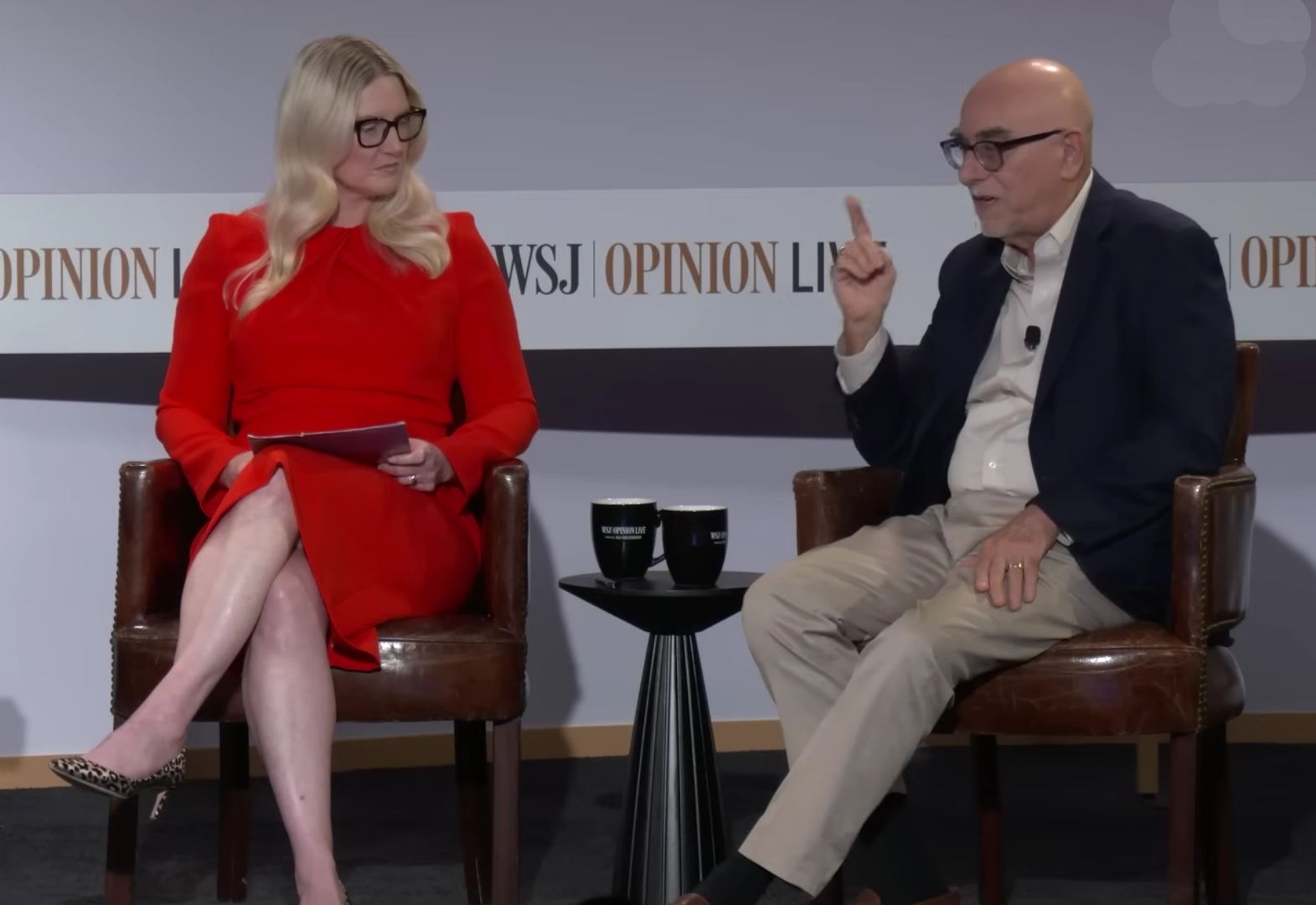
For their panel discussion on the future of the Democratic party, The Wall Street Journal hosted commentators Marie Harf and Ruy Teixeira. In his response to this panel interview, my colleague Seth Bush was right to begin with highlighting the generational and practical gaps between these two.Teixeira is a senior fellow at the American Enterprise Institute, and Harf is the Executive Director of the University of Pennsylvania’s Perry World House. Teixeira has spent his career at various centrist and progressive think tanks including the Progressive Policy Institute and Economic Policy Institute. Harf’s career trajectory has involved working for the CIA and State Departments, and she now, in addition to her role at Perry World House, is the Executive Director of the Serve America PAC. There’s also a 30-year age gap between 44-year old Harf and 74-year old Teixeira. For all their differences, though, there is an interesting similarity between the two. Both are Democratic commentators for rightwing organizations—- Harf for Fox News and Teixeira for the American Enterprise Institute.
Harf and Teixeira are textbook center-left Democrats. They eschew the more progressive members of their own party while practicing the casual elitism that many to their ideological right disdain. It makes sense, then, that both have been chosen by right leaning media outlets to represent Democrats to right-leaning audiences. Who better to represent Fox News’s and the American Enterprise Institute’s political adversaries than the party’s most milquetoast, run-of-the-mill spokespeople? It follows further, then, that The Wall Street Journal, known for relatively centrist news reporting but rather more conservative opinion sections, would also choose to highlight uninspiring centrist Democratic voices rather than representatives of the party’s more energetic progressive wing. Harf and Teixeira are not representatives of the plurality of viewpoints that exist within the Democratic party. They do, however, perfectly exemplify the white, affluent, center-left Democrats who occupy most of the party’s positions of power.
In his analysis of the panel discussion, Seth honed in on a theme of the conversation: whether the Democratic party should pursue ideology or pragmatism as the 2026 midterm election season approaches. Ruy Teixeira is a pragmatist, while Marie Harf is an idealist. Teixeira advocated for the party to abandon issues that don’t poll well now or never did, like protections for transgender individuals and policies to address the climate crisis. Harf maintained that Democrats had already learned their lesson from its two losses to Donald Trump while also harkening back to the Obama Administration as an idyllic bygone time when pesky progressives and corrupt right wingers weren’t gumming up the wheels of her party. Teixeira pushed for a return to and a reframing of social issues within the party. He lamented California Governor Gavin Newsom’s being attacked for commenting during an interview earlier this year that the Democratic party ought to be more “culturally normal” to win back centrist voters. Harf referenced another controversial pillar of the Democratic party, its unwavering support for Israel. She said that her “friends in AIPAC” worried about the growing anti-Israel wing of the Democratic party. She, in accordance with sentiment of the Democratic establishment milieu, wants moderate candidates who will condition offensive weapons to Israel, while maintaining close economic and political ties despote the genocide Israel inflicted on Gaza.
Harf spoke adoringly of Senate candidate James Talarico, saying that he is well-spoken, uncontroversial, and Democrat ideology-aligned, i.e. just what the party needs. This was some impressive erasure of the radical and progressive nature of Talarico’s policies and campaign, and erasure and appropriation of the momentum of the progressive left was another theme of this panel. Teixeira spoke about the popularity of the “affordability” agenda, citing it as one of the Democratic party’s most successful messages over the last few years. He gave no credit to the progenitor of the “affordability” campaign, New York City Mayor and Democratic Socialist Zohran Mamdani. In the same breath, Teixeira disparaged progressives in the party as “schticky” contenders taking advantage of people’s frustration with the Democratic establishment. He claimed that progressives like Senate Candidates Graham Platner and Abdul El-Sayed, present nothing heterodox to the Democratic party and are just charismatic figures with “rah rah” attitudes. Harf agreed, saying that if Graham Platner won his senate primary, Democrats would vote for him but we’d “have to hold our noses and do it.” Both Harf and Teixeira gave the Democratic party the credit for the overwhelming success of progressive candidates over the last year, when those candidates arose in spite of and occasionally in opposition to the Democratic establishment.
As my colleague Seth described, Marie Harf and Ruy Teixeira, as representatives of the Democratic party, showed that the current priorities of the party’s leadership is their focus on election victory rather than on governing the country. Both were remarkably out of touch with where the momentum lies in the party, and they scorned the progressive movement that has yielded Democrats some of their most impressive recent wins. The two agreed that the Democratic party ought to keep emphasizing their opposition to Trump, that he presents a great foil, but that the party should run moderate candidates who won’t rock the boat. Harf had the last word in the discussion and said that her ideal candidate was someone who was authentic and who could use the media ecosystem, an unsurprising conclusion from an establishment Democrat who benefits from the party’s status quo. Harf and Teixeira could have advocated for candidates who would prosecute the Trump Administration for its innumerable crimes and rampant corruption; they could have supported candidates who want to improve people’s lives. Instead though, their great closing message was that the Democratic party should keep focusing on promoting candidates with broad and general appeal, who won’t ruffle any feathers, who will continue to maintain the party’s status quo.
