
Carte Blanche: Gunboat Politics In The 21st Century
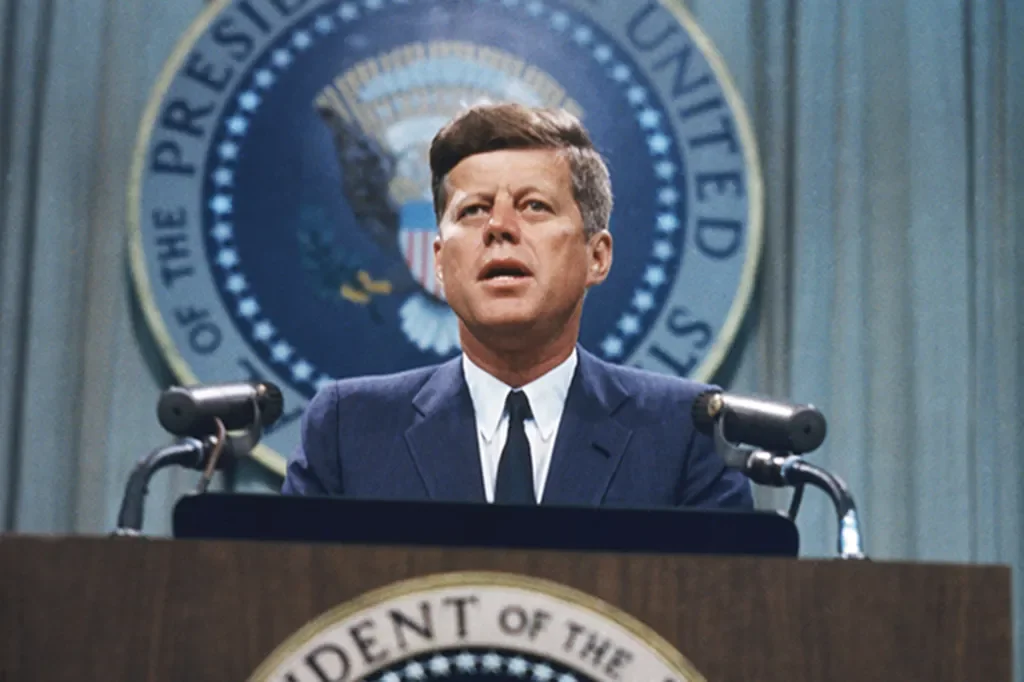
"Our goal is not the victory of might but the vindication of right...not peace at the expense of freedom, but both peace and freedom, here in this hemisphere, and, we hope, around the world.”
-President John F. Kennedy
In the early hours of January 3rd, 2026, US Special Forces carried out a daring raid on the capital of Venezuela, Caracas. During this raid, they captured then President Nicolas Maduro and his wife, and left without suffering any loss of life on US forces. In just over an hour, the head of a nation was on a US warship and headed back to the mainland to be tried for a myriad of crimes he and his wife may or may not have committed. The success of removing one despotic leader encouraged the Trump Administration to blockade the island nation of Cuba for the first time in decades and to launch strikes on the Iranian Theocratic regime in Tehran and across the nation. The reasoning is a simple one. If Maduro can be removed from power with little opposition from his country's armed forces or the local populace, then surely the people of Cuba and Iran would be glad to have the same done to them. The logic is as flawless as that used in the other wars fought in the 21st century that have also yielded such beneficial results for the American people, and the oppressed people of the world. However, while Venezuela may continue to perform better than expected, the same cannot be said for Cuba or Iran. Regarding Cuba, the US has cut off desperately needed supplies of fuel, food, and medical materiel. People who have already suffered under generations of a brutal communist regime are only forced to suffer even greater tragedies as the US uses the pressure to force the Cuban government to surrender to foreign policy designs long held by American politicians and special interest groups. In the case of Iran, the Trump Administration has severely underestimated the survivability of a theocratic death cult that has spent every moment since its inception to prepare for an eventual conflict with the US. Unlike Cuba or Venezuela, which both exist in a sphere completely dominated by the US, Iran is in one of the world's most volatile regions and controls access to one of the most important shipping lanes, through which a fifth of all global energy passes. If history repeats itself, then those who make it refuse to listen to it.
Nicolas Maduro was not a man of the people, no matter how much he claimed to be. His time in office was one of immense suffering for the Venezuelan people. He did what most dictators do: pretend to be democratically elected while ensuring no one has a chance of winning but them. Using the power of government ensured that the overwhelming results that he was going to lose changed almost immediately. When the people protested, he had the country's armed forces crack down on them violently. As if to add insult to injury when the nation was starving in 2017, Maduro took out an empanada from his desk drawer during an hours-long broadcast to the nation and started eating. By every metric that cruel or incompetent dictators can be measured, he fit the bill.
Cuba has been ruled by the Castro family and their chosen successors since they ousted the Batista Dictatorship in 1959. In almost seventy years of communist rule, the nation is far worse off than it ever was since gaining its independence from Spain. Iran had a revolution in 1979 that overthrew a Shah who had been held in place by the British and American governments, who lived lavishly while his people suffered. The Ayatollah, Mullahs, and the commanders of the Islamic Revolutionary Guard Corps are more brutal and more intrusive into the lives of Iranians than the secret police of the Shah ever were. All while living opulent lifestyles as their people are impoverished and starving.
There is little room to argue that the governments of those nations have done anything but oppress their people and enrich a small class of oligarchs who have no intention of ever really improving their citizens' lives or guaranteeing their rights. The people of those nations, and indeed the world, would be far better off with them gone and with new, more open, and elected governments, so that they can have a say in what laws are made and who is chosen to govern. However, despite whatever good can be argued from removing dictators and theocrats, it cannot and should not be the official policy nor preferred method of operation for the US or any other nation. It is a slippery slope that the US, British, French, Spanish, and Soviet governments spent most of the 20th century engaging in across the globe. Coups led to crackdowns, gulags, internment camps, mass executions, and wholesale slaughter and execution from Vietnam to Chile and whole swaths of the continent of Africa. Wherever a nation has decided to use force to ensure change in another nation, rarely has anything good followed.
There has been a growing call in the US to return to a form of Isolationism. The idea that each nation should be an island unto itself and concern itself only with its own affairs. The last time America embraced such policies, a war that the world still hasn’t recovered from ensued. Whole continents were set ablaze, and millions perished. Many would make the argument that WWII and the ensuing Cold War are proof that direct military involvement would’ve prevented such atrocities if they had been carried out sooner rather than later. Few would argue that, had the international community instead acted cohesively and in a determined manner to prevent other nations from bullying and consuming their neighbors, conflict as a whole could’ve been minimized, if not avoided. But international cooperation is messy, and it doesn’t divide countries and people into easily understood us-versus-them camps. Too many embrace spending a trillion dollars blowing up a country instead of a billion building relationships and mutual understanding over time. After all, where’s the catharsis in that?
The Trump Administration isn’t engaging in new or groundbreaking policies or forms of diplomacy that powerful nations haven’t tried simply because they could. Might makes right has long been the motto of the powerful, and it always ends in their downfall. If the US wants the world to be a better place, it has to resist using its military to solve disagreements. The international order isn’t a simple or straightforward process, but it works better than everything that has been tried before. If the world wants prosperity, it must strive for it, not a status quo that some prefer over others.