
Carte Blanche: The Draft Should Never Be Brought Back
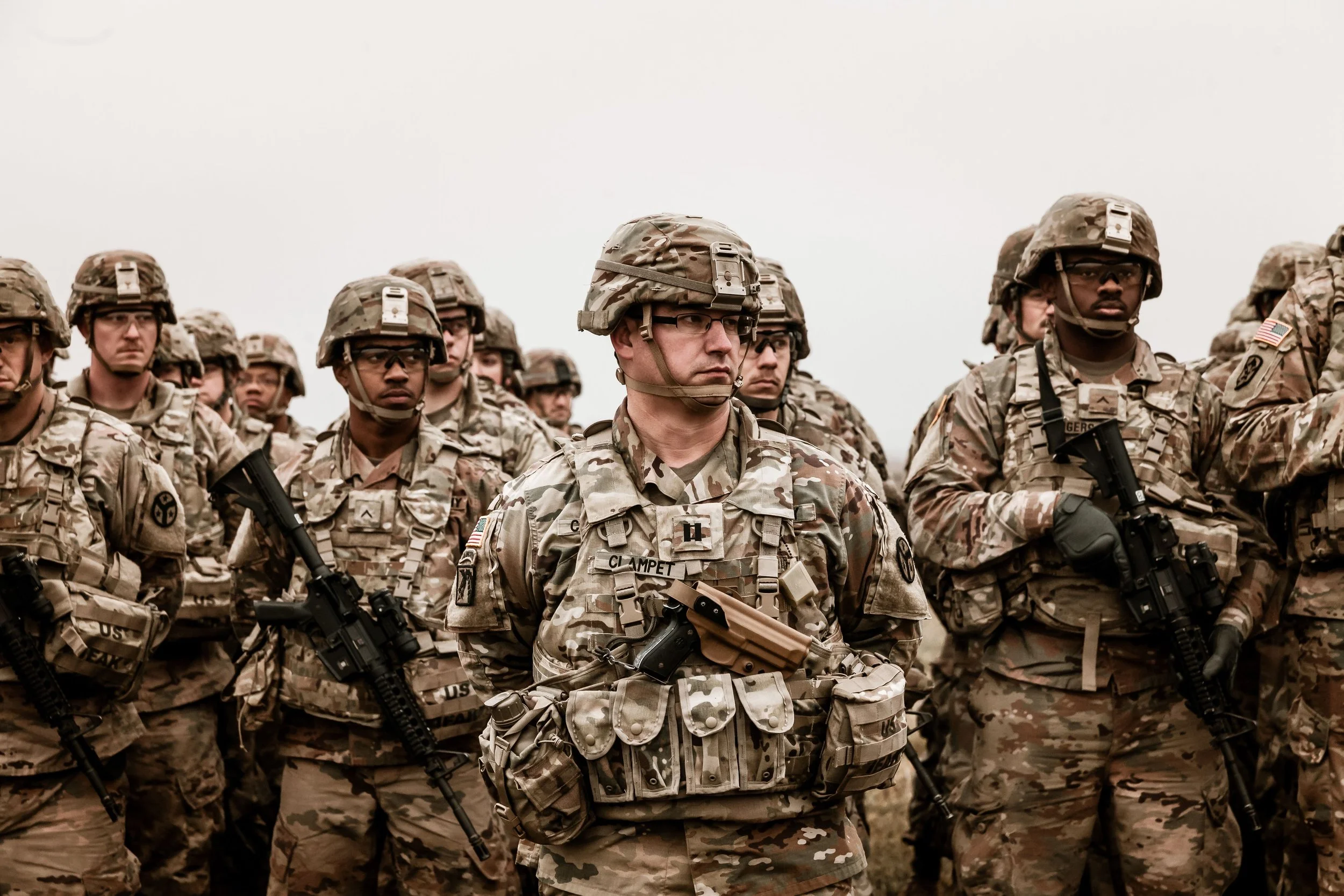
Art Guzman
"Where is it written... that you may take children from their parents, and parents from their children, and compel them to fight the battles of any war in which the folly or the wickedness of government may engage it?"
— Congressman Daniel Webster (1814 speech against conscription)
On March 3rd, 1863, Congress passed the Enrollment Act. This enabled the Federal Government to carry out military conscription. For the first time in American history, the government could forcibly press military-age males into military service. While the number of men drafted was low on both sides of the war, as manpower was desperately needed in the farms and factories that supplied the war effort, it granted the government the power to draft men as they saw fit to fight in the nation's wars. It was an incredibly dangerous power that would eventually be abused in the conflicts that made up the Cold War. From President Truman in 1950 to President Nixon until 1973, men were drafted to fight in increasingly unpopular wars that were neither declared by an act of Congress, nor approved by the American people. Instead of a desperate measure to ensure there was enough manpower to defend a nation in the middle of a cataclysmic civil war, it became the tool of politicians and generals to enforce foreign policies never put to a vote by the American people. Furthermore, the Selective Service Act of 1917 initially required all men aged 21 to 30 to register for the draft, which was later expanded to include men aged 18 to 45.
In both world wars, American men of every race and religious affiliation were required to participate. This meant that, despite the racial segregation, Black American men were required to participate in World War II, and despite being interned in internment camps, Japanese Americans were also required to participate. It was also disproportionately poorer Americans who were drafted. Those who refused were often jailed and fined, if not beaten and mistreated. It became apparent by the Vietnam War that it gave Carte Blanche that the government took for granted the willingness of Americans to participate in military adventurism. Millions of young men were sent to fight and die in conflicts they neither understood nor felt obligated to sacrifice their lives for. Regardless, they were drafted and sent.
There were, of course, protests and legal challenges to the government's ability to conscript its citizens. These challenges were squashed by the Supreme Court in Arver v. United States, also known as the Selective Draft Law Cases. On February 3rd, 1918, Chief Justice Edward White wrote that Congress had the power to do so by virtue of the Article I powers to raise and support armies. By relying on a broad definition of implied powers granted by the Necessary and Proper Clause, the court gave Congress, which then all but surrendered the power to the Executive Branch, the authority to draft and deploy large portions of the American population into undefined and morally questionable conflicts for the last century. What’s unique about the ruling and its substantial legal precedent is that a burden of service has been imposed on American men while granting the government the power to use its draft powers as broadly as it wants, without guaranteeing the rights of the very citizens it impresses into service.
The contradiction goes further: in order to ensure the liberty of its citizens, the government can also override their rights. The law does not require that the nation be attacked or that war must be declared, only that the government sees a need. The founders who had struggled to guarantee that the Constitution would enshrine that very liberty would be appalled at the idea of forced service in times of peace or in conflicts invented by the desires of Presidents to enforce entangling foreign policy, that so many had warned the nation to avoid from the start. After all, how can a nation founded upon the equality of men and their rights to life, liberty, and the pursuit of happiness, so easily override or invalidate all of it simply because the political leadership decides it’s necessary?
In a few days' time, the nation will celebrate its 250th birthday. For two and a half centuries, America has been an experiment in liberty and the rule of law, making it unique in human history. Having cast off the chains of monarchy, nearly destroying itself, ending slavery, and then, after a century more of racial injustice, ending legal discrimination, now stands more like a twisted vision of what could’ve been, instead of what could be for the rest of the world. As the nation struggles to live up to its founding document and virtues, there are renewed calls to reinstate the draft. Congress passed the National Defense Authorization Act in 2025, which requires all eligible males to be registered for the draft immediately and going forward. This will create an available pool of manpower with their information up to date to be called up if and when Congress reauthorizes the draft.
During the early years of the Iraq and Afghanistan campaigns, senior military and civilian leaders called for a return of the draft as a way to alleviate burdens on the overstretched volunteer force and as a way to create political pressure to end the wars. Neither side is a realistic solution to either problem, as the Vietnam War proved. Despite a mixture of volunteer and drafted soldiers, American forces were exhausted and overstretched. Even after nearly a decade of combat, President Nixon and, later, President Ford did not push to end the draft until the conflict was in its final stages and combat operations were winding down. Despite the claims to the contrary, the draft neither alleviated manpower issues nor did politicians succumb to political pressure to end it until it was politically convenient.
If the nation is worth defending, if the ideals and values that are so regularly espoused as American virtues that the nation strives to live by and uphold are truly part of the American character, then there will never be a shortage of volunteers to fight for and defend it until the bitter end. However, the idea that it is the right of the government, whether it be Congress or the President, to decide that it is either necessary or lawful to force others, through threats of violence, to fight for the policies or political outcomes they wish to achieve, is utterly and truly un-American. The draft should be buried deep and left forgotten for all time, and should the nation face real threats from real enemies, each American should take it upon themselves and their consciences to do what they think best for their families and their nation.