
Public Interest: Drill Burnham, Drill?
GANESH RAMSUMAIR
In his first two weeks since entering office, the UK's newest Prime Minister, Andy Burnham, has already made some bold claims about the change he wants to bring through, promising a reversal of 40 years of neoliberalism, and stating, in his maiden speech outside Downing Street on July 20th that “I know people at home are fed up with politics. I hear you. And I want to be honest with you. We have not been good enough, and we need to be better. We will be.”
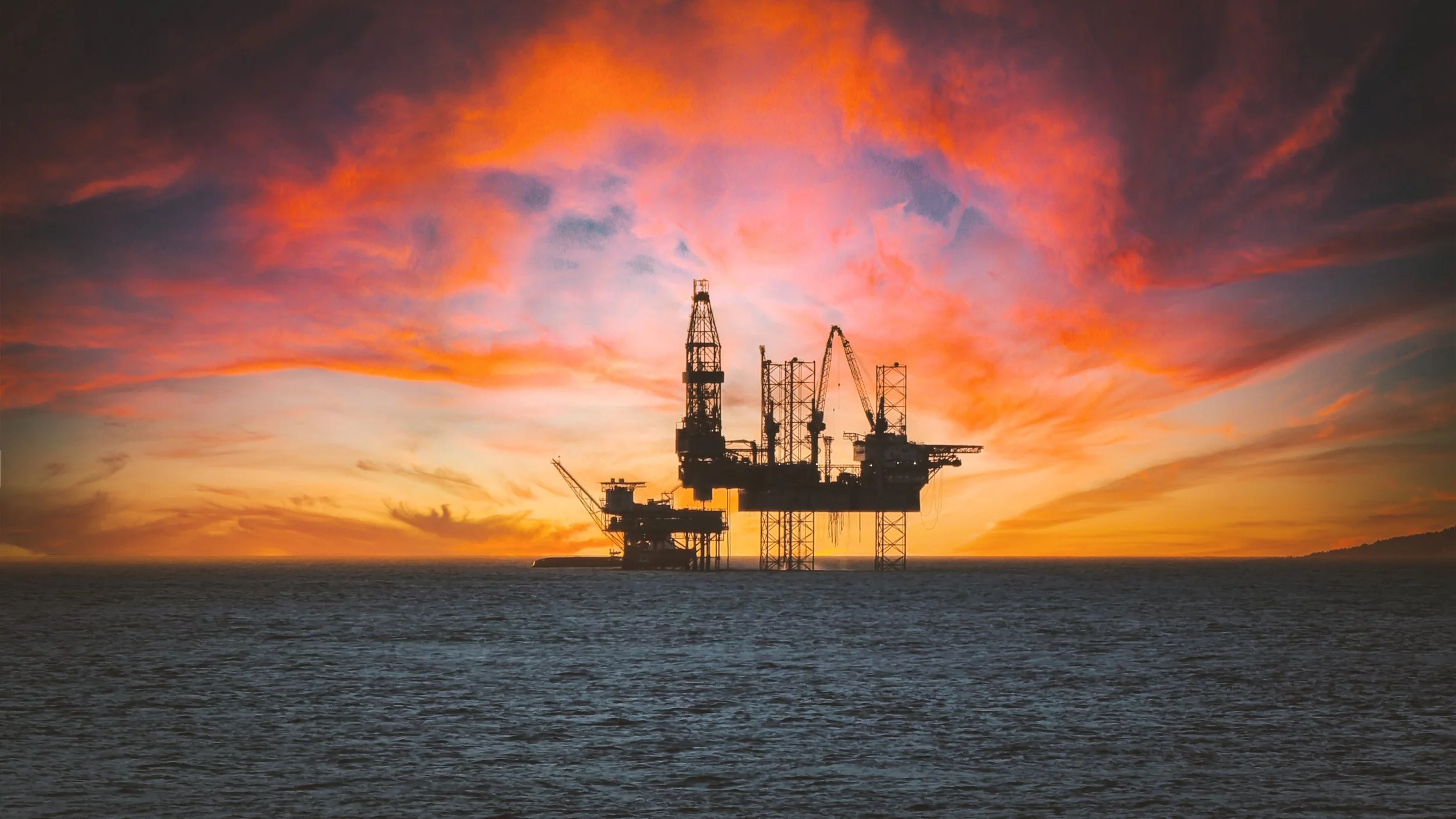
Even in the days before this however, some had been raising concerns about just what kind of changes might be expected. Rumours that the new Prime Minister would be looking to expand drilling operations for oil and gas in the North Sea prompted numerous demonstrations by climate activists and others. Notably, demonstrators gathered at Westminster on the weekend ahead of Burnham's taking office to protest the rumoured drilling of the Rosebank and Jackdaw oil fields.
Rosebank is the UK’s largest undeveloped oil field, and whilst proponents have claimed it would provide a major boost to the UK's economy and energy concerns, as well as creating thousands of new jobs, critics have warned that such drilling could release 200 million tonnes of CO2 emissions - describing it as a “carbon bomb.”
Following on from these rumours and the resultant protests, Burnham had reiterated that he would be sticking to the pledges made in the Labour Party's 2024 manifesto not to further expand North Sea oil and gas drilling, with Labour's Deputy Leader, Lucy Powell, telling the BBC that “Andy has been clear he stands by the policies in our manifesto in relation to that.”
However, even as she said this, she also added that whilst there would be no change in policy here, there may be what she calls “a change of emphasis,” stating that “what Andy is talking about is taking a more pragmatic approach and working with the industry to make sure that it can contribute to that transition and to the mix that is needed over the long term.”
Since then, there have been further hints that some expansion of oil and gas drilling might still be on the table - particularly following the comments made by US President Donald Trump, who welcomed Burnham's taking office by stating that “the People of Aberdeen, in Scotland, are dancing in the streets because the new Prime Minister, Andy Burnham, has stated that he will be opening up, all the way, the invaluable North Sea Oil!”
This week, Trump repeated these claims, stating that he'd been told by Burnham in their first telephone conversation that “he said he's going to open up North Sea oil.” In response, Burnham has himself repeated the line that he will be taking “a pragmatic approach” when it comes to the North Sea, and that he was “open minded” about expanding drilling. “There is a resource there,” the Prime Minister added. “When people are struggling, we can’t ignore that.” Meanwhile, figures on the right of the Labour Party, such as Burnham's former rival for the leadership and the new Defence Secretary, Wes Streeting, have also called for an expansion of drilling, including at Rosebank.
In spite of the concerns such comments have raised among climate activists, as well as many of Burnham's own Labour MP's, this, on the face of it, is a move that could well be seen as perfectly in line with Burnham's wider ideology. As much as it's something that politicians on the right have been pushing for - as seen with Reform leader Nigel Farage's calls for the government to “change course” on the issue whilst Ed Miliband had been Energy Secretary under Starmer - it also very much fits Burnham's goal for the ‘reindustrialization’ of the UK, and of the North in particular, in the wake of Thatcherism and its legacy.
Indeed, critics on the left as well as the right have often accused Thatcher and subsequent Conservative governments of having frittered away the benefits of North Sea oil, as, unlike in Scandinavia, where profits were invested back into state run investment funds and high public spending, in the UK it was used to support the rapid deindustrialization that took place under her watch, helping to fund the massive increase in unemployment that occurred as a result, as well as tax cuts for the well-off. She then went on to add this to the number of industries she sold off, putting much of the profits into private hands.
Seen from this perspective therefore, a potential expansion of drilling arguably fits well within Burnham's stated agenda, even in spite of the Labour government's previous commitments to curb the UK's reliance on oil and gas in its drive towards net zero, under Miliband. However, it also is worth remembering that the situation now is very different to that in the 1980s, and if Burnham does indeed choose to expand drilling, even as much of Europe - including parts of the UK - is engulfed by wildfires, it raises serious questions about Burnham's priorities.
Green Party leader Zack Polanski has stated that any “half measures or backsliding” on this issue, given the current climate crisis, would be “a moral and political failure” from Burnham, adding that “he has the chance to be bold, and failing to do so will see our country get poorer and his party slip further into obscurity. Decades of inaction on the transition to clean energy has already put the UK way behind where we should be, with huge cost to the economy. As the country swelters under extreme heat there has never been a more prescient reminder that we simply cannot afford to keep burning fossil fuels.”
Similar arguments have also been made not only by the Greens, but also by Labour MP's and by some of the major trade unions affiliated with the Labour Party, such as Unison, whose leader has called for no more drilling - this in spite of a key argument in its favour being one around jobs.
The heatwave currently taking its toll on Europe should, if nothing else, illustrate that the climate crisis is now existential. Climate change is no longer something looming in the future, or affecting other countries in far off parts of the world, but an immediate crisis affecting us here and now, one that has already wreaked huge damage, and cost thousands of lives. Action to tackle it is needed urgently, and, especially following on from Trump's comments, this rumoured expansion in the North Sea smacks of an attempt by the new Prime Minister to keep the White House on side.
Keir Starmer's commitment to net zero, and his unwillingness to expand North Sea oil, had proved to be a key source of contention between himself and Trump. Burnham's comments around drilling have also not been the only instance in his first two weeks of his apparent determination to remain friendly with Trump, as it was confirmed that the UK will continue to allow the US to use British air bases in its war in Iran, even as other European leaders - including those previously seen as close to Trump, such as Giorgia Meloni - have stood up against this.
The UK and the US have long had a close relationship, and the good will of Washington remains critical for the UK economy. But Burnham should learn from his predecessor, Starmer, who also, it seemed at first, had a good working relationship with Trump, only for Trump to later turn around and openly criticize much of what he was doing. One of the lasting images of Starmer's premiership will likely be of him stooping to pick up Trump's papers for him, whilst offering him all the prestige of a state visit and meetings with the King, only for the UK to still be hit by tariffs along with the rest of Europe.
Trump has shown time and time again that he cannot be appeased for long, and has little respect for those who don't show strength. To blindly follow his lead therefore, and to “drill, baby drill,” only risks throwing our climate into even greater crisis, for likely very little reward.
